


Choosing the right Cable Tray is not just a buying step. It decides how clean your wiring looks, how easy the job is for installers, and how much trouble you may face later when cables need checking or adding. A small workshop, a power plant, and an infrastructure tunnel do not use the same cable route. The tray has to fit the load, site space, surface condition, and future maintenance plan.
BD FENCE is a metal product manufacturer with a strong factory base and export experience. The company works from a 15,000㎡ production site, with around 190 staff and more than 80 machines for welding, cutting, coating, and related production work. Its product range started from metal fence systems, but now also covers cable management products for industrial and public projects. What I like about BD FENCE is that it does not push only one tray type for every site. You can choose wire mesh, solid bottom, channel, ladder, or FRP structure based on the actual job. That is more practical for buyers who need stable quality, export packing, custom sizes, and clear project communication.
Start from the Wiring Site Before You Pick a Tray
A tray that works well in a clean indoor factory may not be enough for a damp tunnel or a heavy power cable route. So before choosing a model, look at the place where it will be installed. This part is easy to skip, but it saves a lot of back-and-forth later.
Check Cable Weight and Route Length
If your cables are light and the route is short, you can care more about simple installation and future adjustment. A lighter tray structure may already be enough. You do not need to overspend on a heavy-duty type just because it looks stronger.
For long runs, especially in power plants or large industrial buildings, tray strength becomes more important. The support span, cable weight, and number of cable layers should be checked early. If the route crosses wide areas or is installed overhead, the tray must stay stable after loading.
Look at Airflow and Heat Around the Route
Cables need space to release heat. In factory areas, many cable routes pass near machines, control cabinets, motors, or production lines. If heat stays around the cables for a long time, it may affect long-term safety and maintenance.
An open tray structure helps when heat and visibility matter. It also lets workers check the cable route without removing too many parts. This is useful in factories, data rooms, and warehouse wiring where later changes are common.
Think About Dust, Moisture, and Corrosion
Some sites look simple on drawings but are not so clean in real work. Dust, water vapor, chemical gas, salt air, or underground humidity can change the tray choice. A normal surface finish may be enough indoors, but outdoor and corrosive sites need more care.
That is why material and surface treatment should be decided with the job site in mind. Powder coating, electro galvanizing, hot-dip galvanizing, stainless steel, aluminum alloy, and FRP all have their own place. The best choice is the one that fits the site, not the one that sounds the strongest on paper.
Match Each BD FENCE Product with the Right Project Use
After checking the site, you can compare the tray types more clearly. BD FENCE has several products for different cable routing needs, and each one fits a different kind of project. You do not have to use one style across the whole site if different zones need different structures.
Wire Mesh Cable Tray
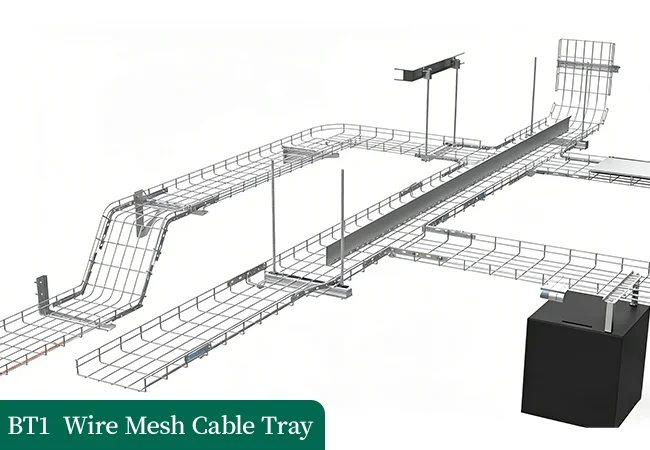
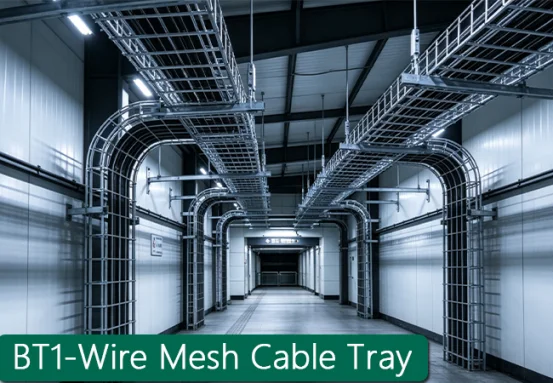
Wire mesh type is often a good choice for factory wiring, warehouse wiring, data rooms, commercial buildings, and other places where cables may be adjusted later. Its open structure is easy to see through, and airflow is better than a closed tray. Workers can also cut and shape it more easily on site when the route needs small changes.
BD FENCE offers this product with heights of 50mm, 100mm, and 150mm. Widths cover 50mm to 600mm depending on the selected height, with a common 3m length. Wire diameter can be 3.5mm to 6mm, and 5mm is often used. You can choose carbon steel, aluminum alloy, or stainless steel, with powder coated, electro galvanized, hot-dip galvanized, or pre-galvanized surface treatment.
Solid Bottom Cable Tray
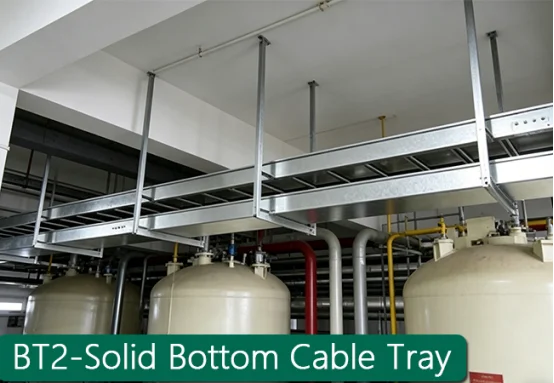
Solid bottom type is better when the cable route needs more complete bottom support. It works well in mechanical rooms, dusty areas, industrial plants, and places where the wiring route should look more enclosed and tidy. If you want cables to sit on a full base instead of an open mesh structure, this product is worth checking.
BD FENCE supplies common heights such as 50mm, 75mm, 100mm, 150mm, and 200mm. Widths can reach 800mm in larger sizes, and the 2m length can be customized. It can work with horizontal tees, 90° horizontal elbows, vertical elbows, reducers, connectors, end caps, cable trunking, and crosses. These parts matter when the route has turns, drops, and branch lines.
Channel Cable Tray
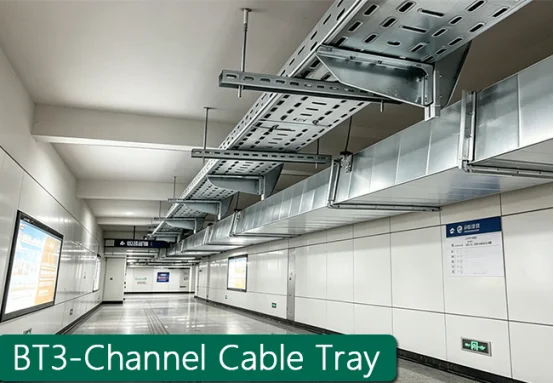
Channel type gives a cleaner and more organized route for medium and larger cable layouts. It is suitable for factories, commercial buildings, underground corridors, utility rooms, and project areas where cable lines should be neat and easy to manage. Compared with wire mesh, it gives a more enclosed structure. Compared with heavy ladder type, it can still stay compact for many standard routes.
BD FENCE offers this tray in heights of 50mm, 75mm, 100mm, 150mm, and 200mm, with widths from 100mm to 800mm in different sizes. The standard length is 2m and can be customized. Materials include aluminum alloy and stainless steel. Surface treatment can be powder coated, electro galvanized, or hot-dip galvanized. Accessories include covers, cover clips, dividers, connectors, tees, crosses, reducers, and adjustable parts.
Choose Stronger Structures for Heavy Loads and Harsh Sites
Some projects need more than neat cable sorting. Power plants, railway projects, large factories, chemical areas, and outdoor routes usually ask for stronger structure or better resistance to the site environment. This is where product selection needs to be more careful.
Ladder Cable Tray
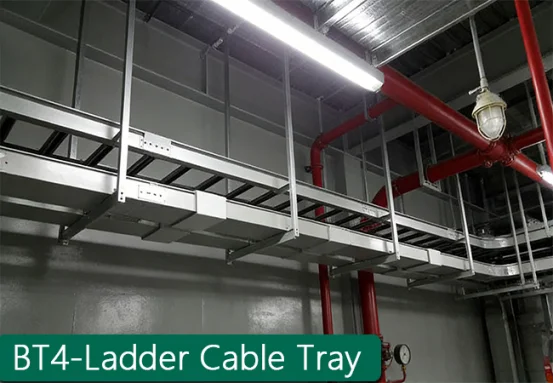
Ladder type is made for heavier cable routes. It is often used in power plants, steel mills, rail projects, large factories, and long overhead cable runs. The two side rails and cross rungs give better load support, while the open design still allows airflow around the cables.
BD FENCE provides this type with heights of 75mm, 100mm, 150mm, and 200mm. Widths cover 150mm to 800mm across different sizes, and the 2m length can be customized. It can be matched with horizontal elbows, horizontal tees, crosses, vertical up and down elbows, reducers, dividers, connectors, end caps, bonding jumpers, covers, cover clips, cover clamps, and adjust couplers. For a large project, these fittings help the route stay clean and consistent.
FRP Cable Tray
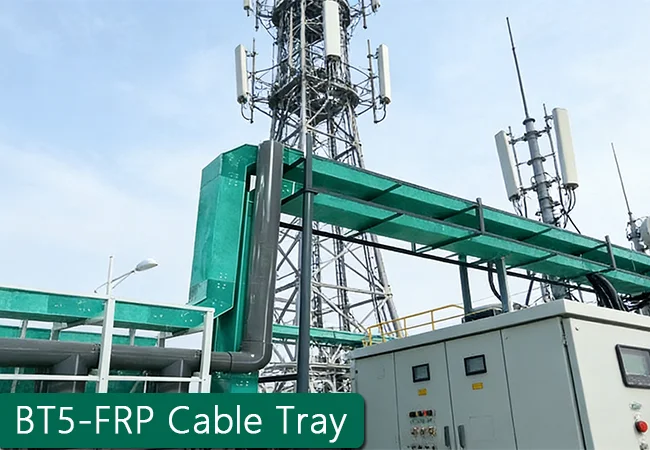
FRP type is mainly used when corrosion resistance, insulation, and lighter handling are important. It is a good fit for chemical plants, water treatment areas, coastal projects, humid tunnels, power-related areas, and sites where metal corrosion may become a long-term issue. If the working environment is tough, it is better to think about FRP early instead of changing plans after installation.
BD FENCE FRP products are made from fiberglass-resin composite material. This gives the tray corrosion resistance, weather resistance, flame-retardant insulation, and anti-aging performance. It also weighs less than many metal structures, so workers can handle it more easily during installation. For damp or chemical areas, this can reduce later repair pressure.
Combine Different Types in One Project
Many real projects do not need only one tray type. A factory may use wire mesh trays in open workshop areas, channel trays in utility zones, and ladder trays for heavy power lines. A power plant may need ladder type for main power routes and FRP type in special corrosive areas.
This mixed use is normal. The key is to keep sizes, fittings, material grades, and surface treatment clear before ordering. When the drawing is clear, BD FENCE can help you match different tray sections without making the installation team guess on site.
Plan Details That Affect Installation and Later Service
A tray order is not only straight sections. The small parts decide whether the installation feels smooth or messy. If you prepare them early, the site team will thank you later.
Do Not Forget Fittings and Covers
Elbows, tees, crosses, reducers, covers, dividers, connectors, end caps, and couplers should be checked before production. If the route turns many times, these parts may be just as important as the tray itself.
Some buyers only count straight tray length at first. Then the installer asks for more fittings on site, and the job slows down. It is better to mark turns, branches, rising sections, and dropping sections on the drawing before placing the order.
Pick Material and Surface Finish by Environment
For indoor dry areas, a standard galvanized or powder coated finish may be enough. For outdoor areas, wet rooms, or stronger rust risk, hot-dip galvanizing or stainless steel may be a better choice. For corrosive or insulated areas, FRP should be considered.
The choice should not be made by habit. If the route sits near water, chemicals, salt air, or heat, tell the supplier before quotation. This helps BD FENCE suggest a more suitable structure and finish, and it also helps you avoid later quality disputes.
Send Project Details Before Final Quotation
To get a useful recommendation, you should prepare cable type, cable quantity, route length, support span, installation environment, preferred material, surface treatment, and any special color or size request. Drawings are even better.
BD FENCE can support custom sizes, matching accessories, packing, and export delivery. For overseas buyers, this kind of service matters. A product that arrives with clear packing and correct fittings can save more time than a small price difference.
Conclusion
Choosing the right Cable Tray is really about matching the tray to the site. For flexible factory or data wiring, wire mesh type is easy to adjust. For cleaner protected routes, solid bottom and channel types are useful. For heavy power routes, ladder type gives stronger support. For corrosive or insulated environments, FRP is the safer direction.
BD FENCE gives you all five choices, so you can build a tray plan around the project instead of forcing one product into every area. If you are working on factory, power plant, or infrastructure wiring, send the drawings and site details first. The right tray type, material, finish, fittings, service, and delivery plan will be much easier to confirm.
FAQ
Q1: Which tray type is better for factory wiring?
A1: For many factory wiring jobs, wire mesh type is easy to use because it gives good airflow and simple cable inspection. BD FENCE can provide it in several heights, widths, wire diameters, materials, and surface finishes.
Q2: What should I use for heavy power cable routes?
A2: Ladder type is usually better for heavy power cable routes because its side rails and cross rungs give stronger support. BD FENCE also provides matching elbows, tees, reducers, covers, and connectors for larger layouts.
Q3: When is solid bottom type a better choice?
A3: Solid bottom type is useful when cables need full bottom support and a cleaner protected route. BD FENCE Solid Bottom product fits mechanical rooms, industrial plants, dusty areas, and utility spaces.
Q4: Is FRP suitable for wet or corrosive areas?
A4: Yes. BD FENCE FRP products are suitable for humid, chemical, coastal, and corrosive environments. They also help when insulation and lighter handling are important.
Q5: How do I choose the right Cable Tray before ordering?
A5: You should check cable weight, route length, installation area, support span, corrosion level, material needs, fittings, and future maintenance. BD FENCE can review your project details and suggest a suitable product type with matching service and contact support.