


Tubular Fence Guide: Types, Benefits, Applications and Selection Tips
Tubular fencing is widely used for residential, commercial, industrial and public perimeter projects because it combines structural strength, open visibility and a clean architectural appearance.
Compared with solid walls or lightweight wire fencing, a tubular fence can create a clearly defined perimeter without completely blocking natural light and visibility. Different materials, tube dimensions, spacing, heights, surface treatments and gate configurations also make tubular fencing adaptable to a wide range of projects.
However, not every tubular fence has the same performance. Steel or aluminum, tube dimensions, fence height, spacing, coating and post structure should all be selected according to the actual application.
This guide explains the main tubular fence types, benefits, applications, materials and selection considerations to help contractors, distributors and project buyers choose an appropriate fencing system.
What Is a Tubular Fence?
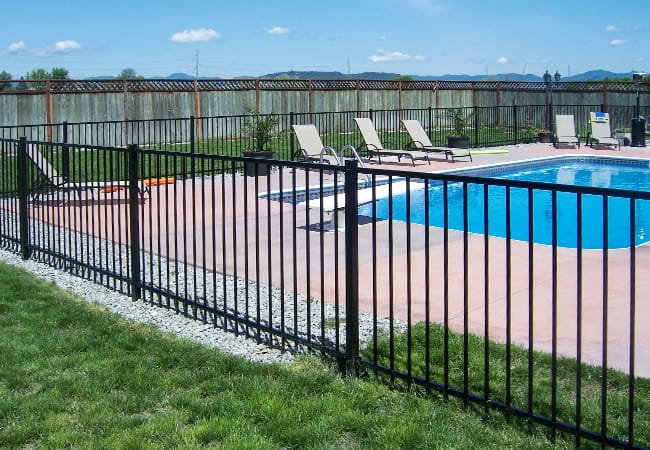
A tubular fence is a metal fencing system constructed primarily from hollow steel or aluminum sections.
A typical panel consists of vertical or horizontal tubular members connected by support rails to form a rigid fence section. Panels are then installed between posts to create a complete perimeter system.
A complete tubular fencing system can include:
- Tubular fence panels
- Steel or aluminum posts
- Horizontal support rails
- Post caps
- Mounting brackets
- Bolts and fasteners
- Pedestrian gates
- Double swing gates
- Sliding gates
- Project-specific accessories
Depending on the design, tubular fencing can prioritize security, aesthetics or a combination of both.
Main Types of Tubular Fence
Tubular fences can be classified according to both material and structural design.
Understanding these differences is important before selecting a fence for a specific project.
1. Steel Tubular Fence
Steel tubular fence is commonly selected for projects where structural strength and perimeter security are important.
The system can be manufactured from carbon steel tubes and protected with galvanizing and powder coating according to the required specification.
Steel tubular fencing is commonly considered for:
- Industrial facilities
- Factory perimeters
- Logistics centers
- Commercial properties
- Schools
- Public facilities
- Residential developments
- Infrastructure projects
Tube dimensions, wall thickness, spacing, posts and rails can be selected according to the required fence configuration.
2. Aluminum Tubular Fence
Aluminum tubular fencing provides a lightweight alternative to steel.
Because aluminum has different corrosion characteristics from carbon steel, it is frequently considered for residential, architectural and environments where corrosion resistance is an important purchasing factor.
Common applications include:
- Residential properties
- Villas
- Gardens
- Parks
- Commercial landscapes
- Coastal properties
- Decorative perimeter projects
The correct material should ultimately be selected according to structural requirements, environment, budget and project specifications.
3. Vertical Tubular Fence
A vertical tubular fence uses upright tubular members installed between horizontal rails.
This is one of the most common tubular fence configurations.
Depending on tube spacing and fence height, vertical designs can provide a clear perimeter while maintaining visibility through the fence.
They are frequently used for:
- Schools
- Factories
- Residential communities
- Commercial properties
- Warehouses
- Public facilities
For security-focused applications, tube spacing, fence height and top design should be determined according to the project requirements.
4. Horizontal Tubular Fence
Horizontal tubular fencing uses horizontal members as the dominant visual feature.
It is frequently selected where architectural appearance is an important consideration.
Horizontal designs can create a modern appearance suitable for:
- Villas
- Residential developments
- Commercial buildings
- Landscape projects
- Architectural boundaries
When used in areas where climbing resistance is important, the complete design should be reviewed carefully because horizontal members can affect climbability.
Steel vs Aluminum Tubular Fence
One of the most common questions from buyers is whether to choose steel or aluminum.
There is no universal answer because the appropriate material depends on the project.
| Factor | Steel Tubular Fence | Aluminum Tubular Fence |
|---|---|---|
| Structural Strength | Generally higher | Suitable for many lighter applications |
| Weight | Heavier | Lighter |
| Corrosion Protection | Requires appropriate finish | Naturally corrosion resistant |
| Industrial Applications | Common | Application dependent |
| Residential Use | Suitable | Very suitable |
| Customization | High | High |
| Installation | Depends on system | Easier handling due to lower weight |
| Coastal Use | Requires suitable protection | Often considered for corrosive environments |
For industrial and security applications, buyers may prioritize structural strength.
For residential, architectural or certain corrosive environments, weight, appearance and corrosion resistance may receive greater consideration.
Key Benefits of Tubular Fencing
Strong and Rigid Structure
Tubular steel construction provides a rigid perimeter system.
Compared with some flexible fencing systems, tubular panels maintain a clearly defined shape and provide a more substantial physical boundary.
The actual strength depends on factors such as:
- Material
- Tube dimensions
- Wall thickness
- Welding
- Rail configuration
- Post dimensions
- Post spacing
- Foundation design
For engineering projects, these factors should be evaluated together rather than considering only the appearance of the fence.
Open Visibility
Tubular fencing creates physical separation without completely closing the perimeter.
The spaces between tubes allow visibility through the fence, which can be useful for:
- Security monitoring
- CCTV surveillance
- Property visibility
- Landscape integration
- Public facilities
This makes tubular fencing suitable for projects where both security and an open appearance are important.
Low Routine Maintenance
Properly manufactured and protected metal fencing generally requires less routine maintenance than many traditional materials.
Maintenance normally focuses on inspecting:
- Surface coating
- Connections
- Posts
- Gates
- Hinges
- Fasteners
- Localized damage
If coating damage occurs on a steel fence, timely repair can help prevent localized corrosion from developing.
Modern Appearance
Straight tubular members and uniform spacing create a clean architectural appearance.
Different colors, tube profiles, top designs and panel configurations can be used to match residential, commercial and industrial environments.
Customizable Specifications
Tubular fencing can be manufactured according to different project requirements.
Common customization options include:
| Item | Custom Options |
|---|---|
| Fence Height | According to project requirements |
| Panel Width | Standard or customized |
| Tube Size | Multiple specifications |
| Tube Spacing | Customizable |
| Rail Configuration | According to panel design |
| Post Size | Multiple options |
| Surface Treatment | Galvanized / powder coated |
| Color | Custom RAL colors |
| Top Design | Standard or customized |
| Gates | Pedestrian / swing / sliding |
Where Is Tubular Fence Used?
Industrial Facilities
Factories, warehouses and logistics centers require durable perimeter systems to establish property boundaries and control access.
Steel tubular fencing provides a rigid structure while maintaining visibility around the site.
Residential Properties
Tubular fencing can be used around:
- Villas
- Private yards
- Apartment developments
- Residential communities
- Gardens
- Shared residential facilities
The open structure provides boundary separation without creating the completely enclosed appearance of a solid wall.
Schools and Educational Facilities
Schools often require fencing that provides a clearly defined perimeter while maintaining visibility.
Tubular fencing can be configured according to required heights, spacing and gate arrangements.
Project-specific safety and local requirements should be confirmed before finalizing the design.
Commercial Properties
Office buildings, shopping facilities, hotels and commercial developments can use tubular fencing where both security and appearance matter.
Powder-coated finishes allow the fence color to coordinate with surrounding architecture.
Parks and Public Areas
Parks, recreational facilities and public spaces can use tubular fencing to define boundaries while maintaining visual openness.
Industrial and Logistics Parks
Large industrial developments may require hundreds or thousands of meters of perimeter fencing.
For these projects, buyers should consider not only fence price but also installation efficiency, packaging, transportation, gate systems and long-term maintenance.
Tubular Fence vs Chain Link Fence
Chain link and tubular fencing can both be used for perimeter applications, but their structures are significantly different.
Chain link fencing uses flexible woven wire mesh, while tubular fencing uses rigid metal members.
Tubular fencing may be preferred where buyers prioritize:
- Rigid panel appearance
- Architectural design
- Defined vertical lines
- Greater structural presence
Chain link fencing may remain suitable for projects prioritizing economical coverage of large areas.
The correct choice depends on project budget, security requirements and expected appearance.
Tubular Fence vs Welded Wire Fence
Welded wire fencing uses welded mesh panels, while tubular fencing uses individual hollow sections and rails.
Welded mesh can provide smaller openings and is suitable for many industrial and security applications.
Tubular fencing generally provides a more architectural appearance and is frequently selected for residential, commercial and public-facing projects.
Neither type is automatically better for every application.
The choice should be based on:
- Required security level
- Appearance
- Budget
- Visibility
- Installation environment
- Project specifications
Tubular Fence vs Wrought Iron Fence
Traditional wrought iron fencing can provide an ornamental appearance but may involve heavier construction and more complex fabrication.
Modern tubular steel fencing can reproduce many clean metal-fence designs using hollow sections, reducing weight while maintaining a rigid structure.
For many modern projects, this can provide a practical balance between appearance, manufacturing efficiency and cost.
How to Choose the Right Tubular Fence
Before purchasing tubular fencing, buyers should evaluate several factors.
1. Determine the Application
Start by identifying where the fence will be installed.
A residential villa, school, industrial warehouse and commercial development may all require different specifications.
2. Select Steel or Aluminum
Consider structural requirements, corrosion exposure, weight, appearance and budget.
For demanding industrial applications, steel may be appropriate.
For certain residential, architectural or corrosion-sensitive environments, aluminum may be considered.
3. Determine Fence Height
Required height depends on the purpose of the fence.
A decorative residential boundary may have very different requirements from an industrial perimeter.
Local regulations and project requirements should also be checked.
4. Select Tube Spacing
Tube spacing influences appearance, visibility and physical access through the fence.
Security-focused projects may require closer spacing than decorative applications.
5. Consider the Installation Environment
Before selecting the surface treatment, consider:
- Coastal exposure
- Humidity
- Rainfall
- Snow
- UV exposure
- Industrial pollutants
- Temperature conditions
The environment should influence material and coating selection.
6. Plan Gates at the Same Time
A complete perimeter system usually requires pedestrian and vehicle access.
Gate design should therefore be planned together with the fence rather than treated as an afterthought.
Options may include:
- Pedestrian gates
- Double swing gates
- Vehicle gates
- Sliding gates
- Customized access gates
Surface Treatment for Steel Tubular Fence
Surface treatment is an important factor affecting the appearance and corrosion resistance of steel fencing.
Depending on the required specification, available configurations can include galvanizing and powder coating.
A typical protected steel fence may involve:
- Steel surface preparation
- Galvanizing according to the required process
- Surface preparation for coating
- Powder coating
- Curing
- Final inspection
The exact coating system should be selected according to the installation environment and project specification.
Tubular Fence Installation Considerations
A tubular fencing system normally consists of prefabricated panels installed between posts.
A typical installation process includes:
- Surveying the fence line
- Marking post locations
- Preparing post foundations
- Installing and aligning posts
- Allowing foundations to stabilize where required
- Installing fence panels
- Installing gates
- Checking alignment
- Tightening connections
- Completing final inspection
Foundation dimensions and installation methods should be determined according to soil conditions, fence dimensions, wind conditions and engineering requirements.
How to Maintain a Tubular Fence
Tubular fencing generally requires straightforward routine maintenance.
Regular Cleaning
Remove dirt, dust, leaves and other contaminants from the fence surface periodically.
Inspect the Coating
Check steel fences for scratches or localized coating damage.
Areas of exposed steel should be addressed before significant corrosion develops.
Check Connections
Inspect bolts, brackets and other connections periodically and tighten them when necessary.
Inspect Gates
Gate hinges, rollers, locks and other moving components should receive additional attention because they experience repeated movement.
Keep the Fence Base Clear
Avoid prolonged accumulation of wet soil, vegetation and debris around the bottom of posts and panels.
Custom Tubular Fence Solutions From Bendin
Different projects require different tubular fence specifications.
Bendin provides customized tubular fencing for international distributors, contractors, engineering companies and project buyers.
Customization can include:
- Fence height
- Panel width
- Tube dimensions
- Tube spacing
- Rail configuration
- Post dimensions
- Surface treatment
- RAL colors
- Top styles
- Pedestrian gates
- Vehicle gates
- Packaging
Customers can provide drawings, specifications, BOQs or project requirements for review before production.
What Information Is Needed for a Tubular Fence Quote?
Providing complete project information helps produce a more accurate quotation.
Buyers should provide, where available:
- Total fence length
- Required height
- Panel width
- Tube dimensions
- Tube spacing
- Steel or aluminum material
- Required surface treatment
- Required color
- Gate dimensions and quantities
- Installation environment
- Project drawings
- Destination country or port
If specifications have not yet been finalized, application information and preliminary drawings can be provided for discussion.
Why Choose Bendin for Tubular Fencing?
Bendin provides tubular fencing solutions for residential, commercial, industrial and public projects.
We support:
- Steel tubular fencing
- Customized panel dimensions
- Multiple tube specifications
- Customized spacing
- Galvanized and coated finishes
- RAL color customization
- Matching posts
- Pedestrian and vehicle gates
- OEM and ODM production
- Project drawing review
- Export packaging
- International project supply
For project orders, the complete fence system can be manufactured according to confirmed drawings and technical specifications.
FAQ About Tubular Fence
What is a tubular fence?
A tubular fence is a metal perimeter fencing system made primarily from hollow steel or aluminum sections arranged vertically or horizontally and supported by rails and posts.
Is steel or aluminum better for tubular fencing?
It depends on the project. Steel is commonly selected where structural strength is a priority, while aluminum offers lower weight and different corrosion characteristics. Installation environment, design requirements and budget should all be considered.
Can tubular fence dimensions be customized?
Yes. Bendin can customize fence height, panel width, tube dimensions, tube spacing, posts, colors and gate configurations according to project requirements.
Is tubular fencing suitable for industrial projects?
Yes. Steel tubular fencing can be used for factories, warehouses, logistics parks and other industrial perimeter applications when appropriately specified.
Can tubular fencing be used in coastal areas?
Yes, but the material and corrosion-protection system should be selected according to the actual coastal exposure conditions. Aluminum or appropriately protected steel may be considered depending on project requirements.
Can Bendin supply matching gates?
Yes. Pedestrian, swing, sliding and other gate configurations can be manufactured according to the fence system and project requirements.
Can Bendin manufacture according to project drawings?
Yes. Buyers can provide drawings, BOQs and technical specifications for review before quotation and production.
Choose the Right Tubular Fence for Your Project
The best tubular fence is not simply the cheapest or strongest option. It should match the project’s security requirements, environment, architectural design, installation conditions and budget.
Steel tubular fencing provides a strong solution for many industrial and commercial applications, while other configurations can address residential, landscape and architectural requirements.
By selecting the appropriate material, tube dimensions, spacing, surface treatment, posts and gates, buyers can build a perimeter fencing system suited to long-term project requirements.
For customized tubular fencing, send Bendin your project dimensions, drawings, required specifications, quantity and destination. Our team can prepare a suitable fence configuration and quotation based on your project requirements.