


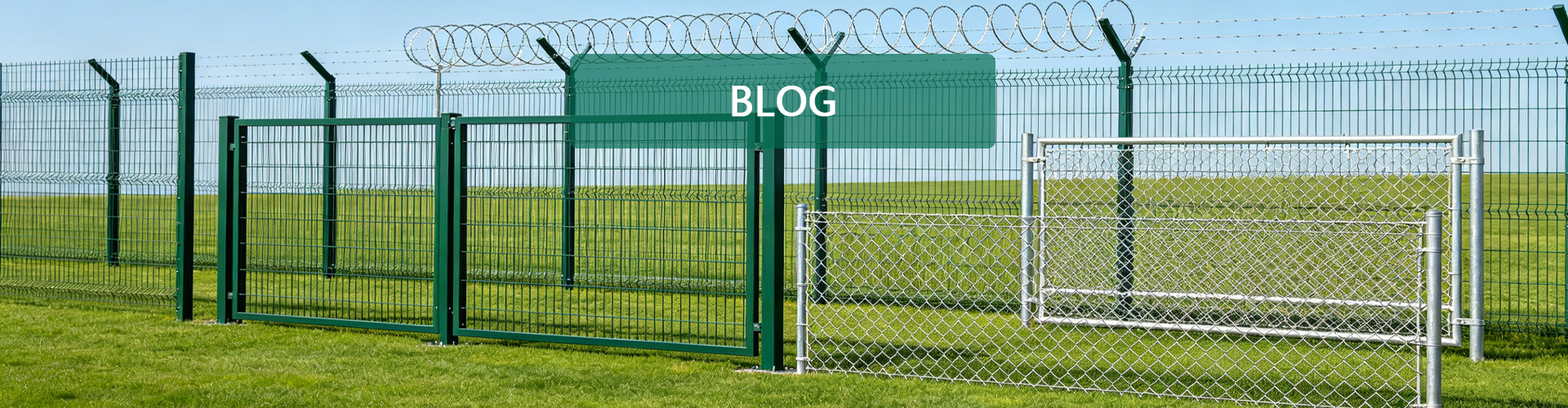
Chain Link Fence: Specifications, Applications and Buying Guide
Chain link fencing is a versatile metal fencing system made from steel wire woven into a diamond-shaped mesh. Supported by posts, rails and tensioning accessories, it provides a practical solution for defining boundaries, controlling access and enclosing large outdoor areas.
Because the mesh is flexible and can be supplied in rolls, chain link fencing is widely used for factories, warehouses, sports grounds, schools, farms, residential properties, parking areas and selected utility facilities.
Bendin (Hebei Bendin Industrial Technology Co., Ltd.) supplies customizable chain link fence systems for international distributors, contractors and project owners. Depending on the selected configuration, options include galvanized or PVC-coated mesh, round steel posts, angle iron posts, top rails, tensioning accessories and compatible gates.
This guide explains chain link fence construction, specifications, surface treatments, installation components and purchasing considerations to help you select a suitable system for your project.
1. What Is a Chain Link Fence?
A chain link fence is made by interweaving steel wires into a continuous diamond-shaped mesh. The mesh is stretched between supporting posts and secured using compatible tension bars, bands, ties and other fittings.
Unlike rigid welded mesh panels, chain link mesh is flexible and can accommodate selected changes in ground level and fence-line direction.

Main Components of a Chain Link Fence
A complete system may include:
- Woven chain link mesh
- Line posts
- Terminal and corner posts
- Gate posts
- Top rails or tension wires, depending on the design
- Tension bars and tension bands
- Fence ties, clips and fasteners
- Post caps and rail fittings
- Compatible pedestrian or vehicle gates
The exact configuration depends on the fence height, mesh specifications, post spacing, ground conditions and intended application.
How the System Works
Line posts support the fence along straight sections. Terminal and corner posts carry the tension forces transferred through the mesh. Rails and tensioning components help maintain the intended alignment.
The complete system must be designed and installed as a coordinated assembly. Selecting mesh without considering posts, foundations, gates and accessories can lead to installation problems or inadequate performance.
2. Chain Link Fence Specifications
Bendin offers chain link fence configurations according to product availability, manufacturing capabilities and project requirements.
| Parameter | Typical Options |
|---|---|
| Product Type | Chain Link Fence |
| Mesh Structure | Woven Diamond-Shaped Mesh |
| Mesh Opening | 40 × 40, 50 × 50, 60 × 60, 75 × 75 or 100 × 100 mm |
| Wire Diameter | 2.5, 3.0, 3.5, 4.0 or 4.5 mm |
| Roll Height | Approximately 1.2–3.0 m |
| Roll Length | Approximately 9–30 m |
| Mesh Material | Galvanized Steel Wire / PVC-Coated Wire |
| Post Options | Round Steel Posts / Angle Iron Posts |
| Round Post Diameters | Approximately 40, 48, 60 or 75 mm |
| Post Thickness | Selected options may range from 1.5–2.5 mm |
| Surface Treatment | Galvanized / PVC-Coated / Other Specified Finish |
| Edge Style | Knuckled / Twisted / Other Available Configurations |
| Accessories | Rails / Tension Bars / Bands / Ties / Caps / Fasteners |
| Gates | Compatible Swing or Sliding Gates, where available |
These are indicative options based on the supplied product information, not a guarantee that every combination is available. Confirm the actual wire diameter, mesh opening, roll dimensions, post thickness and coating specification before ordering.
Wire Diameter and Mesh Opening
Wire diameter and mesh opening should be considered together.
Thicker wire may increase the rigidity of the mesh, while smaller openings create a denser barrier. The actual performance depends on the steel specification, weaving quality, fence height, post arrangement and installation method.
Larger openings may be suitable for general boundary definition where a less dense mesh is acceptable. Smaller openings may be preferred for selected sports, agricultural or containment applications.
Roll Height and Length
Roll dimensions affect transportation, handling, installation and the number of joints along the fence line.
Longer rolls may reduce the number of mesh joints but can be heavier and more difficult to handle. The suitable roll length depends on the wire specification, package weight, site access and installation equipment.
Post Dimensions
Post diameter and wall thickness should be selected according to fence height, mesh tension, post spacing, ground conditions and expected loads.
Taller fences, large gates and exposed locations may require a different post and foundation configuration from a low boundary fence.
3. Galvanized vs. PVC-Coated Chain Link Fence
Surface treatment influences corrosion protection, appearance and maintenance requirements.
Galvanized Chain Link Fence
Galvanized chain link mesh has a zinc coating that helps protect the underlying steel against corrosion.
It may be suitable for:
- Industrial and warehouse boundaries
- Agricultural properties
- General outdoor fencing
- Utility and storage areas
- Selected construction-site applications
When comparing galvanized products, confirm the wire specification and coating requirements. The word galvanized alone does not identify the coating thickness or establish a guaranteed service life.
Posts, rails, fittings and gates should also have suitable corrosion protection for the intended environment.
PVC-Coated Chain Link Fence
PVC-coated chain link mesh has a polymer outer layer over the specified wire substrate. Depending on the product, the underlying steel wire may also have a metallic coating.
PVC-coated mesh may be selected where a colored finish and additional surface protection are required.
Commonly requested colors include green and black, subject to product availability.
Before ordering, confirm:
- Underlying steel wire specification
- Finished wire diameter
- Coating type and construction
- Coating condition and quality requirements
- Compatibility with posts and fittings
- Suitability for the intended environment
A thicker polymer layer does not necessarily mean the underlying steel wire is thicker or stronger.
Choosing the Right Finish
| Project Environment | Main Considerations |
|---|---|
| General Industrial Site | Wire specification, coating and maintenance |
| Residential Property | Appearance, edge style and gate compatibility |
| Sports Ground | Fence height, mesh specification and expected ball impact |
| Coastal Location | Airborne salt and increased corrosion risk |
| Agricultural Property | Animal species, mesh opening and terrain |
| Temporary Work Area | Handling, reuse, storage and installation method |
The appropriate finish should be selected according to the actual environment and product specification.
4. Knuckled, Twisted and Other Edge Configurations
The edge treatment affects the finish of the mesh and its suitability for different locations.
Knuckled Edge
A knuckled edge bends the wire ends into loops, providing a comparatively smooth edge.
It may be suitable for selected residential, school, sports and public-facing applications where exposed wire ends require careful consideration.
Twisted Edge
A twisted edge uses twisted wire ends to form a more pointed finish.
Its suitability depends on the intended application and local safety requirements. Exposed sharp edges may be restricted in certain accessible areas.
Knuckle-and-Knuckle
This configuration uses knuckled edges at both the top and bottom of the mesh.
It may be selected where a smoother edge treatment is preferred.
Twist-and-Twist
This configuration uses twisted edges at both ends.
The suitability of this arrangement depends on the project requirements and applicable safety considerations.
Mixed Edge Configurations
Some products may combine different top and bottom edge treatments. Confirm the available configuration and intended use before ordering.
Edge selection should be based on the actual product design and installation location rather than assuming one style is suitable for every project.
5. Chain Link Fence Posts, Rails and Accessories
A complete chain link fence requires compatible supporting components.
Round Steel Posts
Round posts are commonly used to support chain link mesh along straight fence sections.
The selected diameter and wall thickness should match the fence height, mesh tension and installation conditions.
Angle Iron Posts
Angle iron posts may be available for selected fence configurations.
Their suitability depends on the design, fixing arrangement, structural requirements and compatibility with the mesh system.
Top Rails and Tension Wires
Top rails or tension wires help support the fence line, depending on the system design.
Their dimensions, connections and installation method should be confirmed in the product specification.
Tension Bars and Bands
Tension bars and bands secure the mesh at terminal and other specified posts.
Correct installation helps distribute mesh tension and maintain alignment.
Fence Ties, Clips and Caps
Ties and clips connect the mesh to compatible posts and rails. Post caps and other fittings protect or finish exposed components according to the selected design.
Gate Components
A complete order may also require hinges, latches, bolts, nuts, ground bolts, wheels and other gate accessories.
The full parts list should be confirmed before production to avoid missing components during installation.
6. Chain Link Fence Applications
Industrial and Warehouse Boundaries
Chain link fencing is widely used to enclose industrial facilities, warehouses, storage yards and parking areas.
Its open mesh maintains visibility while defining the site boundary. The required wire specification, height, posts and gates depend on the site’s operational and security requirements.
Sports Grounds
Chain link fencing may be used around tennis courts, basketball courts, football fields and other outdoor sports areas.
Selection should consider fence height, expected ball impact, mesh dimensions and access arrangements.
A purpose-designed sports fence may be needed where the application involves higher impact loads or specialized performance requirements.
Schools and Public Areas
Schools and public spaces may use chain link fencing for boundary definition and selected activity areas.
Edge treatment, mesh opening, fence height and gate positions should be selected according to the intended use and applicable safety requirements.
Farms and Agricultural Properties
Chain link fencing may be suitable for selected farm boundaries, storage areas and animal enclosures.
For livestock containment, mesh opening, wire specification and edge treatment should be appropriate for the animal species. Specialized field fencing may be more suitable for some grazing applications.
Residential Properties and Gardens
Residential chain link fencing provides a visible boundary and may be selected for gardens, yards and pet areas.
PVC-coated mesh and compatible gates can help coordinate the appearance with the surrounding property.
Utility and Infrastructure Sites
Chain link fencing may be used around selected utility sites, equipment compounds and infrastructure facilities.
Where enhanced security is required, the complete system should be evaluated against the project’s actual security requirements. Standard chain link fencing should not automatically be treated as a high-security barrier.
7. How to Select the Right Chain Link Fence
Before requesting a quotation, assess the intended use and site conditions.
Step 1: Define the Application
Identify whether the fence is intended for a residential boundary, sports ground, farm, industrial yard, temporary work area or restricted-access facility.
The application determines the appropriate mesh, edge style, height and supporting components.
Step 2: Confirm the Mesh Specification
Specify the mesh opening and wire diameter. If PVC-coated wire is required, confirm the finished wire diameter and underlying wire specification.
Step 3: Determine Fence Height and Length
Measure the total boundary and identify corners, gate openings, changes in direction and variations in ground level.
Confirm the roll dimensions or panel arrangement before calculating quantities.
Step 4: Select Posts and Foundations
Choose the post type, diameter or section, wall thickness, spacing and mounting method according to the fence design and site conditions.
Post embedment depth and foundation dimensions should follow the approved design rather than a universal rule.
Step 5: Confirm Accessories and Gates
Prepare a complete parts list covering posts, rails, tension bars, bands, ties, caps, fasteners and gates.
Gate openings should be included in the layout before quantities are finalized.
Step 6: Select Surface Treatment
Choose a suitable finish according to environmental exposure, maintenance requirements and the product specification.
Step 7: Review Transportation and Installation
Consider roll weight, package dimensions, unloading equipment, storage conditions and the planned installation sequence.
For large orders, confirming these details before production can reduce delays and handling problems.
8. Chain Link Fence Installation Best Practices
Correct installation helps maintain mesh tension, alignment and structural stability.
Site Survey
Measure the fence line and identify corners, gates, changes in direction, ground slopes and underground utilities.
Post Installation
Install posts according to the approved layout and foundation design.
Check alignment and spacing before attaching the mesh. Foundation dimensions and embedment depth depend on the design, ground conditions and expected loads.
Mesh Unrolling and Tensioning
Open the mesh along the fence line and attach it using the specified tensioning components.
Apply tension according to the manufacturer’s instructions. Insufficient tension may cause sagging, while excessive tension can overload posts and fittings.
Fixing the Mesh
Secure the mesh to the designated posts and rails using compatible ties, bands, clips or other specified accessories.
Check for uneven mesh, loose fittings and damage to the protective coating.
Gate Installation
Install the designated gates, hinges, latches and other accessories.
Verify gate alignment, opening clearance and operation before handover.
Final Inspection
Check:
- Mesh alignment and tension
- Post stability
- Connection security
- Edge condition
- Coating condition
- Gate operation
- Ground-level gaps
The installation should follow the manufacturer’s instructions and applicable project requirements.
9. Maintenance and Long-Term Performance
Routine maintenance helps identify damage before it becomes more serious.
The appropriate inspection frequency depends on the environment, usage and project requirements.
Visual Inspection
Check for:
- Loose ties, bands and fasteners
- Sagging or deformed mesh
- Damaged coating
- Visible corrosion at joints or exposed edges
- Post movement
- Gate hinge and latch problems
- Damage caused by vehicles or equipment
Cleaning
Remove accumulated dirt and other contaminants using methods suitable for the selected coating.
Coastal installations may require more frequent cleaning to remove salt deposits. Industrial sites may need cleaning procedures appropriate for the contaminants present.
Repairing Damaged Areas
Assess coating damage and repair it using a method compatible with the actual surface treatment.
Where mesh, posts or gate components are severely damaged, replacement may be appropriate.
Storage and Reuse
When chain link fencing is used for temporary applications, store rolls, posts and accessories in a way that reduces deformation, coating damage and loss of components.
Inspect products before reuse to ensure they remain suitable for the next installation.
10. Illustrative Project Example: Industrial Storage Yard
An industrial storage yard requires a long perimeter fence that provides boundary definition, visibility and practical maintenance access.
The project team considers galvanized chain link mesh, round steel posts and compatible tensioning accessories.
Preliminary Configuration
| Item | Example Requirement |
|---|---|
| Application | Industrial Storage Yard |
| Fence Type | Galvanized Chain Link Fence |
| Fence Height | 2.0 m, subject to project requirements |
| Mesh Opening | 50 × 50 mm, subject to design |
| Wire Diameter | Confirmed according to the selected product |
| Roll Length | Selected according to handling and layout requirements |
| Posts | Compatible Round Steel Posts |
| Rails | According to the selected system |
| Surface Treatment | Specified Galvanized Finish |
| Gates | Access Gates according to the site layout |
| Inspection | Mesh Tension, Posts, Connections, Coating and Gate Operation |
The final wire diameter, mesh dimensions, post sections, foundation details and accessory quantities should be confirmed against the approved project design.
This is an illustrative project scenario, not a completed Bendin customer installation.
11. How to Choose a Chain Link Fence Manufacturer
When comparing suppliers, evaluate the actual product specification rather than relying only on the product name or unit price.
Product Specifications
Confirm mesh opening, wire diameter, roll dimensions, post dimensions and surface treatment.
Component Compatibility
Ensure that posts, rails, tensioning components, ties, caps and gates are compatible with the selected mesh system.
Manufacturing and Inspection
Request the applicable material specifications and agree on inspection requirements for the order.
Customization
Confirm whether the supplier can provide the required heights, mesh openings, wire diameters, coatings and accessories.
Packaging and Delivery
Specify roll packaging, post bundling, accessory cartons, loading requirements and export documentation.
Warranty and After-Sales Support
Request the actual warranty terms and clarify coverage, exclusions and maintenance requirements.
For customized projects, approve the final product specification and bill of materials before production begins.
12. Bendin Custom Chain Link Fence Solutions
Bendin supplies customizable chain link fencing products for residential, agricultural, sports, commercial and industrial applications.
Depending on product design and manufacturing capabilities, customization may include:
- Mesh opening and wire diameter
- Roll height and length
- Galvanized or PVC-coated mesh
- Round posts or other compatible post types
- Top rails and tension wires
- Knuckled, twisted or other available edge configurations
- Gates and compatible accessories
- Packaging and OEM requirements
Customers can provide site drawings, boundary measurements, reference photographs and technical specifications for review before ordering.
For a complete fencing system, confirming the mesh, posts, accessories and gate arrangement together can simplify procurement and installation planning.
13. Frequently Asked Questions
What is a chain link fence made of?
It is made from steel wire woven into diamond-shaped mesh, supported by posts and secured with compatible rails, tensioning components and fittings.
Which mesh sizes are available?
Options may include 40 × 40, 50 × 50, 60 × 60, 75 × 75 and 100 × 100 mm, subject to product availability and the selected specification.
Is galvanized or PVC-coated chain link fencing better?
Galvanized mesh may be suitable for many general outdoor and industrial applications. PVC-coated mesh adds a colored outer layer and may be preferred for selected sports, residential and landscaped areas. The correct option depends on the environment and product specification.
How do I choose the correct wire diameter?
Consider the application, mesh opening, fence height, post configuration and expected loads. Confirm the actual wire specification before ordering.
Can chain link fencing be used for high-security sites?
It may be suitable for selected security applications, but standard chain link fencing should not automatically be treated as a high-security system. Higher-risk sites may require a purpose-designed anti-climb fence.
Can chain link fence rolls be customized?
Customization can be discussed according to product design and manufacturing capabilities. Confirm the required roll dimensions, mesh opening, wire diameter, coating and edge style.
What accessories should be included in an order?
Depending on the system, accessories may include posts, rails, tension bars, bands, ties, caps, fasteners and gates. The final bill of materials should match the approved layout.
14. Request a Chain Link Fence Quotation
Chain link fencing provides a practical solution for projects requiring flexible mesh, clear visibility and adaptable boundary coverage.
The correct configuration depends on mesh opening, wire diameter, fence height, post dimensions, surface treatment, edge style and installation conditions.
Bendin (Hebei Bendin Industrial Technology Co., Ltd.) supplies customizable chain link fence systems for international distributors, contractors and project owners.
For a quotation, provide:
- Intended application
- Total fence length and required height
- Mesh opening and wire diameter
- Roll length and edge style
- Post type and dimensions
- Surface treatment and color
- Rail, tensioning and fixing accessories
- Gate requirements
- Quantity and delivery destination
Bendin can review your requirements and discuss a suitable chain link fence configuration for your project.