



Zinc Steel Fence: Galvanizing, Powder Coating and Corrosion Protection
Outdoor steel fencing must withstand rain, humidity, sunlight, temperature changes and other environmental conditions while maintaining its structural performance and appearance.
For residential communities, commercial developments, municipal facilities and industrial properties, choosing the right surface protection system is essential for controlling long-term maintenance costs.
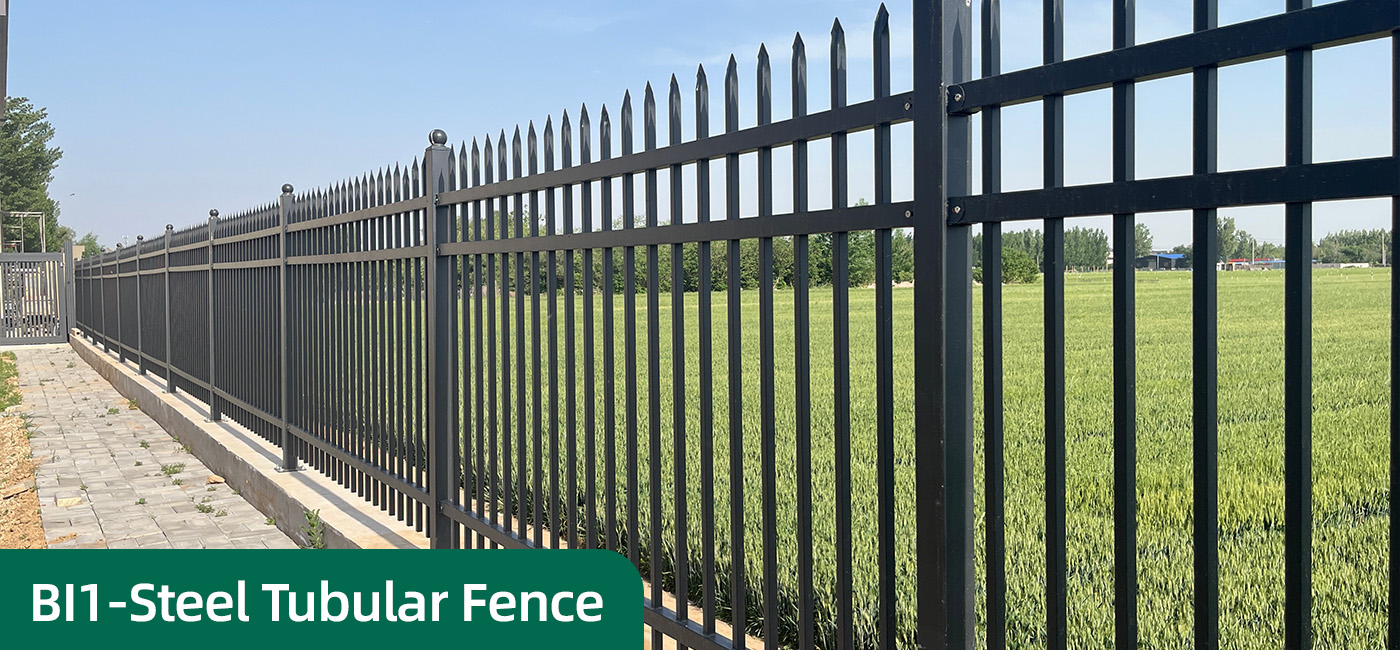
A zinc steel fence, commonly referring to a galvanized steel fencing system with a protective decorative finish, combines the strength of steel with corrosion-resistant surface treatment.
BenDin (Hebei Bendin Industrial Technology Co., Ltd.) manufactures customizable steel fencing systems for international construction and perimeter protection projects.
This guide explains the corrosion protection technologies, typical specifications, coating selection principles and installation considerations for zinc steel fencing.
1. What Is a Zinc Steel Fence?
A zinc steel fence is generally manufactured using steel tubes, rails, pickets or other fabricated steel components protected by zinc-based coatings.
Many decorative zinc steel fencing systems also receive a powder-coated finish to provide color and additional surface protection.
A typical system consists of:
- Vertical steel pickets
- Horizontal steel rails
- Supporting posts
- Connection brackets and fasteners
- Matching pedestrian or vehicle gates
The term zinc steel does not necessarily mean that the structural material is a special zinc-steel alloy. In many commercial applications, it refers to galvanized steel components.
The actual base material, galvanizing process and coating system should be confirmed in the technical specification.
2. Why Corrosion Protection Matters for Steel Fencing
Unprotected carbon steel can corrode when exposed to moisture and oxygen.
Outdoor environments may also introduce additional corrosion risks from:
- Coastal salt
- Industrial pollutants
- Persistent humidity
- Rainfall
- Temperature fluctuations
- Ground-level moisture
Corrosion can affect both appearance and structural durability over time.
A suitable protective coating system helps reduce direct exposure of the steel substrate to the surrounding environment.
The required coating system depends on the location, intended service period, maintenance plan and project specification.
3. Hot-Dip Galvanizing for Zinc Steel Fences
Hot-dip galvanizing is a widely used method of protecting fabricated steel components against corrosion.
During the process, appropriately prepared steel is immersed in molten zinc, producing a metallurgically bonded zinc coating.
Main Advantages
- Zinc-based corrosion protection
- Coverage of accessible steel surfaces
- Suitability for many outdoor applications
- Compatibility with additional coating systems when properly prepared
Galvanizing Thickness
The required zinc coating thickness depends on factors such as:
- Steel thickness
- Applicable galvanizing standard
- Material composition
- Project requirements
For example, a project may specify a nominal or minimum coating thickness in micrometers.
However, a claim such as “zinc thickness exceeds 80 μm” should only be used when supported by the actual production specification and inspection records.
Relevant Standard
ISO 1461 specifies requirements and test methods for hot-dip galvanized coatings on fabricated iron and steel articles.
Where ISO 1461 is specified, the applicable coating thickness and inspection requirements should be confirmed for the relevant steel components.
4. Polyester Powder Coating for Decorative Steel Fences
Polyester powder coating is commonly used to provide decorative color and an additional protective layer.
A typical powder coating process includes:
- Surface preparation
- Cleaning and pretreatment
- Powder application
- Thermal curing
- Finished coating inspection
Main Benefits
Color Customization
Powder-coated steel fences can be produced in a wide range of colors.
Common selections include:
- RAL 6005 Moss Green
- RAL 7016 Anthracite Grey
- RAL 9005 Jet Black
- RAL 9016 Traffic White
Architectural Appearance
Powder coating provides a consistent decorative finish suitable for residential, commercial and municipal environments.
Additional Surface Protection
When properly selected and applied, the coating helps protect the underlying metal surface.
Coating Performance
The performance of a powder coating depends on:
- Coating formulation
- Surface preparation
- Film thickness
- Curing conditions
- Environmental exposure
Not all powder coatings provide identical outdoor durability.
For demanding projects, coating specifications and testing requirements should be established before production.
5. Duplex Coating: Galvanizing Plus Powder Coating
A duplex coating system combines galvanizing with an organic coating such as polyester powder.
This approach is frequently selected when a project requires both corrosion protection and decorative appearance.
How the System Works
The galvanized layer protects the steel substrate, while the powder coating forms an additional barrier and provides the required color.
A simplified coating structure is:
| Layer | Function |
|---|---|
| Steel Substrate | Structural support |
| Galvanized Zinc Coating | Corrosion protection |
| Surface Preparation | Promotes coating adhesion |
| Polyester Powder Coating | Decorative finish and additional protection |
Surface preparation is a process stage, not necessarily a separate physical coating layer.
Therefore, descriptions such as four-layer corrosion protection should only be used when the actual coating structure has been defined and verified.
When Is Duplex Coating Useful?
It may be considered for:
- Residential developments
- Commercial properties
- Municipal landscaping
- Industrial facilities
- Projects requiring customized colors
For highly corrosive environments, the complete system should be evaluated against the specified exposure conditions.
6. Typical Zinc Steel Fence Specifications
BenDin can discuss customized fencing configurations based on project requirements.
The following figures are indicative options for product planning rather than a fixed catalog.
| Parameter | Typical Options |
|---|---|
| Product Type | Zinc Steel Fence |
| Base Material | Carbon Steel / Galvanized Steel |
| Fence Height | 1000–2500 mm |
| Panel Width | 2000–3000 mm |
| Picket Profile | Square / Rectangular Steel Tube |
| Rail Profile | Square / Rectangular Steel Tube |
| Post Type | Square Steel Post |
| Surface Treatment | Galvanized / Powder Coated / Duplex |
| Common Colors | RAL 6005 / RAL 7016 / RAL 9005 |
| Connection Type | Welded / Mechanical Connection |
| Gate Options | Single Swing / Double Swing / Sliding |
| Installation | Embedded Post / Base Plate |
| Customization | Dimensions / Profiles / Colors / Accessories |
Final specifications must be confirmed according to structural requirements, installation conditions and manufacturing capabilities.
7. Zinc Steel Fence for Different Outdoor Environments
Different locations may require different corrosion protection strategies.
Residential Communities
Residential fencing often needs to balance appearance, durability and maintenance.
A powder-coated galvanized steel system may be suitable where a consistent architectural finish is required.
Municipal Parks and Public Spaces
Public landscaping projects may prioritize:
- Decorative appearance
- Weather resistance
- Easy cleaning
- Replacement of damaged components
The coating color should complement the surrounding environment.
Industrial Facilities
Industrial sites may expose fences to pollutants, moisture or other environmental factors.
The coating specification should reflect the actual exposure conditions rather than relying only on the product name.
Coastal Environments
Salt-laden air can increase corrosion risk.
For coastal projects, buyers should pay particular attention to:
- Galvanizing specifications
- Coating preparation and adhesion
- Fastener corrosion resistance
- Drainage and water-trapping details
- Maintenance requirements
A coastal application does not automatically guarantee a particular service life.
8. Zinc Steel Fence vs Traditional Painted Steel Fence
| Feature | Galvanized and Powder-Coated Steel Fence | Conventionally Painted Steel Fence |
|---|---|---|
| Steel Substrate | Steel | Steel |
| Zinc Protection | Usually Included in Duplex Systems | Not Necessarily Included |
| Decorative Finish | Powder Coating | Liquid Paint |
| Corrosion Resistance | Depends on Complete Coating System | Depends on Surface Preparation and Paint System |
| Maintenance | Depends on Exposure and Damage | Depends on Exposure and Damage |
| Color Options | Wide Range | Wide Range |
| Outdoor Suitability | Project-Dependent | Project-Dependent |
A properly specified conventional paint system can also provide good performance.
The correct comparison should consider coating specifications, installation environment and maintenance requirements rather than assuming one product always outperforms another.
9. Illustrative Project Example: Residential Community Boundary
Consider a residential development planning approximately 750 meters of decorative perimeter fencing.
The project requires a modern appearance, controlled access and a protective coating suitable for outdoor exposure.
Preliminary Configuration
| Item | Example Requirement |
|---|---|
| Application | Residential Community |
| Fence Length | 750 m |
| Fence Height | 1800 mm |
| Nominal Panel Width | 2500 mm |
| Material | Steel Tubular Components |
| Surface Treatment | Galvanized + Polyester Powder Coated |
| Color | RAL 7016 |
| Post Type | Square Steel Post |
| Gate Type | Pedestrian and Vehicle Gates |
| Installation | Engineered Post Foundations |
Preliminary Panel Quantity
750 m ÷ 2.5 m = 300 nominal panel positions
The final quantity must be adjusted for:
- Gate openings
- Corners
- Site slopes
- Non-standard sections
- Installation clearances
Why Select a Duplex Finish?
The project requires a consistent dark grey appearance and reduced exposure of the steel substrate to outdoor moisture.
A galvanized and powder-coated finish can be evaluated against those requirements.
The actual coating specification should be confirmed based on the local environment and intended maintenance plan.
This is a hypothetical project example and does not represent a completed BenDin customer installation.
10. Modular Zinc Steel Fence Installation
Modular fencing systems can simplify transportation, handling and on-site assembly when designed appropriately.
Common installation steps include:
Step 1: Site Measurement
Confirm the perimeter length, ground levels, gate positions and obstacles.
Step 2: Post Layout
Determine post spacing and foundation positions according to the approved design.
Step 3: Post Installation
Install supporting posts using the specified embedded or base-plate method.
Step 4: Panel Connection
Attach panels using the approved brackets, fasteners or connection system.
Step 5: Alignment and Inspection
Check:
- Fence alignment
- Post verticality
- Panel connections
- Gate operation
- Coating damage
- Installation clearances
Can Modular Fencing Reduce Installation Time?
Prefabricated components may reduce some on-site fabrication work.
However, installation time depends on site conditions, crew experience, foundation design and the connection system.
A specific claim such as “60% faster installation” requires a documented comparison using equivalent installation conditions.
11. Quality Control for Zinc Steel Fence Production
Quality control should focus on measurable product characteristics.
Depending on the agreed purchase specification, inspections may include:
- Steel material verification
- Profile dimension checks
- Welding quality inspection
- Galvanizing thickness measurement
- Powder coating thickness measurement
- Coating adhesion evaluation
- Finished product dimension checks
- Connection accessory inspection
- Packaging verification
Inspection methods and acceptance criteria should be established before manufacturing.
12. How Long Does a Zinc Steel Fence Last?
The service life of a zinc steel fence depends on multiple factors, including:
- Steel thickness
- Galvanizing quality
- Coating system
- Installation environment
- Design details
- Maintenance frequency
- Physical damage
It is not technically reliable to guarantee a universal service life based only on the use of galvanized steel and powder coating.
For projects requiring a specific design life, buyers should request documented coating specifications and suitable performance evidence.
13. Maintenance Recommendations
Although galvanized and powder-coated fences generally require less frequent repainting than unprotected steel, periodic inspection remains important.
Recommended maintenance activities include:
- Cleaning dirt and contaminants
- Checking coating damage
- Inspecting fasteners
- Examining areas where water accumulates
- Repairing damaged protective finishes
- Checking gate hinges and moving components
The maintenance schedule should reflect the local environment and operating conditions.
14. BenDin Custom Zinc Steel Fence Solutions
BenDin provides customized fencing solutions for different project applications.
Customization discussions may include:
Structural Design
- Fence height
- Panel width
- Steel profile dimensions
- Post configuration
Appearance
- Picket arrangement
- Decorative details
- RAL colors
Surface Protection
- Galvanizing requirements
- Powder coating specifications
- Duplex coating options
Complete System
- Fence panels
- Supporting posts
- Connection accessories
- Pedestrian gates
- Vehicle gates
For accurate production planning, buyers should provide technical drawings, required specifications and project quantities.
15. Frequently Asked Questions
What is a zinc steel fence?
A zinc steel fence generally refers to a steel fencing system with zinc-based corrosion protection, often combined with a decorative coating.
Is zinc steel fence made from zinc alloy?
Not necessarily. Many products marketed as zinc steel fencing use galvanized carbon steel rather than a special structural zinc alloy.
What is the difference between galvanizing and powder coating?
Galvanizing applies zinc protection to steel, while powder coating provides an organic surface finish. They serve different functions and may be combined.
Is galvanized and powder-coated fencing suitable for coastal areas?
It may be suitable when the coating system is correctly specified for the environmental conditions. Actual performance should be verified against the project requirements.
Can BenDin customize zinc steel fence dimensions?
Yes. Dimensions, profiles, finishes and accessories can be discussed according to manufacturing capabilities and project specifications.
Does zinc steel fencing require maintenance?
Yes. Periodic cleaning, inspection and repair of damaged coatings are recommended.
16. Request a Zinc Steel Fence Quotation
BenDin supplies customizable zinc steel fencing systems for residential, commercial, municipal and industrial projects.
For a technical quotation, please provide:
- Project application
- Fence length and height
- Preferred panel design
- Steel profile requirements
- Surface treatment
- Color
- Gate requirements
- Installation location
- Delivery destination
Contact BenDin to discuss a galvanized and powder-coated steel fencing solution based on your project specifications.