



Vertical Tube Fence: Materials, Specifications and Applications
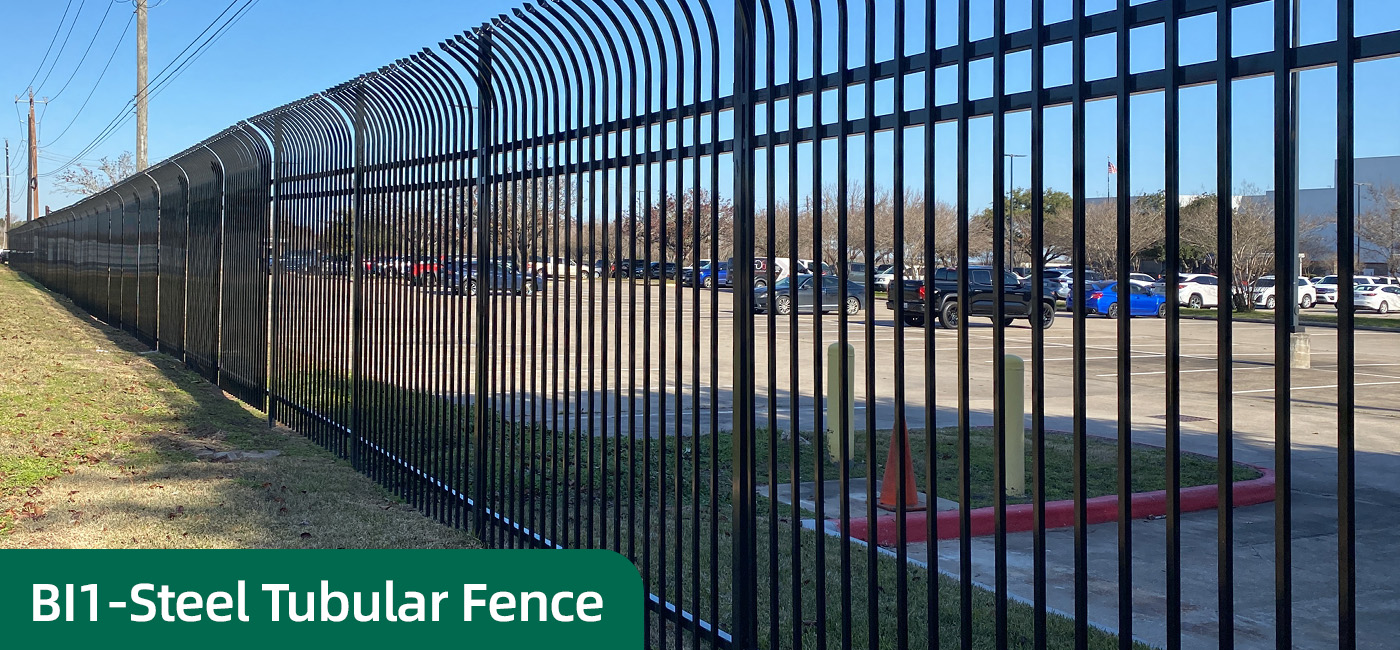
Vertical tube fencing is a metal fencing system characterized by evenly spaced vertical steel tubes or bars connected to horizontal rails and supporting posts. Its clean lines, open structure and customizable appearance make it suitable for residential communities, schools, commercial properties, industrial facilities and municipal landscaping projects.
Unlike welded wire mesh fencing, vertical tube fencing uses tubular or bar-shaped infill components to create a more architectural appearance. The design can be adapted to different fence heights, tube profiles, spacing requirements, colors and gate configurations.
Bendin (Hebei Bendin Industrial Technology Co., Ltd.) supplies customizable metal fencing products for residential, commercial and public-space applications. Depending on the selected design, options can include steel tubes, horizontal rails, supporting posts, galvanized components, powder-coated finishes and matching access gates.
This guide explains vertical tube fence construction, typical specifications, material options, corrosion protection, installation considerations and applications for international projects.
1. What Is a Vertical Tube Fence?
A vertical tube fence is a metal boundary system in which vertical tubes or bars are fixed between horizontal rails and supported by posts.
The finished structure creates a defined boundary while retaining an open appearance.
A typical system may include:
- Vertical steel tubes or bars
- Horizontal rails
- Supporting steel posts
- Rail-to-post connections
- Tube-to-rail connections
- Post caps and mounting accessories
- Pedestrian gates
- Vehicle access gates
- Galvanized or powder-coated finishes
The complete fence’s performance depends on the steel specification, tube dimensions, spacing, connection quality, post design, foundations and environmental exposure.
Vertical tube fencing is sometimes described as vertical bar fencing or metal picket fencing. The exact product structure should be confirmed before ordering.
2. Main Advantages of Vertical Tube Fencing
Clean Architectural Appearance
The regular arrangement of vertical tubes creates a consistent appearance that can complement modern buildings, residential developments and landscaped public spaces.
Tube profiles, spacing and colors can be coordinated with the surrounding architecture.
Open Visibility
The spaces between vertical tubes allow light and air to pass through the fence.
This can be useful for properties where visibility is important, although the actual degree of visibility depends on tube spacing and profile dimensions.
Customizable Construction
Tube diameter, profile shape, rail arrangement, panel width and fence height can be selected according to the project requirements.
Customization should be based on the intended function, local requirements and manufacturing capabilities.
Coordinated Gates and Posts
Matching posts and gates can help maintain a consistent appearance across the complete boundary.
The gate structure should be designed separately where additional loads are generated by hinges, latches or automated operating equipment.
Practical Maintenance
A suitable corrosion-protection system can help reduce maintenance requirements.
Actual maintenance needs depend on the coating, installation, environmental exposure and condition of the fence.
3. Typical Vertical Tube Fence Specifications
Bendin can discuss customized configurations according to product drawings and manufacturing capabilities.
| Parameter | Typical Options |
|---|---|
| Product Type | Vertical Tube Fence / Vertical Bar Fence |
| Main Material | Steel Tube / Steel Profile |
| Infill Design | Vertical Tubes or Bars |
| Tube Profile | Round / Square / Rectangular, subject to design |
| Fence Height | Approximately 0.8–2.4 m for selected products, subject to requirements |
| Panel Width | Customized |
| Tube Diameter or Width | Product-specific |
| Tube Wall Thickness | Product-specific |
| Tube Spacing | Customized according to design and applicable requirements |
| Horizontal Rails | Steel Profiles, according to the design |
| Post Type | Square / Rectangular / Other Compatible Profiles |
| Surface Treatment | Galvanized / Powder Coated / Duplex Coating |
| Color | RAL Colors / Project-Specific Colors |
| Gates | Single Swing / Double Swing / Sliding, where available |
| Customization | Height / Width / Tube Profile / Spacing / Color / Gate |
These are indicative options rather than a fixed specification for every product. Actual tube dimensions, wall thickness, spacing, panel size, coating requirements and connection details should be confirmed before ordering.
4. Choosing the Right Vertical Tube Profile
Tube profile selection affects the appearance, fabrication and structural characteristics of the fence.
Round Tubes
Round tubes have a circular cross-section and can create a softer visual appearance.
They may be considered for residential boundaries, parks and selected commercial properties.
The required tube diameter and wall thickness depend on the fence design and loading conditions.
Square Tubes
Square tubes provide a regular geometric appearance and defined connection faces.
They may be suitable for modern residential developments, schools and commercial properties.
Rectangular Tubes
Rectangular tubes have different dimensions along their two cross-sectional axes.
Their suitability depends on the section dimensions, orientation, connection method and required structural performance.
A rectangular profile is not automatically stronger than a square or round profile under every loading condition.
Selecting the Appropriate Profile
Before ordering, confirm:
- Tube shape
- Outside dimensions
- Wall thickness
- Steel specification
- Tube spacing
- Connection method
- Surface treatment
- Intended application
The complete fence should be evaluated as a system rather than selecting tubes solely by appearance.
5. Tube Spacing and Fence Height
Tube spacing and fence height influence the appearance and functional performance of vertical tube fencing.
Tube Spacing
The gap between adjacent tubes should be selected according to the project’s intended function and applicable requirements.
Smaller gaps may be appropriate where closer separation is required, while wider spacing can create a more open appearance.
For schools and other areas used by children, opening dimensions should be checked against the relevant safety requirements.
Fence Height
The appropriate height depends on the boundary purpose, site conditions, local requirements and desired appearance.
A decorative residential fence may require a different height from an industrial boundary or a public facility.
There is no single height suitable for every vertical tube fence.
Panel Width
Panel width affects the number of posts required and the installation layout.
The panel dimensions should be coordinated with corners, changes in direction, gate openings and foundation positions.
6. Materials and Corrosion Protection
Outdoor metal fencing may be exposed to rain, humidity, sunlight, pollution and coastal conditions.
The appropriate material and coating system should be selected according to the environment.
Galvanized Steel
Galvanized steel uses a zinc coating to help protect the steel substrate against corrosion.
It is commonly considered for outdoor fencing.
Powder-Coated Steel
Powder coating provides a decorative finish and an additional protective layer when applied over an appropriately prepared substrate.
It allows the fence to be coordinated with buildings, gates and surrounding landscaping.
Galvanizing Plus Powder Coating
A compatible galvanized substrate combined with powder coating may be selected where both corrosion protection and appearance are important.
The coating specification should reflect the expected environmental exposure and maintenance requirements.
Stainless Steel
Stainless steel may be considered for selected projects requiring particular corrosion-resistance or appearance characteristics.
Its suitability depends on the grade, environment, budget and project specification.
Stainless steel should not automatically be considered necessary for every outdoor fence.
A specific service-life claim should only be published when supported by product data and clearly defined environmental conditions.
7. Vertical Tube Fence for Residential Communities
Residential communities often require fencing that defines property boundaries while maintaining a consistent architectural appearance.
Vertical tube fencing may be used for:
- Residential perimeter boundaries
- Shared gardens
- Community entrances
- Pedestrian access areas
- Selected internal boundaries
Important considerations include fence height, tube spacing, color, post design and gate coordination.
For large developments, standardized panel dimensions can simplify procurement and help maintain a consistent appearance across different sections of the property.
8. Vertical Tube Fence for Schools and Public Facilities
Schools and public facilities may require a clearly defined boundary with appropriate visibility and controlled access.
The design should consider:
- Required boundary function
- Tube spacing and opening dimensions
- Accessible edges and projections
- Gate operation
- Pedestrian circulation
- Maintenance requirements
- Applicable local safety requirements
The fence should be selected according to the facility’s needs rather than assuming that a standard decorative fence is suitable for every public-space application.
9. Vertical Tube Fence for Commercial and Industrial Properties
Commercial and industrial properties may use vertical tube fencing to define boundaries around offices, warehouses, factories and service areas.
Potential applications include:
- Commercial property boundaries
- Office complexes
- Warehouse entrances
- Factory perimeters
- Selected industrial compounds
- Utility and service areas
The appropriate tube dimensions, post arrangement and coating depend on the site’s environmental exposure and required level of protection.
For high-security locations or areas exposed to particular impact hazards, a dedicated security fencing system may be more appropriate than a standard decorative vertical tube fence.
10. Matching Vertical Tube Fence Gates
Gates are an important part of a complete fencing system.
Single Swing Gates
Single swing gates may be suitable for pedestrian entrances and selected narrow openings.
The design should account for the clear opening, hinge arrangement, latch and available operating space.
Double Swing Gates
Double swing gates provide a wider opening through two moving leaves.
They may be considered for vehicle entrances where sufficient space is available for the gate leaves to open.
Sliding Gates
Sliding gates move laterally and may be suitable where swing clearance is limited.
The design must account for lateral space, ground conditions, guides, tracks or other specified supporting components.
Gate Posts and Hardware
Gate posts may require different dimensions and foundations from intermediate fence posts because they support hinges, latches and operating loads.
The gate frame, infill tubes, finish and accessories should be coordinated with the main fence design.
11. Vertical Tube Fence vs. Welded Mesh Fence
Vertical tube fencing and welded mesh fencing serve different design preferences and functional requirements.
| Feature | Vertical Tube Fence | Welded Mesh Fence |
|---|---|---|
| Main Structure | Vertical tubes or bars between rails | Welded wire grid |
| Appearance | Architectural, linear design | Regular mesh pattern |
| Visibility | Depends on tube spacing | Depends on mesh opening |
| Customization | Tube profile, spacing and rail design | Wire diameter, mesh opening and panel size |
| Typical Applications | Residential, commercial and public boundaries | Industrial, sports and general perimeter fencing |
| Main Selection Factor | Appearance and tube configuration | Mesh structure and functional requirements |
Neither product is automatically better for every project. Selection should reflect the required appearance, security function, installation method and budget.
12. Installation Considerations
A typical vertical tube fence installation includes the following steps.
Step 1: Survey the Fence Line
Measure the boundary and identify corners, changes in direction, gate locations and ground-level changes.
Step 2: Confirm Panel Dimensions
Check the fence height, panel width, tube spacing and post positions against the approved layout.
Step 3: Prepare the Foundations
Determine whether posts will be embedded or fixed using base plates and suitable anchors.
Step 4: Install the Posts
Position the posts according to the approved layout an