


Temporary Edge Protection Systems: Installation, Applications and Buying Guide
Temporary edge protection systems are an important part of managing fall hazards on construction sites and elevated work areas.
During building construction, workers may be exposed to unprotected floor edges, roof perimeters, platforms and other elevated locations. Suitable protective systems help establish physical boundaries and reduce the risk of falls.
Modular steel mesh edge protection systems can provide visibility, reusable components and flexible installation arrangements for different construction stages.
BenDin manufactures customizable steel mesh panels and protective barrier components for construction and industrial applications.
This guide explains the main components, construction applications, installation considerations and purchasing requirements for temporary edge protection systems.

What Is a Temporary Edge Protection System?
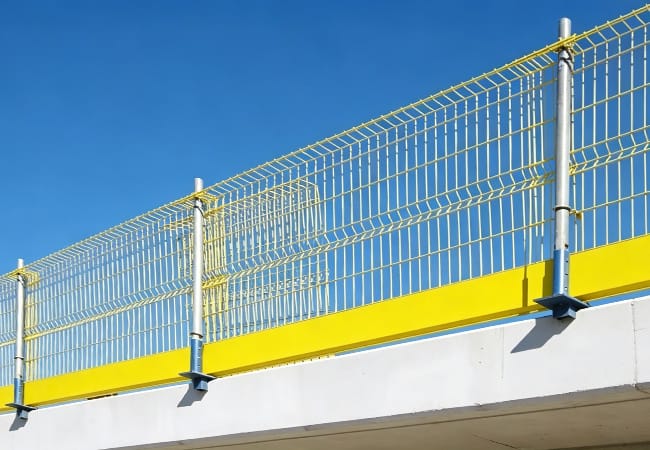
A temporary edge protection system is a collective protective arrangement installed to help prevent falls from exposed edges during construction or maintenance activities.
Depending on the application, the complete system may include:
- Steel mesh protection panels
- Supporting posts
- Guardrail elements
- Toe boards
- Connection clamps
- Fixing brackets
- Anchors or other supporting devices
The system must be designed for the intended use and installed according to the applicable safety requirements.
A standard welded mesh fence panel should not automatically be treated as a compliant temporary edge protection system.
Where Are Temporary Edge Protection Systems Used?
Building Floor Edges
During multi-story building construction, temporary protection may be required around exposed slab edges.
Modular systems can be repositioned as construction progresses, provided that relocation follows an approved safety procedure.
Roof Construction
Roof work may involve fall hazards at roof edges and other openings.
The appropriate protection depends on roof geometry, slope, supporting structure and applicable requirements.
Bridge Construction
Bridge decks and elevated infrastructure projects may require temporary edge protection during different construction phases.
The system must be selected according to the relevant structural and installation conditions.
Elevated Platforms
Temporary work platforms and access areas may require suitable guardrails or other collective protective measures.
Stairwells and Floor Openings
Openings and changes in elevation may require protective arrangements designed for the specific hazard.
Main Components of a Modular Edge Protection System
Steel Mesh Panels
Welded steel mesh panels can provide a visible barrier between workers and hazardous edges.
Panel dimensions and openings must be selected according to the approved system design.
Supporting Posts
Posts transfer loads from the barrier into the supporting structure.
Post dimensions, spacing and fixing arrangements are critical to the performance of the complete system.
Connection Components
Clamps and brackets connect panels to supporting posts.
They should be compatible with the selected system and installed according to the manufacturer’s instructions.
Toe Boards
Where required, toe boards help reduce the risk of materials or tools falling from elevated work areas.
A mesh panel alone may not provide adequate protection against falling objects.
Typical Edge Protection System Specifications
The following table outlines indicative manufacturing options for steel mesh components.
| Item | Indicative Options |
|---|---|
| Product Type | Temporary Steel Mesh Edge Protection |
| Panel Material | Carbon Steel |
| Mesh Construction | Welded Steel Wire |
| Wire Diameter | 2.2–3.5 mm |
| Frame Material | Q235 Steel |
| Panel Height | According to Approved System Design |
| Panel Width | According to Approved System Design |
| Mesh Opening | Project-Specific |
| Surface Treatment | Galvanized / Powder Coated |
| Common Colors | Yellow, Red, Blue |
| Supporting Posts | System-Specific |
| Connection | Approved Clamps and Brackets |
| Installation | According to Approved Instructions |
These are indicative component options, not certified system specifications. Dimensions, structural performance and connection details must be established for the complete system.
Why Modular Edge Protection Systems Are Used
Modular edge protection systems can provide several practical advantages when correctly designed and installed.
Reusable Components: Panels and posts may be reused across suitable projects after inspection.
Flexible Layout: Modular sections can accommodate different construction stages.
Clear Visibility: Mesh panels allow workers and supervisors to see through the protected boundary.
Replaceable Parts: Damaged components may be replaced individually where permitted by the system design.
Transport and Storage: Standardized components can simplify handling and inventory management.
These benefits depend on the actual product configuration and site procedures.
Surface Treatment for Outdoor Construction
Construction equipment is frequently exposed to weather, dust and repeated handling.
Suitable surface treatments help protect steel components.
Hot-Dip Galvanizing
Galvanizing applies a protective zinc coating to steel.
The process and required coating specification should be confirmed before manufacturing.
Powder Coating
Powder coating provides a colored surface finish.
Bright colors may improve the visibility of temporary protective boundaries.
Combined Coating Systems
Galvanizing and powder coating can be combined where appropriate.
The suitability of the coating system depends on surface preparation, manufacturing requirements and environmental exposure.
Installation Considerations
Temporary edge protection is a safety-critical system.
Before installation, contractors should verify:
- The supporting structure is suitable
- Fixings and anchors meet the approved design
- Posts and panels are correctly positioned
- Connections are fully secured
- Required protection heights are maintained
- Openings and transitions are appropriately protected
- Inspection procedures are established
Installation should follow the approved system instructions.
Workers should not modify or remove protective components without appropriate authorization and alternative protection arrangements.
Applicable Safety Standards
Different countries have different requirements for construction fall protection.
European Applications
EN 13374 is an important standard for temporary edge protection systems.
It establishes requirements and test methods for relevant systems and distinguishes between different performance classes.
The appropriate class depends on the intended application and site conditions.
United States
Relevant OSHA construction fall-protection requirements may include 29 CFR 1926 Subpart M.
The applicable requirements depend on the work activity and protective method.
Other Markets
Projects in Australia, the Middle East and other regions may have their own regulatory and technical requirements.
Buyers should confirm the applicable local requirements before specifying a system.
Important: Manufacturing a steel mesh panel does not automatically establish compliance with EN 13374, OSHA or other safety requirements. Compliance must be supported by appropriate system-level design, testing and documentation.
Example: Multi-Story Building Construction Project
Consider a construction project requiring approximately 360 meters of temporary edge protection during a particular construction phase.
A preliminary material planning example might include:
| Item | Example Requirement |
|---|---|
| Required Protection Length | 360 m |
| Nominal Panel Width | 2.4 m |
| Panel Type | Steel Mesh |
| Frame Material | Q235 Steel |
| Surface Treatment | Galvanized |
| Installation | Approved System Components |
| Application | Building Floor Edges |
Using nominal 2.4-meter panel sections:
360 ÷ 2.4 = approximately 150 panels.
Additional panels and supporting components may be required for corners, openings, transitions and replacement inventory.
This is an illustrative material quantity calculation, not a completed BenDin project or an approved fall-protection design.
Can Reusable Edge Protection Reduce Project Costs?
Reusable components may help reduce material purchases across multiple construction projects.
However, the financial benefit depends on:
- Initial purchase cost
- Installation labor
- Removal labor
- Transport expenses
- Storage requirements
- Inspection and maintenance
- Damage and replacement rates
- Number of reuse cycles
For example, if a system can be safely reused on several projects, its purchase cost may be distributed across those projects.
However, reuse must be permitted by the system design and should occur only after the required inspections.
Damaged or unsuitable components must not be reused simply to reduce costs.
How to Choose a Temporary Edge Protection Supplier
Construction buyers should evaluate both manufacturing quality and system suitability.
1. Confirm the Application
Identify whether the system is intended for building floors, roofs, platforms or another location.
2. Identify the Required Standard
Confirm the applicable regulations and performance class.
3. Review Technical Drawings
Check panel dimensions, posts, connections and installation arrangements.
4. Request Performance Documentation
Obtain relevant test reports, engineering information and installation instructions where required.
5. Confirm Surface Treatment
Specify corrosion protection suitable for the expected environment.
6. Evaluate Reuse Requirements
Consider inspection, replacement and maintenance procedures.
7. Confirm Packaging and Delivery
Ensure components can be identified and transported according to project requirements.
Custom Steel Mesh Edge Protection Components
BenDin can manufacture steel mesh panels and related components according to confirmed project drawings.
Customization options include:
- Panel dimensions
- Wire diameter
- Mesh opening
- Frame dimensions
- Steel material
- Surface treatment
- RAL colors
- Connection details
- Export packaging
For safety-critical applications, the complete system design and required performance criteria should be established before production.
Frequently Asked Questions
What is a temporary edge protection system?
It is a temporary protective arrangement used to help prevent falls from exposed edges during construction or maintenance work.
Can temporary edge protection panels be reused?
They may be reusable if the system design permits reuse and the components pass the required inspections.
Is steel mesh suitable for edge protection?
Steel mesh can be used as part of a properly designed edge protection system. Suitability depends on the complete system and its intended application.
What is EN 13374?
EN 13374 is a European standard addressing temporary edge protection systems, including performance requirements and test methods.
Can BenDin manufacture customized edge protection panels?
Yes. BenDin can manufacture steel mesh panels and related components according to confirmed drawings and technical specifications.
Request a Temporary Edge Protection Quote
BenDin supplies customizable steel mesh panels and protective barrier components for construction and industrial projects.
For an accurate quotation, please provide:
Application + required standard + approved drawings + panel dimensions + mesh specifications + supporting components + quantity + destination.
BenDin can manufacture components according to confirmed technical requirements.