



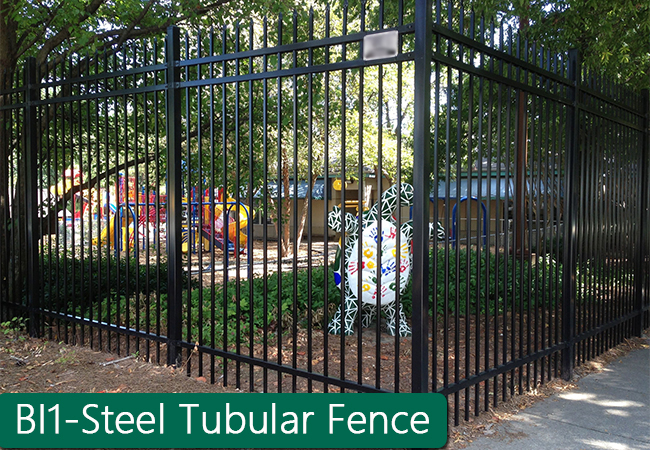
Steel Tubular Fence for Durable Perimeter Protection
A steel tubular fence provides a practical combination of structural strength, open visibility and clean architectural appearance for residential, commercial and industrial perimeter projects.
Unlike flexible wire fencing, tubular fencing uses rigid steel tubes, horizontal rails and supporting posts to create a stable perimeter structure. Its modular panel design also makes transportation, installation and component replacement more convenient for different project environments.
Bendin provides customizable steel tubular fencing with different heights, tube dimensions, spacing, surface treatments, colors, posts and gate configurations to meet project-specific requirements.
What Is a Steel Tubular Fence?
A steel tubular fence is a rigid metal fencing system manufactured primarily from hollow steel tubes.
Vertical tubular pickets are typically connected to horizontal support rails through welding to form complete fence panels. These panels are then installed between supporting posts to create a continuous perimeter.
A typical tubular fencing system can include:
- Steel tubular fence panels
- Vertical tubular pickets
- Horizontal support rails
- Steel fence posts
- Mounting brackets
- Fasteners
- Post caps
- Pedestrian gates
- Swing gates
- Sliding gates
Compared with solid barriers, the spaces between the tubular pickets maintain visibility and airflow while still defining and protecting the perimeter.
Strong Steel Tubular Structure
Structural design is one of the main advantages of tubular fencing.
Bendin tubular fence panels can be manufactured using steel tubular components and reinforced Q235 steel structures according to the required configuration.
The overall performance of a tubular fence depends on several factors:
- Steel material
- Tube diameter
- Tube wall thickness
- Picket spacing
- Horizontal rail dimensions
- Fence height
- Post dimensions
- Welding quality
- Post spacing
- Installation method
For this reason, industrial, commercial and residential projects do not necessarily require the same tubular fence specification.
The appropriate configuration should be selected according to the intended application and site conditions.
Precision-Welded Fence Panels
Tubular fence panels require consistent positioning and reliable connections between the vertical pickets and horizontal rails.
Precision welding helps create a rigid panel while maintaining uniform tube spacing and a neat finished appearance.
Proper manufacturing can provide:
- Consistent panel dimensions
- Stable tubular connections
- Uniform picket spacing
- Clean appearance
- Reliable structural integrity
- Easier on-site installation
After fabrication, welded areas and exposed surfaces should also be properly finished before the required surface treatment is applied.
Hot-Dip Galvanized Tubular Fence
Steel fencing installed outdoors is exposed to rain, humidity and other environmental conditions.
Galvanizing can be used as part of the corrosion-protection system for tubular fencing.
A zinc protective layer helps reduce direct exposure of the underlying steel to moisture and the outdoor environment.
The appropriate galvanizing specification should be selected according to project requirements and installation conditions.
Powder-Coated Tubular Fence
Powder coating can provide an additional protective and decorative surface finish.
It also allows tubular fencing to coordinate with different architectural and landscape designs.
Available colors can include:
- Black
- Green
- Grey
- White
- Other customized RAL colors
For projects requiring both galvanizing and powder coating, the two treatments can be combined according to the required product specification.
This type of surface configuration is particularly useful where corrosion protection and appearance are both important considerations.
Smooth and Practical Surface Design
Fence design should consider not only structural performance but also how people interact with the finished perimeter.
Smooth finishing and controlled edges help reduce unnecessary sharp contact points.
This can be particularly important for fencing installed around:
- Residential communities
- Parks
- Schools
- Commercial properties
- Public facilities
- Pedestrian areas
Top configurations can also be selected according to the intended application.
A residential or public-area fence, for example, may require a different top design from a security-oriented industrial perimeter.
Modular Tubular Fence Design
Bendin tubular fencing can use a prefabricated modular panel system.
Panels are manufactured before delivery and installed between posts at the project site.
This modular approach can provide several practical benefits:
- Faster panel installation
- Easier transportation
- Consistent fence alignment
- Convenient component replacement
- Easier future perimeter modification
- Simplified gate integration
For long perimeter projects, modular construction can also help standardize panel dimensions across the site.
Main Advantages of Steel Tubular Fence
1. Rigid Perimeter Structure
Steel tubes and reinforced support rails create a rigid physical boundary suitable for many permanent perimeter applications.
2. Open Visibility
The spaces between vertical tubes allow visibility through the fence.
This can be useful for security monitoring, CCTV systems and projects where a completely closed boundary is not required.
3. Corrosion Protection Options
Galvanizing and powder coating can be selected according to the required installation environment and project specification.
4. Clean Architectural Appearance
Straight tubular members and uniform spacing create a neat, modern appearance suitable for residential, commercial and public-facing properties.
5. Low Routine Maintenance
Compared with some traditional fencing materials, properly protected steel tubular fencing generally requires relatively straightforward routine maintenance.
6. Flexible Customization
Fence height, tube dimensions, spacing, posts, colors and gate configurations can be customized according to project requirements.
Where Is Steel Tubular Fence Used?
Residential Properties
Tubular fencing can provide boundary protection without creating the visually closed appearance of a solid wall.
Typical residential applications include:
- Private yards
- Villas
- Residential communities
- Apartment developments
- Garden boundaries
- Shared residential facilities
Different colors and panel designs can be selected to coordinate with the surrounding architecture.
Industrial Zones
Factories and industrial facilities often require durable perimeter fencing to define property boundaries and control access.
Steel tubular fencing can be used around:
- Manufacturing facilities
- Industrial parks
- Warehouses
- Equipment areas
- Logistics centers
- Storage facilities
For industrial projects, tube dimensions, wall thickness, fence height and posts should be selected according to project requirements.
Commercial Areas
Commercial properties often need fencing that provides both perimeter protection and a professional appearance.
Applications can include:
- Office buildings
- Shopping facilities
- Hotels
- Parking areas
- Retail properties
- Business parks
Parks and Public Areas
The open structure of tubular fencing makes it suitable for projects where visibility is important.
It can be considered for:
- Urban parks
- Recreational areas
- Public facilities
- Landscape boundaries
- Sports facilities
- Pedestrian areas
Steel Tubular Fence vs Chain Link Fence
Steel tubular fencing and chain link fencing can both provide perimeter separation, but their structures and typical applications are different.
| Feature | Steel Tubular Fence | Chain Link Fence |
|---|---|---|
| Structure | Rigid tubular panels | Flexible woven mesh |
| Appearance | Architectural and uniform | Functional mesh appearance |
| Visibility | Open | Open |
| Terrain Adaptability | Best for planned panel layouts | Highly adaptable |
| Installation | Panel and post system | Mesh roll and post system |
| Custom Colors | Available | Available depending on coating |
| Typical Use | Residential, commercial, industrial | Large areas, sports, farms, general perimeter |
Tubular fencing is often considered where buyers prioritize rigid construction and architectural appearance.
Chain link fencing can be more practical where economical coverage and terrain adaptability are the main considerations.
Steel Tubular Fence vs Welded Wire Fence
A welded wire fence uses steel wires welded together to create a mesh panel, while a tubular fence uses hollow steel sections.
Welded wire fencing can provide smaller openings and is commonly used for industrial and security applications.
Tubular fencing provides a different architectural appearance and is frequently selected for properties where the fence is an important visible part of the overall site design.
The correct option depends on:
- Required security level
- Appearance
- Opening size
- Project budget
- Site conditions
- Installation requirements
Custom Steel Tubular Fence Options
Bendin supports project-specific tubular fence customization.
| Specification | Custom Options |
|---|---|
| Fence Height | According to project requirements |
| Panel Width | Standard or customized |
| Tube Diameter | Multiple specifications |
| Tube Wall Thickness | Project-specific |
| Picket Spacing | Customizable |
| Horizontal Rails | According to panel design |
| Post Dimensions | Multiple configurations |
| Surface Treatment | Galvanized / powder coated |
| Color | Custom RAL colors |
| Top Design | Project-specific |
| Gates | Pedestrian / swing / sliding |
Customers can provide project drawings, BOQs or required dimensions for technical confirmation before production.
How to Choose the Right Steel Tubular Fence
Determine the Application
First identify the main purpose of the fence.
Residential, commercial, public and industrial projects can have different requirements for security, appearance and dimensions.
Choose the Fence Height
Fence height should be selected according to the required perimeter function and applicable project requirements.
Select Tube Dimensions
Tube diameter and wall thickness influence material consumption, weight and structural characteristics.
The appropriate specification should match the actual project requirements.
Determine Picket Spacing
Picket spacing affects:
- Visibility
- Appearance
- Opening size
- Material consumption
- Perimeter function
Spacing should therefore be confirmed according to the intended application.
Select Surface Treatment
Consider the installation environment before determining the coating system.
Important factors include:
- Rainfall
- Humidity
- UV exposure
- Coastal conditions
- Industrial environment
- Temperature variation
Plan Gates and Access
Pedestrian and vehicle gates should be considered during the initial fence design.
This helps ensure consistent dimensions, appearance and access planning across the complete perimeter system.
Installation of Steel Tubular Fence
A typical tubular fence installation process includes:
- Confirm the perimeter layout.
- Mark post positions.
- Prepare foundations.
- Install and align fence posts.
- Position tubular fence panels.
- Connect panels to posts.
- Install gates and accessories.
- Check panel alignment.
- Tighten connections.
- Complete the final inspection.
Foundation design and installation methods should be determined according to site conditions and project requirements.
Maintenance of Tubular Fencing
Routine inspection can help keep tubular fencing in good condition.
Recommended maintenance includes:
- Periodically cleaning the fence surface
- Checking the coating for localized damage
- Inspecting posts and panels
- Checking bolts and brackets
- Repairing damaged coating where necessary
- Checking gate hinges and moving components
- Removing accumulated vegetation and debris around the fence base
Projects in more demanding outdoor environments may require more frequent inspections.
Custom Tubular Fence Solutions From Bendin
Bendin provides steel tubular fencing for international distributors, contractors, engineering companies and project buyers.
Customization can include:
- Fence dimensions
- Tube diameter
- Tube wall thickness
- Picket spacing
- Horizontal rails
- Post dimensions
- Surface treatment
- RAL colors
- Top designs
- Gates
- Accessories
- Packaging
For engineering and bulk procurement projects, customers can provide technical specifications, drawings or BOQs for review.
What Information Is Needed for a Quote?
For a more accurate tubular fence quotation, buyers should provide the following information where available:
- Total fence length
- Required fence height
- Panel width
- Tube dimensions
- Tube wall thickness
- Picket spacing
- Post dimensions
- Surface treatment
- Required color
- Gate sizes and quantities
- Required quantity
- Project drawings or BOQ
- Installation environment
- Destination country or port
If the specification has not yet been finalized, Bendin can review the available project information before the final configuration is confirmed.
FAQ About Steel Tubular Fence
What is a steel tubular fence?
A steel tubular fence is a rigid perimeter system constructed from hollow steel tubes, support rails and posts. The tubular members are typically welded into prefabricated panels before installation.
Is tubular fence suitable for outdoor use?
Yes. Steel tubular fencing is widely used outdoors. The appropriate material and corrosion-protection system should be selected according to the installation environment.
Can tubular fence dimensions be customized?
Yes. Bendin can customize fence height, panel width, tube dimensions, picket spacing, posts, surface treatment and colors according to project requirements.
Is steel tubular fence suitable for industrial sites?
Yes. Tubular fencing can be used for factory, warehouse, logistics and other industrial perimeter applications when the correct specifications are selected.
Can galvanized tubular fence also be powder coated?
Yes. Galvanizing and powder coating can be combined according to the required product configuration.
Can Bendin supply matching gates?
Yes. Matching pedestrian, swing and sliding gate configurations can be produced according to project requirements.
What colors are available?
Powder-coated tubular fencing can be manufactured in different RAL colors according to customer requirements.
Steel Tubular Fence for Your Next Project
A steel tubular fence can provide a practical balance of structural rigidity, open visibility, corrosion protection and architectural appearance.
The final performance of the fencing system depends on selecting appropriate tube dimensions, wall thickness, spacing, posts, surface treatment and installation methods for the actual project.
For residential, commercial, industrial and public perimeter applications, Bendin provides customizable tubular fence systems based on project specifications.
Send Bendin your drawings, required dimensions, quantity and installation information to discuss a suitable tubular fencing configuration for your project.