

Robot Safety Fence for Industrial Automation & Machine Guarding
As industrial automation continues to expand, robots are increasingly used for welding, assembly, palletizing, material handling, cutting, stamping and other automated production processes. While robotic systems improve production efficiency, they also create moving equipment zones that must be properly separated from operators and other personnel.
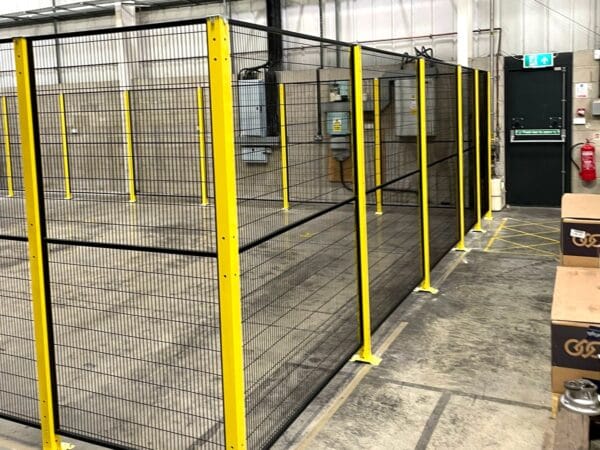
A robot safety fence provides a physical barrier around robotic workstations, automated machinery and restricted production areas. It helps control access to hazardous zones while maintaining the visibility required for production monitoring and equipment maintenance.
Bendin manufactures modular robot safety fencing for industrial automation projects. Available configurations include full-mesh fencing, mesh-and-panel combinations, punched-panel fencing, doors, posts and related accessories, allowing the guarding system to be adapted to different production layouts.
This guide explains the main types, features, applications and selection considerations of robot safety fencing for industrial projects.
What Is a Robot Safety Fence?
A robot safety fence is a modular physical guarding system installed around industrial robots, automated machinery or production cells.
Its primary purpose is to create a clearly defined separation between personnel and areas containing potentially hazardous moving equipment.
A typical robot fencing system can include:
- Welded wire mesh panels
- Steel posts
- Full solid panels
- Perforated or punched panels
- Swing or sliding access doors
- Door frames
- Fixing brackets
- Bolts and connectors
- Floor anchors
- Safety interlock mounting provisions
- Customized corner and connection components
Compared with permanently welded barriers, modular robot fencing can be easier to install, modify, expand and relocate when a production line changes.
Why Is Robot Safety Fencing Important?
Industrial robots can perform rapid and repetitive movements within programmed working envelopes.
During normal production, maintenance or unexpected equipment movement, uncontrolled access to these areas may expose personnel to hazards.
A properly designed machine guarding system helps physically separate operators from robot operating zones and provides controlled entry points for maintenance and production requirements.
Robot safety fencing is therefore commonly incorporated into the overall risk-reduction strategy of automated production lines.
The exact safety configuration should always be determined according to the machinery, robot movement, risk assessment, access requirements and applicable safety standards of the individual project.
Key Features of Bendin Robot Safety Fence
1. Rigid Welded Steel Construction
Bendin robot safety fence panels use welded steel construction to create a stable physical barrier around automated equipment.
Mesh dimensions, wire specifications and panel configurations can be selected according to project requirements.
A properly configured welded mesh structure provides a balance between physical separation and visibility into the robot cell.
2. High Visibility for Production Monitoring
Visibility is an important consideration for automated manufacturing facilities.
Open mesh panels allow operators, technicians and production managers to observe robot movements and production conditions from outside the guarded area.
This helps facilities maintain visual monitoring without unnecessarily entering the robot operating zone.
3. Modular Installation
One of the major advantages of robot safety fencing is modularity.
Standardized panels and posts can be combined into different layouts, including:
- Straight fence lines
- L-shaped layouts
- U-shaped layouts
- Fully enclosed robot cells
- Multiple interconnected robot zones
- Custom production-line configurations
When machinery layouts change, individual panels or fence sections can potentially be repositioned or replaced instead of rebuilding the entire guarding structure.
4. Multiple Panel Configurations
Different automated processes create different guarding requirements.
For this reason, Bendin provides multiple robot safety fence configurations rather than relying on one universal panel design.
Projects can combine mesh, solid and punched panels according to visibility, debris control and process requirements.
5. Corrosion-Resistant Surface Treatment
Robot fencing is commonly used for many years inside industrial facilities.
Galvanized and powder-coated surface options can help protect steel components against corrosion while providing a clean, professional appearance.
Different colors can also be selected to coordinate with factory safety zoning or equipment layouts.
Main Types of Robot Safety Fence
Selecting the appropriate panel structure depends on the type of robot, manufacturing process and potential hazards inside the cell.
Full-Mesh Robot Safety Fence
Full-mesh fencing provides maximum visibility into the guarded area.
It is suitable for many general industrial robot applications where operators need to observe the production process while remaining outside the robot cell.
Typical applications include:
- Robotic assembly
- Palletizing
- Pick-and-place systems
- Packaging lines
- Material handling
- Automated production equipment
Upper-Mesh and Lower-Solid Panel Fence
This design combines an upper mesh section with a lower solid steel panel.
The upper mesh maintains visibility while the lower panel provides additional separation from materials, fragments or process-related debris near floor level.
This configuration can be considered for applications such as:
- Robotic welding cells
- Metal processing
- Stamping areas
- Machining equipment
- Heavy-duty production lines
The final panel configuration should be determined according to the actual hazards generated by the machinery and process.
Full Punched-Panel Safety Fence
Punched or perforated steel panels provide a different balance between visibility and physical separation.
The perforations allow partial visibility and airflow while the steel sheet provides greater coverage than standard welded mesh.
This configuration can be used where a project requires more enclosed guarding while still allowing some observation of the equipment.
Customized Robot Cell Fencing
Not every automation project can be protected using standard panel dimensions.
Customized fencing may be required for:
- Irregular robot workstations
- Multiple robot cells
- Conveyor interfaces
- Automated warehouses
- Restricted maintenance areas
- Production lines with multiple access points
Bendin can manufacture panels, posts and doors according to project layouts and agreed specifications.
Common Applications of Robot Safety Fencing
Automotive Manufacturing
Automotive factories use industrial robots extensively for welding, assembly, handling and component production.
Robot fencing can be installed around individual workstations or complete automated production cells to control personnel access.
Robotic Welding Cells
Welding robots operate repeatedly inside defined work areas.
Depending on the welding process and project risk assessment, guarding systems may require combinations of mesh and solid panels as well as appropriate doors and other protective measures.
Palletizing and Packaging Robots
Automated palletizing systems can involve large and rapid robot movements.
Physical fencing helps establish a restricted operating zone while still allowing workers to observe the palletizing process.
CNC and Automated Machine Areas
Robot safety fencing can also be integrated with CNC machines, loading systems and other automated equipment.
Modular panels make it possible to separate multiple pieces of equipment within a coordinated guarding layout.
Warehouses and Logistics Automation
Modern warehouses increasingly use automated equipment for material movement, sorting and storage.
Safety fencing can separate automated machinery zones from pedestrian routes and conventional working areas.
Electronics and Precision Manufacturing
Automation cells used for assembly, testing and material handling may also require physical separation.
Different mesh and panel configurations can be selected according to the production environment.
Robot Safety Fence Doors and Controlled Access
Access doors are an important component of a complete robot guarding system.
Workers may need to enter the guarded area for:
- Equipment maintenance
- Robot programming
- Cleaning
- Tool replacement
- Product changeover
- Inspection
- Troubleshooting
Robot fencing layouts can therefore incorporate single swing doors, double doors, sliding doors or customized access openings.
Where required by the safety design, door structures can also provide mounting positions for appropriate safety interlock devices.
The complete safety control system, including interlocks, sensors and stopping functions, should be designed and validated according to the machine risk assessment and applicable safety requirements.
How to Choose a Robot Safety Fence
Before purchasing an industrial robot fencing system, buyers should consider more than panel price.
Robot Working Envelope
Determine the maximum operating area of the robot and any associated tooling or workpieces.
The fence layout should be designed around the actual hazardous zone rather than simply following the footprint of the robot base.
Fence Height
Fence height should be selected according to the project risk assessment, machinery arrangement and applicable requirements.
Bendin can manufacture different panel heights according to confirmed project specifications.
Mesh Opening
Mesh opening affects both visibility and physical access through the guarding system.
The required opening should be selected according to the safety design and required separation distance.
Distance From the Hazard
The relationship between opening size, guard position and hazardous machinery is an important part of machine-guarding design.
Project engineers should determine the required safety distance according to the applicable risk assessment and standards.
Door Position
Access points should be planned around maintenance requirements and normal production workflows.
Poorly positioned doors can create unnecessary walking distances or encourage unsafe access behavior.
Production Environment
Consider whether the robot cell involves:
- Welding
- Sparks
- Metal fragments
- Cutting
- Oil or coolant
- Dust
- High humidity
- Frequent washdown
- Special cleanliness requirements
These conditions can influence panel type, coating and overall guarding configuration.
Custom Robot Safety Fence Solutions From Bendin
Automation projects rarely have identical layouts.
Bendin supports OEM and ODM robot safety fencing for machinery manufacturers, system integrators, engineering contractors and industrial end users.
Customization options can include:
| Component | Customization Options |
|---|---|
| Fence Height | According to project requirements |
| Panel Width | Standard or customized |
| Mesh Opening | Multiple specifications |
| Wire Diameter | According to design |
| Panel Type | Mesh / solid / punched / combined |
| Posts | Multiple sizes and configurations |
| Doors | Single / double / sliding |
| Surface | Galvanized / powder coated |
| Color | Custom RAL colors |
| Layout | According to project drawings |
Buyers can provide CAD drawings, equipment layouts, fence dimensions or bills of quantities for technical review.
Modular Design for Production Line Changes
Modern factories frequently reconfigure equipment as products and manufacturing processes change.
A modular robot fencing system can make these changes easier.
Individual panels, posts and doors can be repositioned or replaced when the guarding layout needs to be modified.
This provides an important advantage over permanently constructed walls or fully welded guarding structures, particularly for factories that regularly upgrade automated equipment.
Manufacturing and Quality Control
Bendin manufactures robot fencing using controlled production processes for panels, posts and accessories.
Typical production stages include:
- Raw material preparation
- Wire straightening
- Automated mesh welding
- Steel panel fabrication
- Post manufacturing
- Surface preparation
- Galvanizing or coating
- Powder coating where specified
- Dimensional inspection
- Packing and shipment
Before shipment, products can be checked against the confirmed specifications for dimensions, mesh configuration, surface condition and accessory quantities.
Information Needed for a Robot Safety Fence Quote
Providing complete project information helps manufacturers prepare more accurate quotations and layouts.
When requesting a quote, consider providing:
- Factory or production-line layout
- Robot cell dimensions
- Required fence length
- Required fence height
- Preferred panel type
- Mesh opening requirements
- Number and size of doors
- Surface treatment
- Required color
- Installation environment
- Quantity
- Destination country or port
- Applicable project standards
If a complete specification is not yet available, buyers can provide an equipment layout or preliminary drawing for discussion.
Why Choose Bendin for Robot Safety Fencing?
Bendin focuses on manufacturing fencing and guarding products for industrial applications.
For robot safety fence projects, we support:
- Modular fencing systems
- Multiple panel structures
- Custom dimensions
- Matching posts and accessories
- Customized access doors
- OEM and ODM manufacturing
- Project drawing review
- Export packaging
- Installation guidance
- International project supply
Our objective is to provide a coordinated guarding system that can be integrated into the customer’s industrial automation layout.
FAQ About Robot Safety Fence
What is a robot safety fence used for?
A robot safety fence is used to physically separate personnel from industrial robots and automated machinery. It is commonly installed around robot cells, automated production lines, palletizing systems and other restricted machinery areas.
What is the difference between robot fencing and ordinary warehouse fencing?
Robot fencing is designed as part of an industrial machine-guarding system. Its dimensions, openings, access points and position relative to machinery should therefore be selected according to the hazards and safety requirements of the automated equipment.
Can robot safety fencing be customized?
Yes. Bendin can customize panel dimensions, fence height, mesh configuration, posts, doors, colors and other components according to project requirements.
Can mesh and solid panels be combined?
Yes. A guarding system can combine full-mesh, mesh-and-solid and punched-panel sections depending on visibility and process requirements.
Can Bendin manufacture according to CAD drawings?
Project drawings and equipment layouts can be provided for review. Panels, posts, doors and other components can then be configured according to the agreed guarding layout and manufacturing specifications.
Can robot fencing be modified when a production line changes?
Modular systems are generally easier to reconfigure than permanently constructed barriers. Individual sections may be relocated, added or replaced when the equipment layout changes, subject to a new safety assessment.
Get a Custom Robot Safety Fence Solution
If you are planning a new robotic workstation, automated production line or machine guarding project, selecting the correct fence configuration is an important part of the overall safety design.
Send Bendin your robot cell layout, required dimensions, panel type, access requirements and project specifications.
Our team can review the fencing requirements and provide a customized robot safety fence configuration and quotation for your project.