



Robot Safety Fence: Industrial Automation Safety Solutions and Specifications
Industrial automation has transformed modern manufacturing. Robots, automated assembly systems and smart production lines improve efficiency, but they also require effective safety management to separate operators from hazardous operating areas.
A robot safety fence is a specialized industrial guarding system designed to create a controlled safety zone around robotic equipment.
Unlike ordinary perimeter fencing, robot safety fences must consider:
- Machinery movement range
- Operator access
- Maintenance requirements
- Safety distances
- Door access control
- Production line layout
BenDin manufactures customizable robot safety fence systems for automation factories, machine builders, system integrators and industrial project contractors worldwide.
Based in Anping, China, BenDin combines steel fabrication experience with customized industrial safety solutions for robotic applications.

What Is a Robot Safety Fence?
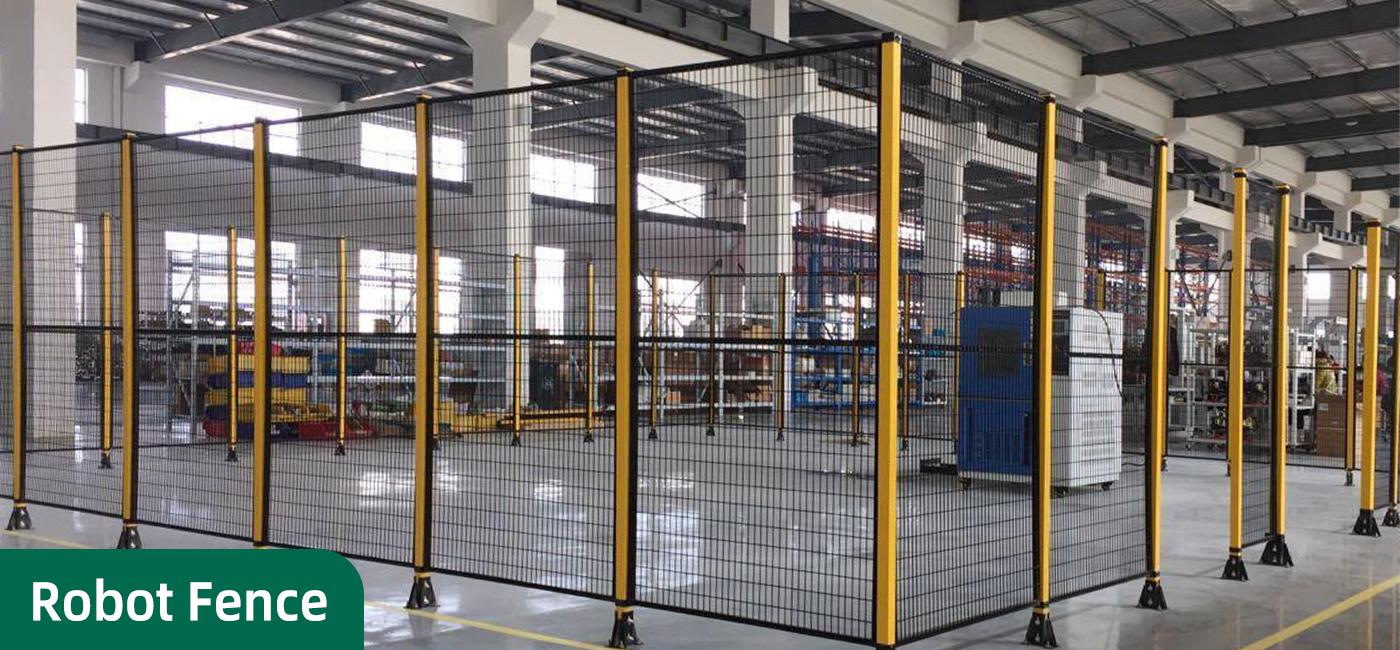
A robot safety fence is a modular guarding system installed around industrial robots and automated equipment.
Its primary purpose is to create a physical separation between personnel and hazardous machine operating zones.
A typical robot safety fence system includes:
- Welded mesh panels
- Steel posts
- Frame structures
- Access doors
- Fixing brackets
- Safety switch mounting provisions
- Customized panels
Common applications include:
- Robotic welding cells
- Automotive production lines
- CNC machining areas
- Assembly automation
- Packaging systems
- Material handling robots
- Industrial testing equipment
Why Robot Safety Fences Are Important in Automated Factories
Industrial robots operate at high speed and often involve:
- Moving arms
- Automated tools
- Welding processes
- Heavy components
- Conveyor systems
Without proper guarding, unauthorized access may create safety risks.
A suitable robot safety fence helps:
Separate Operators from Robot Zones
The physical barrier defines the robot operating area.
Improve Workshop Organization
Clear separation improves factory layout management.
Support Controlled Maintenance Access
Properly designed doors allow authorized personnel to access equipment areas.
Protect Production Equipment
The fence helps prevent accidental interference with automated processes.
Typical Robot Safety Fence Specifications
BenDin manufactures robot safety fence systems according to project requirements.
| Item | Typical Options |
|---|---|
| Product Type | Robot Safety Fence |
| Panel Height | 1200–3500 mm |
| Panel Width | 200–1500 mm |
| Mesh Opening | 10×10 mm to 100×100 mm |
| Wire Diameter | 3.0–5.0 mm |
| Frame Material | Carbon Steel |
| Post Type | Square / Rectangular Steel |
| Surface Treatment | Powder Coated / Galvanized |
| Colors | Yellow / Black / Gray / Custom RAL |
| Door Type | Hinged / Sliding |
| Installation | Floor Mounted |
Final dimensions should be determined according to robot layout, safety distance requirements and project specifications.
Robot Safety Fence Design Options
Different automation environments require different guarding structures.
Full Mesh Robot Safety Fence
Full mesh panels provide:
- High visibility
- Ventilation
- Easy robot monitoring
- Flexible installation
Applications:
- General robotic workstations
- Assembly robots
- Handling robots
- Industrial automation areas
Upper Mesh Lower Panel Robot Guarding
Some applications require additional separation from process hazards.
A combined structure may include:
- Upper welded mesh
- Lower steel panel
Advantages:
- Blocks debris in selected areas
- Provides improved separation
- Maintains visibility above
Common applications:
- Welding robots
- Pressing equipment
- Metal processing lines
Full Steel Panel Robot Safety Fence
Solid panels can provide increased separation where required.
Applications may include:
- Process isolation
- Special production environments
- Areas requiring reduced visibility
The appropriate design depends on the actual machinery and hazard assessment.
Collaborative Robot Safety Fence
Collaborative robots work closer to human operators compared with traditional industrial robots.
Guarding requirements depend on:
- Robot speed
- Payload
- Workspace design
- Risk assessment
Some collaborative applications may require different safety solutions compared with traditional robot cells.
Robot Safety Fence Materials and Surface Treatment
Steel Mesh Panels
Welded steel mesh provides:
- Visibility
- Structural stability
- Air circulation
- Easy inspection
Mesh size should be selected according to the distance between the fence and hazardous movement areas.
Steel Frame Structure
The frame provides support for:
- Mesh panels
- Doors
- Connection systems
Tube dimensions and wall thickness should be selected according to the required application.
Powder Coated Finish
Powder coating provides:
- Industrial appearance
- Color identification
- Surface protection
Common industrial colors:
- Safety yellow
- Black
- Gray
- Custom RAL colors
Galvanized Protection
Galvanizing can improve corrosion resistance for demanding environments.
Suitable applications may include:
- Humid workshops
- Outdoor equipment areas
- Industrial environments
Robot Safety Fence Standards and Compliance
Robot guarding requirements vary by country and application.
Common references include:
ISO 12100
Machinery safety risk assessment and risk reduction principles.
ISO 14120
Requirements for fixed and movable guards.
ISO 13857
Safety distances preventing access to hazardous areas.
ISO 14119
Interlocking devices associated with guards.
For US projects, applicable OSHA requirements may include relevant machinery guarding provisions.
A robot safety fence itself does not automatically make an entire robotic system compliant. The complete machine safety design must be evaluated.
Safety Door and Interlock Solutions
Robot cells require controlled access points.
BenDin robot safety fence systems can incorporate:
- Hinged doors
- Sliding doors
- Maintenance access doors
- Safety switch mounting provisions
Door selection depends on:
- Maintenance frequency
- Available space
- Production requirements
- Safety system design
Interlock devices and safety controls should be selected and validated according to the complete machinery safety system.
Robot Safety Fence Applications
Automotive Manufacturing
Common applications:
- Welding robots
- Assembly robots
- Material handling robots
Robot fencing helps separate operators from automated processes.
Electronics Manufacturing
Applications include:
- Precision assembly
- Automated testing
- Component handling
Mesh selection may prioritize visibility and cleanliness.
New Energy Manufacturing
Applications include:
- Battery production
- Automated inspection
- Material handling systems
Safety zoning is important in highly automated production environments.
Machinery Manufacturing
Applications include:
- CNC machining
- Robot loading systems
- Automated production cells
Custom layouts are often required according to equipment arrangement.
Example: Automotive Robot Cell Project
A factory installs a new robotic welding line.
Project requirements:
| Item | Example Requirement |
|---|---|
| Application | Automotive Welding Cell |
| Fence Length | 120 m |
| Fence Height | 2200 mm |
| Mesh Opening | 50×50 mm |
| Panel Type | Full Mesh |
| Doors | Sliding + Maintenance Doors |
| Finish | Powder Coated |
| Color | Safety Yellow |
The final layout includes:
- Robot operating area
- Operator access points
- Maintenance routes
- Safety separation zones
This is an illustrative project example, not a completed BenDin customer project.
Modular Robot Safety Fence Advantages
Modern factories frequently modify production lines.
A modular robot fence system allows:
Production Expansion
Additional panels can be added when new equipment is installed.
Layout Adjustment
Existing sections can be relocated.
Easier Maintenance
Individual components can be replaced.
Reduced Future Modification Cost
Factories can adapt safety systems without rebuilding the entire structure.
How to Choose a Robot Safety Fence Supplier
Before purchasing, factories should confirm:
Robot Layout
Provide:
- Robot model
- Working range
- Cell dimensions
- Access requirements
Fence Specification
Confirm:
- Height
- Mesh size
- Wire diameter
- Panel structure
Door Requirements
Specify:
- Door location
- Door type
- Maintenance access
Surface Treatment
Choose according to:
- Indoor/outdoor environment
- Corrosion conditions
- Appearance requirements
Documentation
Request:
- Technical drawings
- Product specifications
- Installation instructions
Custom Robot Safety Fence Manufacturing
BenDin provides customized robot safety fence solutions including:
- Mesh panels
- Steel frames
- Posts
- Hinged doors
- Sliding doors
- Custom openings
- Special dimensions
- RAL colors
- Installation accessories
OEM and project-based manufacturing are available according to customer requirements.
Quality Control
BenDin production inspection may include:
- Raw material inspection
- Mesh dimension checking
- Welding quality
- Frame measurement
- Surface coating inspection
- Door alignment
- Packaging inspection
Consistent manufacturing helps ensure easier installation and system compatibility.
Frequently Asked Questions
What is a robot safety fence?
A robot safety fence is a guarding system installed around industrial robots to separate personnel from hazardous operating zones.
What mesh size is suitable for robot fencing?
The suitable mesh opening depends on the distance between the fence and hazardous machinery according to safety requirements.
Can robot fences be customized?
Yes. Height, mesh size, colors, doors and layouts can be customized.
Can BenDin supply robot cell doors?
Yes. Hinged and sliding access doors can be manufactured according to project requirements.
Are robot safety fences suitable for automotive factories?
Yes. They are widely used around welding robots, assembly robots and automated production systems.
Request a Robot Safety Fence Solution
BenDin supplies customizable robot safety fence systems for automotive plants, smart factories, automation projects and industrial facilities worldwide.
For a quotation, provide:
Robot layout + fence dimensions + mesh requirement + door requirements + surface treatment + quantity + destination.
BenDin can manufacture robot safety fencing according to confirmed project specifications.