


Prairie Fence: Types, Specifications and Livestock Management Applications
Prairie fencing is used to define pasture boundaries, manage livestock movement, protect designated grassland areas and organize agricultural land. In open grassland environments, a suitable fence needs to balance strength, flexibility, weather resistance, installation efficiency and the requirements of the animals being contained.
Unlike rigid security fencing, prairie fence is commonly designed for long boundary runs across fields, rolling terrain and large agricultural properties. Its wire configuration, mesh openings and post arrangement should reflect the intended livestock, ground conditions and environmental exposure.
Bendin (Hebei Bendin Industrial Technology Co., Ltd.) supplies customizable wire fencing products for agricultural and infrastructure applications, with options for wire specifications, mesh configuration, roll dimensions, surface treatment and installation accessories.
This guide explains prairie fence structures, typical specifications, livestock-related selection factors, corrosion protection and installation considerations for pasture and grassland projects.

1. What Is Prairie Fence?
Prairie fence is a general term for fencing used to enclose grassland, pasture and agricultural properties.
Depending on the market and application, it may include woven wire field fencing, fixed-knot livestock fencing or other suitable wire fence configurations.
A typical prairie fence system consists of:
- Woven steel wire mesh
- Horizontal line wires
- Vertical stay wires
- Fence posts
- Tensioning and fixing accessories
- Gates and access points
The mesh provides a continuous barrier along the boundary, while the posts and fixing system maintain the required fence position and tension.
The appropriate design depends on the livestock, terrain, boundary length and required level of containment.
2. Main Types of Prairie Fence
Woven Wire Field Fence
Woven wire field fencing uses horizontal and vertical wires connected through a weaving or knotting process.
It is commonly used for pasture boundaries and agricultural land where a continuous mesh barrier is required.
The wire configuration and mesh openings can vary according to the product design.
Fixed-Knot Livestock Fence
Fixed-knot fencing uses a specialized knot to connect the vertical stays and horizontal line wires.
Depending on the product design, this structure can be suitable for long agricultural boundaries and applications requiring consistent mesh geometry.
Galvanized Prairie Fence
Galvanized prairie fence uses a zinc coating to help protect the steel wire against corrosion.
It is commonly considered for outdoor agricultural applications where the fence is exposed to rain, humidity and changing weather conditions.
PVC-Coated Prairie Fence
PVC-coated wire can provide additional surface protection and a different appearance.
Its suitability depends on the coating construction, wire specification, animal contact conditions and expected environmental exposure.
3. Typical Prairie Fence Specifications
Bendin can discuss customized configurations according to project requirements and available product designs.
| Parameter | Typical Options |
|---|---|
| Product Type | Prairie Fence / Woven Field Fence |
| Material | Low-Carbon Steel Wire |
| Fence Height | Approximately 0.8–2.4 m, subject to product design |
| Roll Width | Customized |
| Roll Length | Customized |
| Horizontal Wires | Product-Specific |
| Vertical Wire Spacing | Product-Specific |
| Mesh Opening | Graduated / Uniform / Customized |
| Wire Diameter | Depends on wire position and product design |
| Surface Treatment | Galvanized / PVC-Coated Options |
| Posts | Wood / Steel / Other Suitable Supports |
| Accessories | Tensioning Wire / Clips / Gates |
| Application | Pastures / Grassland / Agricultural Boundaries |
These are indicative configuration options rather than a fixed product specification. The actual height, wire diameter, mesh pattern, coating and roll dimensions should be confirmed before ordering.
4. How to Choose Prairie Fence for Different Livestock
Different animals have different containment requirements. Mesh opening and wire configuration should therefore be selected according to the species and the site’s operating conditions.
Cattle
Cattle fencing commonly requires suitable line-wire strength, appropriate fence height and secure post installation.
The design should account for animal size, pressure against the fence, terrain and the length of the boundary.
Sheep and Goats
Sheep and goats may require smaller lower mesh openings to reduce the risk of animals passing through or becoming trapped.
The required opening depends on animal size, behavior and the farm’s management practices.
Horses
Horse fencing requires special attention to visibility, exposed wire ends, gaps and the potential for entanglement.
A fence designed for cattle should not automatically be assumed suitable for horses. Where horses are kept, the owner should evaluate the fence’s visibility, smoothness and animal-safety characteristics.
Mixed Livestock
For mixed-livestock properties, the fence should be designed around the animal with the most demanding containment requirements, while avoiding unnecessary hazards for other animals.
5. Mesh Opening and Wire Configuration
Mesh opening is one of the most important prairie fence selection parameters.
Graduated Mesh
Graduated mesh uses smaller openings near the bottom and larger openings higher up.
This configuration may be useful where smaller animals need to be contained near ground level while larger openings are acceptable higher on the fence.
Uniform Mesh
Uniform mesh uses a more consistent opening pattern throughout the panel.
It can be considered where the containment requirements are similar across the fence height.
Wire Arrangement
Horizontal wires provide the main longitudinal structure, while vertical stays help maintain the mesh geometry.
The required wire diameters, spacing and knot configuration should be specified according to the intended livestock and expected fence loading.
6. Corrosion Protection for Grassland Environments
Prairie fences are exposed to rain, humidity, soil moisture, temperature variation and, in some regions, snow and ice.
The appropriate surface treatment depends on the local environment and expected maintenance requirements.
Galvanized Wire
Galvanized steel wire uses a zinc coating to help protect the steel substrate from corrosion.
The required coating specification should be selected according to the product design and environmental exposure.
PVC-Coated Wire
PVC-coated wire may provide an additional protective layer and can be considered for selected agricultural applications.
The suitability of the coating depends on its construction, adhesion, environmental exposure and animal-contact requirements.
Coastal or High-Humidity Areas
For more aggressive environments, the coating system should be specified with reference to the expected exposure conditions and maintenance plan.
A service-life claim such as 15 years should only be used when supported by relevant product specifications, coating data and environmental assumptions.
7. Prairie Fence for Uneven Terrain
Grassland boundaries often cross slopes, shallow depressions and rolling ground.
Woven wire fencing can accommodate certain terrain variations when the mesh and support arrangement are correctly selected.
Important installation considerations include:
- Ground profile
- Post spacing
- Changes in elevation
- Corner and end-post strength
- Wire tension
- Gate locations
- Drainage conditions
On uneven ground, the fence line should be planned to reduce excessive gaps beneath the mesh while avoiding unnecessary strain on the wire and supporting posts.
For steep or irregular terrain, the installer may need to adjust the post layout and fence alignment to match the ground profile.
8. Prairie Fence vs. Chain Link Fence
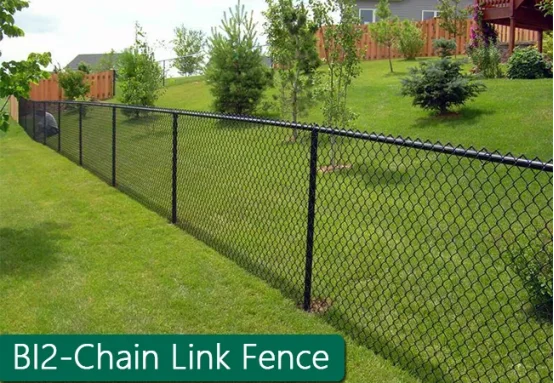
Prairie fencing and chain link fencing are both made from wire, but they are designed for different common applications.
| Feature | Prairie Fence | Chain Link Fence |
|---|---|---|
| Typical Structure | Woven or knotted field mesh | Interlocking diamond mesh |
| Main Application | Pasture and livestock management | General perimeter and sports fencing |
| Mesh Pattern | Often graduated or field-oriented | Usually uniform diamond pattern |
| Terrain Adaptability | Suitable for many agricultural boundaries | Flexible, but installation depends on support design |
| Livestock Use | Common | Depends on mesh and application |
| Roll Supply | Common | Common |
| Post System | Agricultural posts and supports | Line posts, tension wires and fittings |
The correct product depends on the animals, the site layout, the required containment and the intended service conditions.
9. Prairie Fence Installation
A typical installation process includes the following steps.
Step 1: Plan the Boundary
Measure the fence line and identify corners, gates, drainage areas and changes in terrain.
Step 2: Select Suitable Posts
Post material, dimensions, spacing and foundations should be selected according to the fence design and site conditions.
Step 3: Install End and Corner Supports
End and corner assemblies must be capable of carrying the loads generated by the tensioned wire.
Step 4: Unroll and Position the Mesh
Handle the roll carefully and position the mesh along the planned boundary.
Step 5: Attach and Tension
Attach the mesh to the supports using suitable agricultural fencing accessories and the specified installation method.
Step 6: Check Ground Clearance
Inspect the lower mesh line to identify gaps that may allow livestock to escape or create animal-safety issues.
Step 7: Inspect the Completed Fence
Check post stability, wire tension, attachment points, gates and any sharp or damaged sections.
Installation should follow the product instructions and the farm’s safety requirements.
10. Illustrative Project Example: Cattle Pasture Boundary
A livestock farm requires fencing around a 1,000-meter pasture boundary.
The farm selects a galvanized woven field fence with mesh openings appropriate for its cattle-management requirements.
Preliminary Configuration
| Item | Example Requirement |
|---|---|
| Application | Cattle Pasture |
| Boundary Length | 1,000 m |
| Fence Type | Galvanized Woven Field Fence |
| Mesh Pattern | Graduated Mesh |
| Fence Height | Project-Specific |
| Wire Specification | Confirmed according to product design |
| Posts | Suitable Agricultural Posts |
| Gates | Vehicle and Livestock Access Gates |
| Surface Treatment | Galvanized |
The final mesh pattern, wire dimensions, post spacing and fixing method should be selected according to the farm layout, livestock behavior and ground conditions.
This is an illustrative project scenario, not a completed Bendin customer installation.
11. Estimating Prairie Fence Roll Quantity
For continuous fencing, a basic estimate can be made by dividing the required fence length by the usable length of each roll.
Estimated roll quantity = Required fence length ÷ Usable roll length
For example, a 1,000-meter boundary using 50-meter rolls requires:
1,000 ÷ 50 = 20 nominal rolls
The actual quantity should allow for corners, gates, overlaps, cutting and installation waste.
The fence layout should be finalized before ordering so that the quantity of mesh, posts, gates and accessories can be calculated together.
12. Quality Control
Quality checks for prairie fence may include:
- Wire diameter
- Mesh opening
- Vertical and horizontal wire spacing
- Knot or weaving consistency
- Coating condition
- Roll dimensions
- Packaging
- Accessory compatibility
For products intended for specific livestock or regulated applications, the required product standard and acceptance criteria should be confirmed before production.
13. Bendin Custom Prairie Fence Solutions
Bendin supports customized wire fencing configurations according to project requirements and available manufacturing options.
Customization may include:
- Fence height
- Roll width and length
- Mesh pattern
- Wire diameter
- Horizontal wire arrangement
- Vertical wire spacing
- Surface treatment
- Packaging
- Accessories and gates
- OEM requirements
Customers can provide project dimensions, livestock type, site photographs, technical specifications and estimated quantities for review before ordering.
14. Frequently Asked Questions
What is prairie fence used for?
Prairie fence is commonly used for pasture boundaries, grassland management, livestock containment and agricultural land separation.
Is woven field fence suitable for cattle?
It can be suitable when the fence height, wire specification, mesh opening, posts and installation method are selected for the cattle and site conditions.
Can prairie fence be used for sheep and goats?
Yes, suitable configurations can be used for sheep and goats. Smaller lower mesh openings may be necessary depending on animal size and behavior.
Is galvanized prairie fence suitable for outdoor use?
Galvanized field fencing is commonly used outdoors. Its durability depends on the coating specification, environment, installation and maintenance.
Can Bendin customize mesh openings and roll sizes?
Yes. Mesh configuration, wire dimensions and roll sizes can be discussed according to manufacturing capabilities and project requirements.
Is prairie fence the same as chain link fence?
No. Prairie fence typically uses woven or knotted field mesh, often with graduated openings, while chain link fence uses interlocking wire spirals to form a diamond pattern.
15. Request a Prairie Fence Quotation
Prairie fencing helps define agricultural boundaries and support livestock management when the mesh structure, posts, wire configuration and installation are appropriate for the site.
The correct product depends on livestock type, boundary length, terrain, mesh opening, wire dimensions, corrosion protection and maintenance requirements.
Bendin supplies customizable wire fencing products for international agricultural and infrastructure projects.
For a quotation, provide:
- Intended livestock
- Fence height
- Mesh pattern
- Wire specification
- Roll width and length
- Surface treatment
- Required quantity
- Project location and destination
Bendin can review your requirements and discuss a suitable prairie fence configuration for your project.