


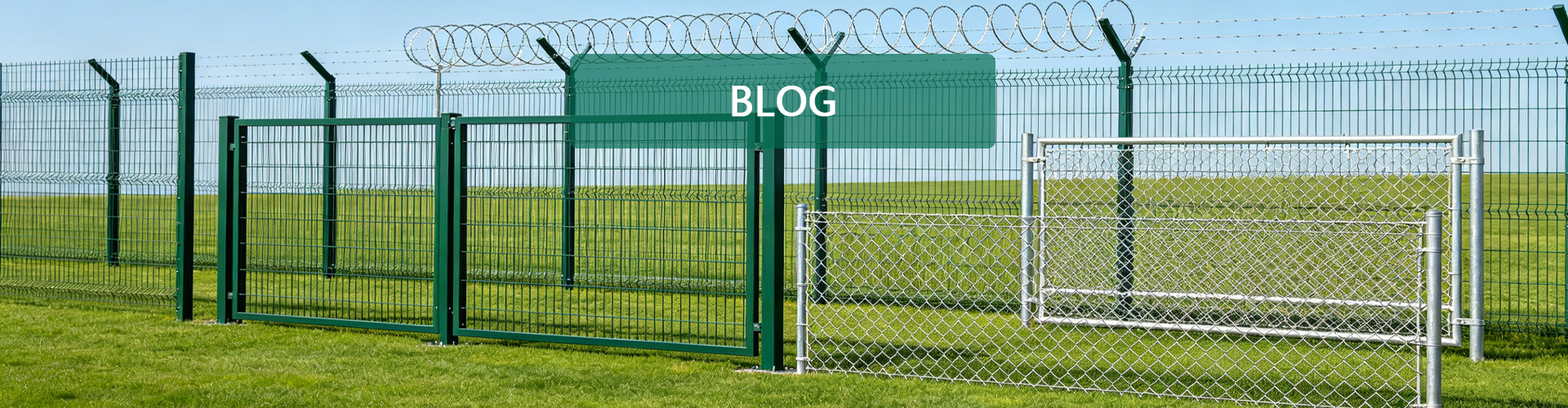
Modular Temporary Barrier: Design, Specifications and Applications
Modular temporary barriers provide a practical way to establish temporary boundaries around construction sites, roadworks, public events and industrial work areas. Their modular construction allows individual sections to be connected, rearranged and reused as site requirements change.
Unlike permanent fencing, a modular temporary barrier is designed for repeated deployment, convenient transportation and flexible site layouts. Depending on the product design, it may use welded steel panels, tubular frames, detachable connectors and weighted bases to create a freestanding or interconnected barrier system.
Bendin (Hebei Bendin Industrial Technology Co., Ltd.) supplies customizable temporary fencing and barrier products for construction, municipal, commercial and event applications. Available configurations can be discussed according to panel dimensions, frame design, connection method, base type, surface treatment and project requirements.
This guide explains the main barrier types, technical specifications, installation considerations and selection factors for reusable temporary protection systems.
1. What Is a Modular Temporary Barrier?
A modular temporary barrier is a portable protective structure made from individual sections that can be connected to form a continuous boundary.
Depending on the intended application, a system may include:
- Welded mesh panels or tubular steel frames
- Interconnecting clips or couplers
- Freestanding support bases
- Ballast-compatible supports
- Pedestrian access gates
- Warning signs and reflective accessories
- Optional privacy screens
The modular design allows the barrier layout to be adjusted without permanently modifying the site.
This is useful for projects where work zones, pedestrian routes, vehicle access or event layouts change over time.
The appropriate configuration depends on whether the primary purpose is perimeter separation, pedestrian guidance, construction-site enclosure or restricted-area protection.

2. Modular Temporary Barrier vs. Temporary Fence
Although the terms are sometimes used interchangeably, modular temporary barriers and temporary fences can serve different purposes.
| Feature | Modular Temporary Barrier | Temporary Fence |
|---|---|---|
| Typical Structure | Tubular frame or modular barrier section | Often a larger welded mesh panel |
| Main Purpose | Temporary separation and access management | Temporary perimeter enclosure |
| Connection | Interlocking connectors or couplers | Panel clamps or fence connectors |
| Base | Freestanding or weighted base | Commonly weighted support bases |
| Layout Changes | Designed for frequent rearrangement | Can be relocated, depending on design |
| Common Applications | Events, pedestrian routes, roadworks | Construction sites, renovation areas |
| Privacy Screen | Product-dependent | Often available as an option |
The right product depends on the required barrier function, site conditions and expected duration of use.
3. Main Types of Modular Temporary Barrier
Tubular Steel Barrier
Tubular barriers use a steel frame to create a lightweight, open boundary.
They may be suitable for public events, pedestrian management and selected roadwork applications where visibility and convenient handling are important.
Welded Mesh Barrier
Welded mesh barriers combine a steel frame with a mesh infill.
They can provide a more continuous physical separation than an open tubular frame and may be considered for selected construction or industrial work areas.
Interlocking Barrier
Interlocking barriers use compatible connectors to join adjacent sections.
The connection design helps maintain alignment and allows the layout to be extended or rearranged.
Weighted-Base Barrier
Weighted-base systems use a suitable support base to improve stability.
The appropriate base configuration depends on the barrier dimensions, ground conditions, wind exposure and intended application.
4. Typical Modular Temporary Barrier Specifications
Bendin can discuss customized configurations according to product design and project requirements.
| Parameter | Typical Options |
|---|---|
| Product Type | Modular Temporary Barrier |
| Main Material | Carbon Steel / Galvanized Steel |
| Frame Type | Tubular Frame / Welded Mesh Frame |
| Barrier Height | Approximately 0.9–1.2 m for selected crowd-control designs; other heights customized |
| Section Width | Customized according to product design |
| Frame Tube | Project-specific |
| Infill | Open Tubular Frame / Welded Mesh |
| Connection | Interlocking Connector / Clamp / Coupler |
| Base Type | Freestanding / Weighted / Project-Specific |
| Surface Treatment | Galvanized / Powder Coated |
| Common Colors | Galvanized Finish / Yellow / Black / Other RAL Colors |
| Accessories | Gates / Warning Signs / Reflective Elements |
| Customization | Dimensions / Frame / Base / Color / Accessories |
These are indicative configuration options rather than a fixed specification for every barrier. Final dimensions, material thickness, base design and connection details should be confirmed before ordering.
5. Why Modular Design Matters
Flexible Layouts
Individual sections can be connected to create straight lines, corners and different temporary boundary arrangements.
This is useful when a construction site or event venue needs to change its layout as work progresses.
Reusable Components
Suitable modular barriers can be dismantled, inspected, stored and reused for later projects.
Reuse can reduce the need to purchase new barriers for every event or construction phase, provided the components remain in serviceable condition.
Convenient Transportation
Detachable sections can be stacked or bundled according to their design.
Efficient packaging can help improve storage and transport planning, although the actual space savings depend on the product dimensions and packing method.
Easier Component Replacement
Where the system uses replaceable connectors, bases or panels, damaged components may be replaced individually rather than requiring the entire system to be discarded.
6. Base Options and Stability
The base is an important component of a freestanding temporary barrier.
A barrier that is lightweight and easy to move must still remain stable under the conditions in which it will be used.
Standard Freestanding Base
A standard base supports the barrier section on a suitable surface.
It may be appropriate for selected indoor applications and other locations where the product’s stability requirements are satisfied.
Weighted Base
A weighted base adds mass to the barrier system.
It may be considered where additional stability is required, but the appropriate weight depends on the barrier design, ground conditions and expected external forces.
Ballast-Compatible Configuration
Some products allow additional ballast to be used where the design permits it.
The required ballast and its installation should follow the product specification rather than being determined by guesswork.
Outdoor Stability Considerations
For outdoor applications, assess:
- Wind exposure
- Ground slope
- Surface friction
- Barrier height and width
- Connection between sections
- Pedestrian or vehicle interaction
- Required anchoring or ballast
Freestanding barriers should not automatically be treated as suitable for fall protection, vehicle-impact protection or high-wind conditions.
7. Surface Treatment and Durability
Temporary barriers may be exposed to rain, humidity, sunlight, dirt and repeated handling.
Bendin can discuss different surface-treatment options according to the intended application.
Galvanized Steel
A zinc coating helps protect steel components against corrosion.
It may be suitable for many outdoor applications, depending on the coating specification and environmental exposure.
Powder Coating
Powder coating provides a decorative finish and additional surface protection when applied over an appropriately prepared substrate.
High-visibility colors may be selected for construction and event-management applications.
Galvanized Plus Powder Coating
A duplex coating combines zinc protection with a powder-coated finish.
It can be considered where the project requires both corrosion protection and a specific appearance.
Durability depends on the coating, material, handling, storage and operating environment. Any specific service-life claim should be supported by relevant product data.
8. Modular Temporary Barriers for Construction Sites
Construction projects often require temporary boundaries around work areas, material storage and pedestrian routes.
Modular barriers can help establish visible separation while allowing the site layout to change.
Potential applications include:
- Building renovation
- Maintenance work zones
- Temporary pedestrian diversion
- Equipment separation
- Restricted work areas
- Selected site-access arrangements
For longer-term site enclosure or locations requiring greater security, a full temporary fence system may be more appropriate than a lightweight crowd-control barrier.
The product should be selected according to the required level of separation and the risks present at the site.
9. Temporary Barriers for Roadworks and Municipal Projects
Road maintenance and municipal work frequently require temporary changes to pedestrian routes and access arrangements.
A modular barrier system may help define work boundaries and guide pedestrians around designated areas.
Before selecting the product, confirm:
- Required visibility
- Traffic exposure
- Expected duration
- Ground conditions
- Need for reflective elements
- Connection between adjacent sections
- Applicable roadwork requirements
Where barriers are placed near moving vehicles, the selected product must be appropriate for that traffic environment. A lightweight pedestrian barrier should not be treated as a vehicle-crash barrier.
10. Temporary Barriers for Events and Public Spaces
Events such as exhibitions, concerts, sports competitions and public gatherings may require temporary barriers to define queues, separate pedestrian routes and manage access.
Modular barriers can be useful because the layout can be adjusted as the venue changes.
Common considerations include:
- Section length
- Base stability
- Connector design
- Gate and access requirements
- Visibility
- Transportation and storage
- Inspection before each event
Crowd-control barriers should be selected according to expected crowd conditions and the event safety plan. Standard lightweight barriers may not be suitable for every crowd-pressure situation.
11. Illustrative Project Example: Outdoor Event
An event organizer needs a temporary barrier system to define pedestrian queues and separate a service area from public access.
A preliminary configuration could include:
| Item | Example Requirement |
|---|---|
| Application | Outdoor Public Event |
| Barrier Type | Interlocking Tubular Barrier |
| Section Height | Selected according to event requirements |
| Frame | Steel Tube |
| Base | Compatible Freestanding Base |
| Connection | Interlocking Connector |
| Finish | Galvanized or Specified Coating |
| Accessories | Warning Signs or Reflective Elements |
| Storage | Stackable or Bundled Sections |
The organizer should verify the barrier’s suitability for the expected crowd conditions, weather exposure and site layout before use.
This is an illustrative project scenario, not a completed Bendin customer installation.
12. Installation and Reuse
A typical modular barrier deployment includes the following steps.
Step 1: Plan the Layout
Identify the boundary, pedestrian routes, access points and areas requiring separation.
Step 2: Prepare the Surface
Check that the installation area is suitable for the selected barrier and base configuration.
Step 3: Position the Bases
Place the support bases according to the product design.
Step 4: Install Barrier Sections
Fit the barrier sections into their bases or support brackets.
Step 5: Connect Adjacent Sections
Secure the connectors or couplers and check the alignment of neighboring sections.
Step 6: Inspect the Layout
Check stability, connections, sharp edges, damaged coatings and access openings.
Step 7: Dismantle and Store
After use, disconnect the sections, inspect the components and store them according to the manufacturer’s instructions.
Before reuse, damaged or deformed parts should be removed from service until they have been appropriately assessed or replaced.
13. Quality Control
Quality inspection for modular temporary barriers may include:
- Frame dimensions
- Tube or section thickness
- Weld appearance
- Connection fit
- Base compatibility
- Surface coating
- Edge condition
- Packaging and labeling
For applications requiring a specific load rating or performance standard, the test method and acceptance criteria should be agreed before production.
The presence of a modular connector alone does not establish that the barrier is suitable for a particular load or safety function.
14. Bendin Custom Modular Temporary Barrier Solutions
Bendin supplies customizable temporary fencing and barrier products for international customers.
Depending on the product design and manufacturing capabilities, customization may include:
- Barrier height and width
- Frame configuration
- Mesh or tubular infill
- Connection type
- Base design
- Surface treatment
- Color
- Gates and accessories
- Packaging
- OEM requirements
Customers can provide drawings, site dimensions, application details and estimated quantities for review before ordering.
For projects requiring specific performance ratings, the applicable requirements should be confirmed before production.
15. Frequently Asked Questions
What is a modular temporary barrier used for?
It is used to create temporary boundaries around construction areas, roadworks, events, public spaces and selected industrial work zones.
Can modular temporary barriers be reused?
Yes, suitable systems can be reused when they are dismantled, inspected, stored and maintained according to the manufacturer’s instructions.
Are modular barriers suitable for outdoor use?
Some systems are suitable for outdoor use, depending on the frame, base, coating, wind exposure and ground conditions.
Can the barrier layout be changed?
Yes. Modular systems are designed to allow sections to be connected, removed and rearranged according to the product design.
Can Bendin customize barrier dimensions and colors?
Customization can be discussed according to manufacturing capabilities and project requirements.
Is a temporary barrier suitable for vehicle-impact protection?
Not automatically. A lightweight modular barrier should not be used as a vehicle-crash barrier unless the specific system has been designed and tested for that purpose.
16. Request a Modular Temporary Barrier Quotation
Modular temporary barriers provide a practical option for projects that require flexible layouts, reusable components and convenient transportation.
The right system depends on the intended application, barrier dimensions, base design, connection method, ground conditions and required performance.
Bendin supplies customizable temporary fencing and barrier products for construction, municipal, industrial and event applications.
For a quotation, provide:
- Intended application
- Required barrier height and section width
- Frame or mesh configuration
- Base type
- Connection method
- Surface treatment
- Accessories
- Quantity
- Delivery destination
Bendin can review your requirements and discuss a suitable modular temporary barrier configuration for your project.