


What Is a 3D Fence? Core Features & Key Advantages
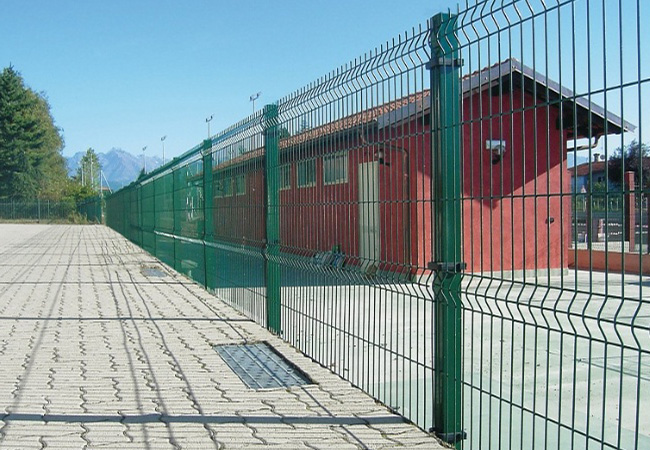
A 3D fence is a welded wire mesh fence with professional three-dimensional V-shaped bends on each panel. These reinforced bending structures are the core reason why 3D fences outperform ordinary flat fences. Made of high-quality hot-dip galvanized steel or PVC-coated steel, it integrates sturdiness, weather resistance, and ornamental features.
Before learning installation and applications, let’s explore its unmatched advantages that make it a top-selling fencing option worldwide:
- Superior Structural Strength: The 3D curved design disperses external impact force effectively, preventing deformation under wind pressure, collision, or external extrusion. It is far more sturdy than standard flat mesh fences and can serve as a long-term security barrier.
- Easy & Fast Installation: Pre-fabricated integrated panels and matched posts allow tool-friendly assembly. No complex welding or professional skills are required, greatly saving construction time and labor costs.
- Excellent Weather Durability: Premium galvanized and PVC-coated layers deliver outstanding anti-rust, anti-corrosion, UV-proof, and waterproof performance. It resists harsh weather including heavy rain, snow, high temperature, and strong wind, with a service life of 15–25 years.
- Aesthetic & Transparent Design: The neat curved mesh structure creates a modern, elegant look without blocking sightlines. It avoids the bulky, enclosed feeling of solid fences, improving the overall landscape of the property.
- High Cost Performance: Compared with wrought iron fences, aluminum fences, and stone fences, 3D fences have lower material and installation costs, with zero frequent maintenance expenses.
- Flexible Customization: Multiple heights, colors, and mesh sizes are available to meet different security and aesthetic needs for various scenarios.

Step-by-Step 3D Fence Installation Guide (Beginner-Friendly)
3D fence installation is highly operable and can be completed by 1–2 people with basic tools. We summarize a standard, error-free 6-step installation process suitable for flat and sloped terrains, covering all key details for stable and neat installation.
Step 1: Site Survey & Layout Marking
First, clean the installation site to remove weeds, stones, and debris, ensuring a flat and unobstructed construction area. Measure the perimeter accurately and mark the positions of all fence posts with lime or markers. The standard post spacing is2–2.5 meters, which matches the conventional 3D fence panel size to avoid gaps or uneven splicing. For sloped or uneven ground, stagger the post positions and adopt a step-type installation to keep the overall fence neat and stable.
Step 2: Post Hole Digging & Foundation Treatment
Dig vertical post holes at all marked positions with a post hole digger or auger. The hole depth is controlled at 50–70cm (exceeding the local frost line to prevent frost heave from damaging the foundation), and the hole width is 20cm larger than the post diameter to reserve enough space for concrete pouring. For hard concrete ground, use anchor bolts and epoxy fixing to install posts, no need for hole digging.
Step 3: Vertical Post Installation & Concrete Fixing
Place the steel post in the center of the hole, use a level tool to calibrate the verticality (vertical error ≤3mm) and fix it with temporary braces to avoid tilting. Pour C25 concrete into the hole slowly and compact it tightly to eliminate internal gaps. After pouring, keep the posts stationary and wait3–5 days for full concrete curing to ensure firm foundation stability.
Step 4: 3D Fence Panel Assembly
After the concrete is completely solidified, start installing fence panels. Align the reserved fixing holes of the 3D curved panel with the post mounting points, and use matched special clamps, bolts, and brackets for preliminary fixing. Note that the V-shaped curved surface of the panel faces outward to maximize impact resistance and three-dimensional decorative effect. For corner and gate positions, use special corner accessories to ensure seamless connection.
Step 5: Overall Calibration & Tightening
After all panels are installed, check the overall flatness, verticality, and splicing tightness of the fence line by line. Adjust the uneven panels and tighten all bolts and accessories one by one to prevent looseness caused by vibration. Ensure no gaps between adjacent panels to guarantee consistent security and appearance.
Step 6: Finishing & Site Cleaning
Trim excess concrete and clean up construction waste on the site. Check the surface coating of the fence panels and posts to ensure no scratches or damage. A complete, stable, and beautiful 3D fence installation is now finished.
Diversified 3D Fence Usage Scenarios (All Property Types Covered)
Thanks to its balanced performance of security, beauty, and durability, 3D fences are widely used in residential, commercial, industrial, agricultural, and public infrastructure fields. Below are the most common and practical application scenarios:
1. Residential & Private Villa Boundaries
3D fences are the most popular choice for family yards, villas, and private residential communities. The transparent and elegant curved design does not block the home’s lighting and view, while effectively isolating private spaces, preventing strangers from entering, and avoiding the cramped feeling of traditional closed fences. Multiple color options (green, white, black, gray) can perfectly match various home styles, improving the overall grade of the property.
2. Commercial & Industrial Sites
For factories, warehouses, logistics parks, shopping malls, and office parks, 3D fences provide reliable perimeter security protection. Its high-strength anti-collision and anti-climbing performance can effectively prevent illegal trespassing and equipment loss. The neat and unified appearance also standardizes the site environment, meeting the dual needs of enterprise safety management and corporate image display.
3. Public Facilities & Municipal Projects
It is widely used for school campuses, kindergartens, sports fields, parks, green belts, and road isolation. The smooth mesh surface has no sharp edges, which can avoid accidental scratches on people and children, ensuring safe public activity spaces. Meanwhile, the weather-resistant and low-maintenance features greatly reduce the later management cost of municipal facilities.
4. Agricultural & Ecological Protection
3D fences are ideal for farmland, orchards, pastures, and ecological protection zones. They can effectively block wild animals such as deer and rabbits from destroying crops and seedlings, and standardize breeding and planting boundaries. The galvanized anti-corrosion material adapts to outdoor humid and wild environments, with long service life and no frequent replacement.
5. Temporary & Special Isolation Areas
Due to fast installation and flexible disassembly, 3D fences are also suitable for construction site isolation, temporary event enclosure, and substation safety isolation. They can be reused after disassembly, greatly saving project cost and meeting the temporary enclosure needs of various scenarios.
3D Fence Daily Maintenance & Long-Term Usage Tips
One of the biggest advantages of 3D fences is low maintenance. To extend its service life and keep a good appearance, just follow simple daily maintenance rules:
- Clean the fence surface regularly with clean water to remove dust, fallen leaves, and dirt; avoid long-term accumulation of stains affecting the coating.
- Check bolts and fixed accessories every 6 months to tighten loose parts in time and ensure overall stability.
- Avoid long-term extrusion and heavy collision with hard objects; deal with minor surface scratches in time to prevent local corrosion expansion.
- For coastal and high-humidity areas, do annual anti-rust inspection to ensure the coating is intact.
Final Thoughts
As a modern high-performance fencing solution, 3D fences perfectly solve the pain points of traditional fences: easy deformation, short service life, ugly appearance, and high maintenance cost. With simple installation, strong practicability, and wide applicability, it has become the mainstream choice for global residential, commercial, and municipal perimeter protection.
Whether you need a beautiful yard fence, a secure industrial isolation fence, or a durable municipal protective fence, a customized 3D fence can fully meet your needs.
FAQs About 3D Fence
Q1: Is 3D fence installation difficult for beginners?
A1: No. 3D fences adopt pre-fabricated panel design with standardized installation steps. Ordinary users can complete the installation with conventional tools by following our step-by-step guide, no professional welding or construction experience required.
Q2: How long does a 3D fence last?
A2: High-quality galvanized and PVC-coated 3D fences have a service life of 15–25 years under normal outdoor environments, with strong resistance to wind, rain, and UV radiation.
Q3: Can 3D fences be installed on sloped ground?
A3: Yes. By adopting staggered foundation and step-type panel installation, 3D fences can perfectly adapt to uneven and sloped terrain without affecting stability and appearance.
Q4: What are the differences between 3D fence and ordinary flat wire fence?
A4: The 3D curved structure greatly improves structural strength and impact resistance. It is more stable, more beautiful, and longer-lasting than flat fences, with higher overall cost performance.