



Industrial Safety Equipment Buying Mistakes and How to Avoid Them
Purchasing industrial safety equipment involves more than comparing unit prices and delivery schedules. Buyers must consider product specifications, installation compatibility, environmental exposure, maintenance requirements and the documentation needed for their projects.
A poorly specified perimeter fence, an unsuitable machine guard or an incorrectly selected cable tray can lead to installation rework, additional procurement costs and operational risks.
For factories, warehouses, logistics centers and industrial construction projects, a structured purchasing process helps ensure that each product matches its intended function.
Bendin (Hebei Bendin Industrial Technology Co., Ltd.) supplies customizable industrial fencing, machine guarding and cable management products for international distributors, contractors and facility owners.
This guide covers five common purchasing mistakes, explains what buyers should verify before placing an order and provides a practical checklist for evaluating industrial safety equipment.
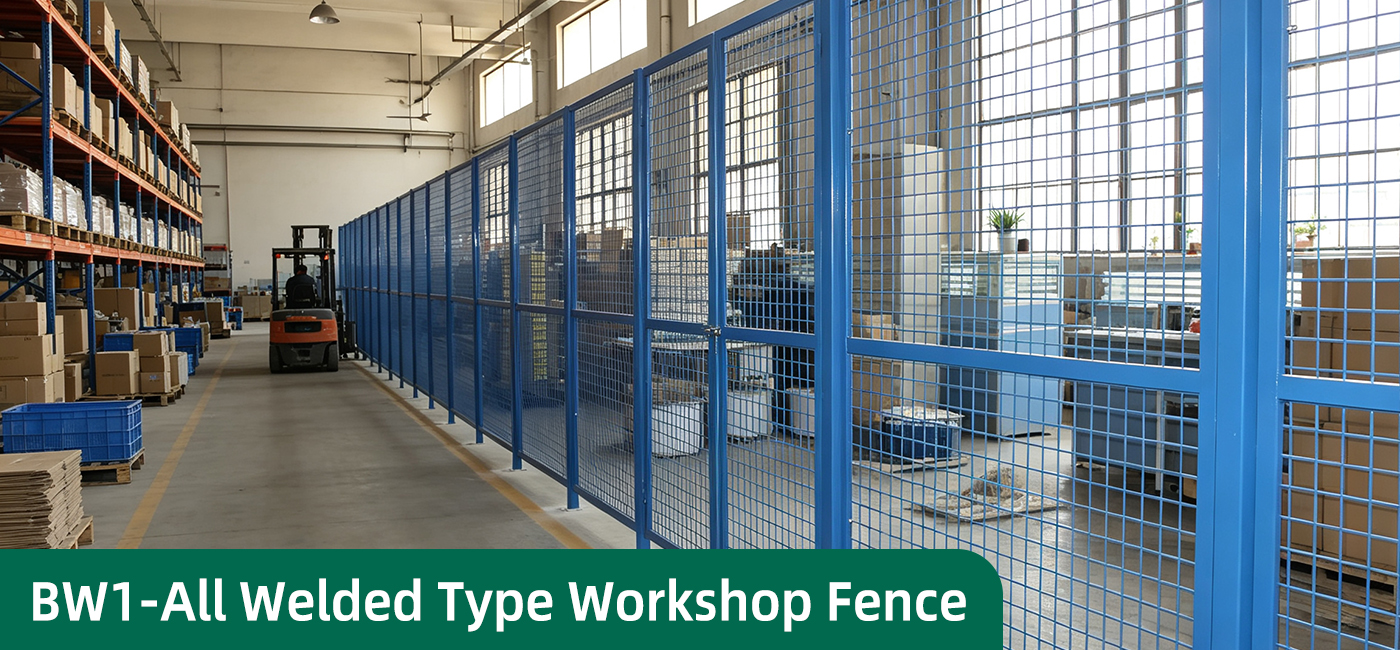
1. Mistake One: Choosing the Lowest Price Without Comparing Specifications
Low-cost products may be suitable for some applications, but comparing prices without checking technical specifications can lead to unsuitable purchases.
Two fence panels may look similar while differing in wire diameter, mesh opening, post dimensions, weld quality and corrosion protection. Similar differences can occur between machine guards and cable trays.
What to Check for Perimeter Fencing
- Steel grade and wire diameter
- Mesh opening and panel dimensions
- Post profile and wall thickness
- Connection method and foundation requirements
- Surface treatment and coating specifications
- Gate dimensions and fixing accessories
What to Check for Machine Guarding
- Panel and frame dimensions
- Mesh opening and wire diameter
- Mounting and connection details
- Access gate arrangement
- Compatibility with required safety interlocks
- Applicable machinery safety requirements
What to Check for Cable Management
- Tray type, width and side height
- Cable quantity and estimated weight
- Support spacing and span
- Material and surface treatment
- Connectors, brackets and mounting accessories
- Applicable electrical installation requirements
Compare Total Cost, Not Just Unit Price
A useful purchasing comparison includes the product price, transportation, installation, maintenance, repairs and replacement costs over the same analysis period.
A more expensive product is not automatically more economical. Its additional cost should be justified by relevant specifications, expected performance and realistic maintenance assumptions.
Bendin purchasing tip: Request quotations based on the same technical specification so you can compare suppliers fairly.
2. Mistake Two: Purchasing Perimeter Fencing, Machine Guarding and Cable Management Without Coordinating the Project
These three product categories serve different purposes, but their installation layouts can affect one another.
For example, a fence may obstruct a vehicle route, a machine guard may interfere with maintenance access, or a cable tray may conflict with machinery or supporting structures.
Why Coordination Matters
Coordinated planning can help identify:
- Incompatible panel and post dimensions
- Gate openings that do not match the site layout
- Conflicts between guards and maintenance routes
- Cable routes that interfere with installed equipment
- Missing connectors, brackets or mounting accessories
- Differences between approved drawings and supplied components
How to Avoid This Mistake
Prepare a coordinated site layout before ordering.
The layout should identify the perimeter boundary, machine guarding zones, access gates, cable routes and relevant installation interfaces.
A shared bill of materials can then list the required panels, posts, gates, connectors, trays, supports and other accessories.
Purchasing multiple product categories from one supplier may simplify communication, but it does not automatically guarantee compatibility. The actual components and technical interfaces must still be confirmed.
3. Mistake Three: Ignoring Future Layout Changes
Industrial facilities frequently add equipment, relocate production lines or modify storage areas.
A safety system designed only for the current layout may require extensive modification when the site changes.
Why Modular Design Can Help
Modular systems use coordinated panels, posts, brackets and accessories that can simplify selected changes.
Potential advantages include:
- Replacement of individual panels
- Addition of compatible sections
- Repositioning of selected barriers
- Easier planning for future expansion
- Reduced need for some on-site fabrication work
What Buyers Should Confirm
Before ordering, ask the supplier:
- Which components are standardized?
- Which panels and posts are compatible?
- Can individual sections be replaced?
- Are matching accessories available?
- What tools are required for assembly?
- Can the proposed system accommodate the planned layout changes?
Not every modular component can be reused in every configuration. Compatibility, component condition and the revised installation requirements must be checked.
For machine guarding, layout changes must preserve the required safety distances and safety functions. For cable management, changes must maintain suitable supports, loading conditions and electrical installation requirements.
4. Mistake Four: Selecting Materials and Coatings Without Considering the Environment
Indoor workshops, outdoor yards, coastal sites and industrial processing facilities can have very different environmental conditions.
Selecting a material or coating without considering the actual exposure may lead to premature deterioration or unnecessary expenditure.
Outdoor Perimeter Fencing
Potential exposure includes rain, humidity, sunlight, airborne salt and industrial pollutants.
Galvanized steel and compatible powder-coated systems may be considered, depending on the product and environment.
Workshop Machine Guarding
Indoor machine guards may be exposed to dust, vibration, cleaning agents or occasional impact.
The panel, frame and coating should be selected according to the workshop’s operating conditions and the guarding requirements.
Cable Management
Cable trays may be installed indoors, outdoors or in locations exposed to moisture, dust or chemicals.
The material, coating and support design should match the environment and applicable electrical installation requirements.
Confirm the Actual Coating Specification
Before ordering, confirm:
- Coating type
- Required coating thickness or mass, where specified
- Manufacturing and surface preparation process
- Inspection method
- Environmental suitability
- Maintenance requirements
Hot-dip galvanizing, powder coating and other finishes are not interchangeable in every application.
A specific service-life claim should be supported by product data and clearly defined environmental conditions.
5. Mistake Five: Overlooking Technical Documentation and Installation Support
Even a suitable product can cause problems if its dimensions, connection details or installation requirements are unclear.
Before placing an order, establish which documents the supplier will provide and which responsibilities remain with the contractor or project engineer.
Documents to Confirm
| Document | Purpose |
|---|---|
| Product Specification | Confirms materials, dimensions and finishes |
| Technical Drawing | Shows panel layout, posts, connections and mounting details |
| Material Information | Identifies the applicable material specification |
| Coating Information | Describes the specified surface treatment |
| Test Reports | Provides evidence for the tested property and method |
| Installation Instructions | Explains assembly and fixing requirements |
| Inspection Records | Documents the agreed quality checks |
| Certificates | Confirms the stated holder, scope, validity and covered product |
The required documents depend on the product and project specification.
ISO 9001 certification relates to a quality management system; it does not automatically mean that every product has independent product certification.
Confirm Responsibilities Before Production
Agree on the final drawings, product dimensions, inspection criteria, packaging requirements and delivery scope before manufacturing begins.
For machine guarding, clarify which party is responsible for the machinery risk assessment and validation of required safety functions.
For cable management, confirm the cable schedule, support design and applicable electrical requirements.
Clear responsibilities help reduce misunderstandings during installation and handover.
6. Industrial Safety Equipment Buying Checklist
Use the following checklist before confirming a purchase.
Product Requirements
- Confirm the intended application of each product.
- Specify the required dimensions and materials.
- Confirm the applicable standard, where required.
- Check compatibility between panels, posts, gates and accessories.
- Select surface treatment according to environmental exposure.
Supplier and Quality Requirements
- Request technical specifications and drawings.
- Confirm the inspection scope and acceptance criteria.
- Verify any product-specific certification claims.
- Agree on packaging and labeling requirements.
- Confirm replacement-part availability where relevant.
Installation and Delivery Requirements
- Confirm the mounting method and site conditions.
- Identify access gates and maintenance routes.
- Coordinate cable routes with equipment and guarding.
- Agree on the final bill of materials.
- Confirm delivery quantities, schedule and required documentation.
7. Illustrative Project Example: Industrial Facility Procurement
A manufacturing facility plans to replace sections of its external fence, install guarding around an automated production cell and organize cable routes for new equipment.
The procurement team compares two quotations and discovers that the proposed products differ in panel dimensions, coating specifications, mounting arrangements and included accessories.
Rather than selecting the lowest total price immediately, the team prepares a common specification for both suppliers.
Preliminary Procurement Comparison
| Item | Option A | Option B |
|---|---|---|
| Perimeter Fence | General welded mesh | Welded mesh with specified panel and post dimensions |
| Machine Guarding | Mesh panels with unspecified fixing details | Mesh panels with documented mounting arrangements |
| Cable Management | Tray dimensions quoted without loading details | Tray configuration with applicable load data |
| Accessories | Some components listed separately | Accessories listed in a detailed bill of materials |
| Documentation | General product description | Agreed drawings and inspection documents |
| Final Evaluation | Requires clarification | Evaluated against the common specification |
The procurement team then compares the complete supply scope, installation requirements and lifecycle costs.
This process helps prevent the common problem of comparing different products as though they were equivalent.
This is an illustrative purchasing scenario, not a completed Bendin customer project.
8. How to Evaluate an Industrial Safety Equipment Supplier
A suitable supplier should be able to explain what is being supplied and provide the information needed to evaluate the proposed configuration.
Manufacturing and Customization
Confirm whether the supplier can manufacture the required dimensions, materials, coatings and accessories.
Technical Communication
Check whether the supplier can review drawings, clarify specifications and identify compatibility issues before production.
Quality Control
Ask which characteristics are inspected and what acceptance criteria apply to the actual product.
Delivery and Packaging
Confirm the quantities, packaging method, labeling, delivery schedule and required export documentation.
After-Sales Support
Clarify how technical questions, missing components, product discrepancies and replacement requirements will be handled.
Evaluate suppliers using the same product specification and procurement criteria rather than relying on general claims such as premium quality or international standards.
9. Bendin Industrial Safety Products and Customization
Bendin supplies customizable industrial fencing, machine guarding and cable management products for factories, warehouses, logistics facilities and infrastructure projects.
Depending on product design and manufacturing capabilities, customization may include:
- Fence type, panel dimensions and mesh openings
- Post profiles and fixing accessories
- Machine guarding layouts and access gates
- Galvanized and powder-coated finishes
- Cable tray dimensions and configurations
- Compatible supports and installation accessories
- Packaging and OEM requirements
Customers can provide site drawings, machine layouts, cable schedules and technical specifications for review before ordering.
For projects involving multiple product categories, a coordinated bill of materials can help align product selection, production, packaging and delivery arrangements.
10. Frequently Asked Questions
What is the most common mistake when purchasing industrial safety equipment?
One common mistake is comparing prices without confirming that the quoted products have equivalent specifications, accessories and installation requirements.
Should I choose modular safety equipment?
Modular systems can simplify certain layout changes and component replacements. Their suitability depends on the application, compatibility and installation requirements.
How do I choose the correct surface treatment?
Consider the actual environmental exposure, base material, coating specification and maintenance requirements. Confirm the selected product’s documented suitability.
What technical documents should I request?
Depending on the project, request product specifications, drawings, material information, coating details, relevant test reports and installation instructions.
Does purchasing from one supplier guarantee compatibility?
No. Compatibility should be confirmed through technical drawings, specifications and the final bill of materials.
Can Bendin customize industrial safety products?
Customization can be discussed according to the selected product, manufacturing capabilities and project requirements. Final drawings and specifications should be confirmed before production.
11. Request an Industrial Safety Equipment Quotation
Avoiding procurement mistakes begins with a clear specification, compatible components and agreed inspection requirements.
Bendin supplies customizable perimeter fencing, machine guarding and cable management products for international distributors, contractors and industrial customers.
For a quotation, provide:
- Intended application
- Site layout and required dimensions
- Fence type and mesh specifications
- Machine guarding requirements
- Cable tray type, dimensions and estimated loading
- Material and surface-treatment requirements
- Applicable project specifications
- Required documentation
- Quantities and delivery destination
Bendin can review your requirements and discuss suitable product configurations for your industrial project.