


How to Choose Industrial Safety Equipment for Factories and Industrial Projects
Selecting industrial safety equipment involves more than comparing prices. Factory managers, contractors and procurement teams must consider site security, machinery hazards, electrical installation requirements, environmental exposure and long-term maintenance.
Three important categories are perimeter fencing, machine guarding and cable management. Although these systems serve different purposes, they can be coordinated during factory construction, renovation and safety improvement projects.
Bendin (Hebei Bendin Industrial Technology Co., Ltd.) supplies customizable industrial fencing, machine guarding and cable management products for manufacturing plants, warehouses, logistics centers and infrastructure facilities.
This guide explains how to select suitable products, compare technical specifications, prepare procurement documents and avoid common mistakes that can increase project costs or create safety issues.

1. How to Choose Perimeter Protection for Industrial Sites
Perimeter fencing defines property boundaries, helps manage access and separates industrial facilities from surrounding areas.
The appropriate fence depends on the site’s security requirements, layout, environmental exposure and budget.
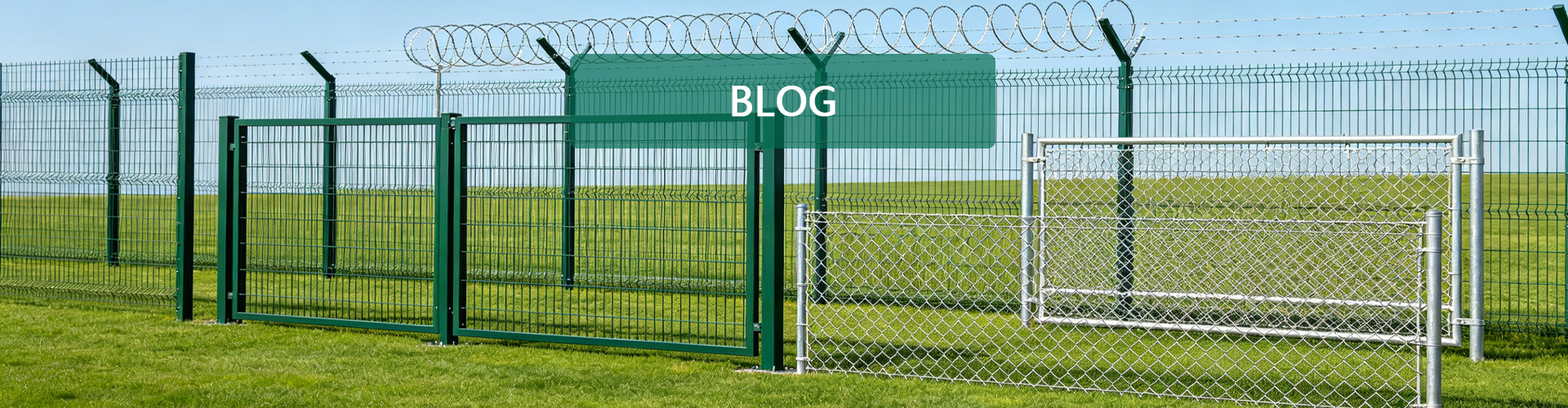
Standard Welded Mesh Fencing
Welded mesh fencing uses steel wires joined at their intersections through resistance welding.
It may be suitable for:
- Factory boundaries
- Warehouse yards
- Industrial parks
- Commercial properties
- General outdoor separation
Its regular mesh pattern and modular panel construction can simplify installation and replacement.
Anti-Climb Security Fencing
Anti-climb fencing uses closely spaced mesh openings to make unauthorized climbing more difficult.
It may be considered for restricted-access compounds, utility facilities, data centers and selected industrial sites.
A common example is 358 security mesh, typically using openings of approximately 76.2 × 12.7 mm. The actual wire diameter, panel dimensions and connection details should be confirmed against the product specification.
Dense mesh does not automatically make a fence completely cut-proof or guarantee a particular security rating.
Chain Link Fencing
Chain link fencing uses woven wire to form diamond-shaped openings.
It may be suitable for long boundaries, storage yards, sports facilities and other applications where flexible installation is useful.
Palisade Fencing
Palisade fencing uses vertical steel pales attached to horizontal rails.
It may be considered for industrial boundaries where a robust steel structure and open visibility are important.
What to Check Before Purchasing
Confirm the following information before selecting a perimeter fence:
- Required fence height and total boundary length
- Mesh opening or pale profile
- Wire diameter or steel profile dimensions
- Post type and wall thickness
- Connection method and foundation requirements
- Surface treatment and color
- Gate positions and opening dimensions
- Environmental exposure
- Applicable project specifications
A standard perimeter fence should not automatically be treated as a vehicle-impact barrier. Where vehicle collision is a credible risk, a separately designed and tested system may be required.
2. How to Select Suitable Machine Guarding
Machine guarding creates a physical boundary around hazardous machinery and automated production areas.
The system should be selected according to the machine’s operating envelope, identified hazards, required access arrangements and applicable safety requirements.
Common Machine Guarding Applications
- Robotic welding cells
- Automated assembly lines
- Conveyor systems
- Material-handling equipment
- Industrial machinery enclosures
- Maintenance and service areas
Main Machine Guarding Options
Full-mesh guarding
Welded mesh panels allow visibility into the guarded area while providing a physical boundary.
Mesh with solid lower panels
Some designs combine an open mesh section with a solid lower panel. Suitability depends on the material or hazards that need to be contained.
Punched metal panels
Punched panels may be considered where a more enclosed appearance or a specific opening pattern is required.
Modular access gates
Pedestrian and maintenance gates provide access to the guarded area. Their positions and operating arrangements should be coordinated with the machinery layout.
Important Selection Criteria
When comparing machine guarding systems, check:
- Panel material and dimensions
- Mesh opening and wire diameter
- Post section and mounting method
- Panel and post connection details
- Required maintenance access
- Gate dimensions and latching
- Compatibility with required safety interlocks
- Applicable machinery safety requirements
A physical guard is only one part of a machine safety solution. Where safety interlocks are required, the interlock and associated control functions must be suitable for the application and validated as part of the complete system.
Modular construction can simplify certain layout changes, but modifications must not compromise guarding distances or safety functions.
3. How to Choose an Industrial Cable Management System
Cable management supports and organizes power, control, communication and instrumentation cables throughout industrial facilities.
A suitable cable routing system can improve accessibility for inspection, reduce exposure to mechanical damage and simplify maintenance.
Common Cable Management Products
Mesh cable trays
Open-wire trays provide a ventilated supporting structure for compatible cable installations.
Perforated cable trays
Perforated trays provide a supporting base with openings that may assist ventilation and drainage.
Solid-bottom cable trays
Solid-bottom trays provide a continuous supporting surface for suitable cable installations.
Cable trunking
Cable trunking provides a more enclosed route for selected cables.
Technical Parameters to Confirm
Before ordering, confirm:
- Tray type
- Tray width and side height
- Material and coating
- Cable types and estimated quantities
- Total cable weight
- Support spacing and mounting method
- Environmental exposure
- Cable separation requirements
- Inspection and maintenance access
Load capacity depends on the tray design, support spacing, span, connections and loading conditions.
A general claim of high load-bearing capacity is not enough to establish suitability. Buyers should request the relevant technical data for the actual tray configuration.
Cable trays do not eliminate every electrical hazard. The complete installation must comply with the applicable electrical design and installation requirements.
4. Comparing Industrial Safety Equipment by Application
The same product specification will not suit every facility. The selection should reflect the function of each area.
| Application | Perimeter Protection | Machine Guarding | Cable Management |
|---|---|---|---|
| General Manufacturing | Welded mesh or suitable perimeter fencing | Mesh panels around selected machinery | Mesh or perforated trays, as specified |
| Automated Production | Fence selected according to site security | Modular guarding and required access gates | Trays and trunking coordinated with equipment |
| High-Security Compound | Anti-climb mesh or another specified security fence | As required for machinery areas | Selected according to the electrical design |
| Warehouse and Logistics | Welded mesh, chain link or other suitable fencing | Guards around relevant equipment | Cable trays for lighting and operational systems |
| Coastal Facility | Coating selected for actual exposure | Compatible coated components | Material and finish selected for the environment |
| Temporary Work Area | Suitable temporary barriers | Application-specific temporary separation | Temporary routing arrangements where permitted |
These are indicative selection examples. The final product configuration should be confirmed against the project’s actual requirements.
5. Typical Technical Specification Checklist
Bendin can discuss customized product configurations according to product design and manufacturing capabilities.
Perimeter Fencing
| Parameter | What to Specify |
|---|---|
| Fence Type | Welded mesh / anti-climb mesh / chain link / palisade |
| Fence Height | Project-specific |
| Panel Width | According to the site layout |
| Mesh or Pale Specification | According to the intended function |
| Post Type | Compatible with the selected fence |
| Surface Treatment | Galvanized / powder coated / other specified finish |
| Gates | Pedestrian / vehicle access |
| Foundations | According to site and structural requirements |
Machine Guarding
| Parameter | What to Specify |
|---|---|
| Guard Type | Full mesh / mesh with solid panel / punched panel |
| Panel Dimensions | According to the machinery layout |
| Mesh Opening | According to the risk assessment |
| Post and Fixing System | Compatible with the panels |
| Access Gates | According to maintenance and operating needs |
| Safety Interlocks | Where required by the validated safety design |
| Surface Treatment | According to the workshop environment |
Cable Management
| Parameter | What to Specify |
|---|---|
| Tray Type | Mesh / perforated / solid-bottom / trunking |
| Tray Width and Height | According to the cable schedule |
| Material | Steel or other specified material |
| Surface Treatment | According to environmental exposure |
| Support Spacing | According to the installation design |
| Loading Requirements | Based on cable weight and applicable design criteria |
| Accessories | Connectors / brackets / supports / covers |
These tables are procurement checklists rather than fixed product specifications. Actual dimensions, loading requirements, materials, coatings and connection arrangements should be confirmed before ordering.
6. How to Balance Initial Cost and Long-Term Value
A lower purchase price does not necessarily mean a lower total project cost. Similarly, a more expensive product is not automatically the best choice.
A practical comparison should consider:
- Product purchase price
- Transportation and handling
- Installation labor
- Foundations and mounting accessories
- Routine inspection
- Repairs and replacement parts
- Replacement labor
- Operational downtime, where applicable
- Removal and disposal at the end of service
Illustrative Lifecycle Cost Example
A factory compares two perimeter fencing options over a planned 10-year period.
| Cost Item | Option A | Option B |
|---|---|---|
| Initial Purchase | $10,000 | $13,000 |
| Installation | $3,000 | $3,200 |
| Planned Maintenance | $2,000 | $1,200 |
| Repairs and Replacement | $3,000 | $1,000 |
| Total Before Downtime | $18,000 | $18,400 |
Under these hypothetical assumptions, Option A has a slightly lower total cost before downtime. Option B may still be preferred if its documented performance better matches the site’s requirements.
These figures are illustrative and do not represent Bendin product prices or measured customer results.
The purpose of lifecycle costing is to compare alternatives using the same analysis period and realistic assumptions rather than automatically favoring the cheapest or most expensive option.
7. Selecting Surface Treatments for Different Environments
Industrial safety equipment may be exposed to humidity, rain, airborne salt, cleaning agents, dust and industrial pollutants.
The appropriate material and coating system depends on the actual exposure and the product’s manufacturing process.
Hot-Dip Galvanizing
Hot-dip galvanizing provides a zinc coating that helps protect steel against corrosion.
The required coating specification should be confirmed for the selected product.
Powder Coating
Powder coating provides a decorative finish and an additional protective layer when applied over an appropriately prepared substrate.
Galvanizing Plus Powder Coating
A compatible galvanized substrate combined with powder coating may be suitable where both corrosion protection and appearance are important.
Cable Tray Finishes
Cable trays and accessories may require different materials or coatings depending on the environment and electrical installation requirements.
A coating suitable for an outdoor fence should not automatically be assumed suitable for every cable management installation.
Service-life claims should be supported by product data and clearly defined environmental conditions.