


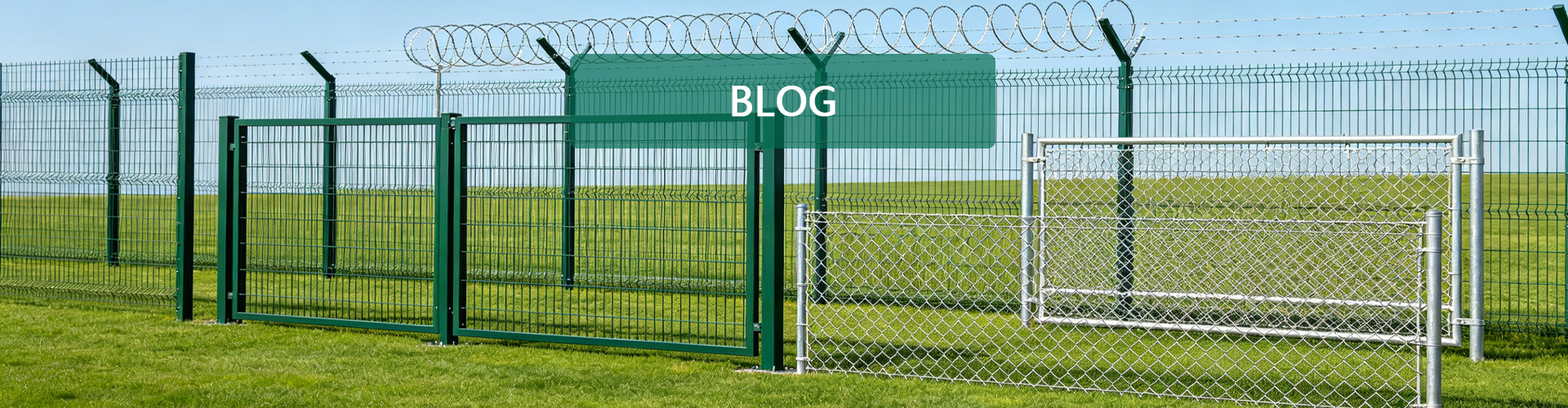
High-Security Perimeter Fencing: Types, Specifications and Applications
High-security perimeter fencing is designed to help protect critical infrastructure, industrial facilities, data centers, utility sites and restricted-access compounds. Unlike general boundary fencing, these systems are selected according to site-specific security risks, required resistance to intrusion, surveillance needs and access-control arrangements.
A high-security fence is not simply a heavier metal barrier. Its effectiveness depends on the combined design of fence panels, posts, foundations, connections, gates and any compatible detection or access-control equipment.
Bendin (Hebei Bendin Industrial Technology Co., Ltd.) supplies customizable steel fencing systems for industrial, commercial and infrastructure applications. Depending on the project, options may include anti-climb welded mesh, palisade fencing, expanded metal panels, reinforced posts, compatible gates and corrosion-resistant surface treatments.
This guide compares the main high-security fencing types, explains important technical specifications and provides practical guidance for B2B buyers planning perimeter protection projects.
1. What Defines High-Security Perimeter Fencing?
High-security perimeter fencing is selected to make unauthorized entry more difficult and support the site’s overall security strategy.
The required performance depends on the potential threats, site layout, response procedures and applicable standards.
Anti-Climb Design
Anti-climb mesh uses closely spaced openings to limit opportunities for gaining handholds or footholds.
Panel geometry, fence height, post arrangement and the absence of convenient climbing features all influence performance.
Resistance to Cutting and Tampering
Wire diameter, steel properties, weld quality and connection design affect resistance to cutting and forced removal.
No fence should be described as completely cut-proof without specific supporting test evidence.
Structural Stability
Posts, panels, connections and foundations must be suitable for the intended loads and environmental conditions.
Where vehicle impact is a credible risk, the project may require a separately designed and tested vehicle-security barrier.
Corrosion Protection
Outdoor security fencing may be exposed to rain, humidity, pollution and coastal conditions.
Galvanizing, powder coating and compatible duplex coating systems can help protect steel components when specified and applied appropriately.
Integration with Security Systems
Depending on the site, fencing may be coordinated with surveillance cameras, lighting, access-control equipment and intrusion-detection systems.
The compatibility and performance of these systems should be verified as part of the overall security design.
2. Main Types of High-Security Perimeter Fencing
Different fencing systems offer different combinations of visibility, physical separation, appearance and installation requirements.
Anti-Climb Welded Mesh Fencing
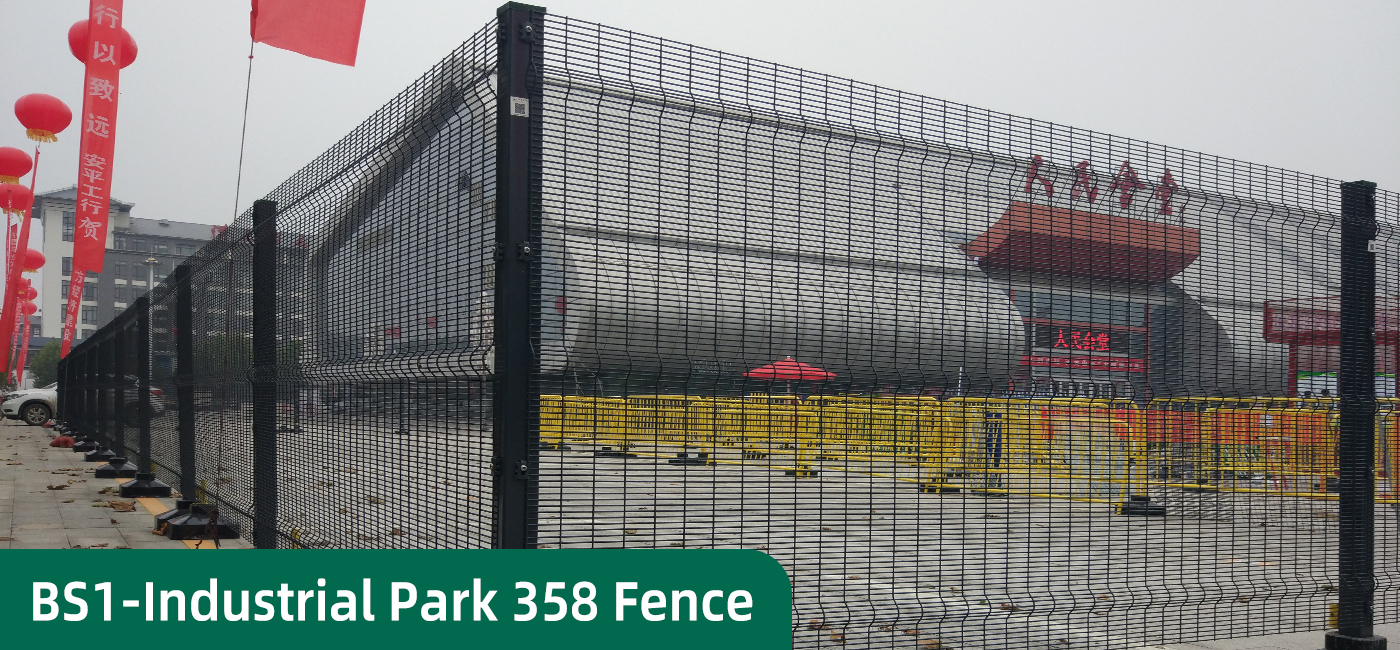
Anti-climb welded mesh uses closely spaced steel wires to form a dense mesh pattern.
A common example is the 358 fence, which typically uses mesh openings of approximately 76.2 × 12.7 mm.
Potential applications include:
- Data center perimeters
- Utility and substation boundaries
- Industrial compounds
- Restricted-access facilities
- Selected transport and logistics sites
The dense mesh makes climbing and cutting more difficult than with many conventional open-mesh designs, while retaining useful visibility through the fence.
Actual performance depends on the complete panel, post, connection and installation specification.
Palisade Security Fencing
Palisade fencing uses vertical steel pales attached to horizontal rails and supporting posts.
Its open structure provides visibility through the boundary, while the profiled pales create a distinctive security-oriented appearance.
Potential applications include:
- Industrial facilities
- Utility compounds
- Commercial storage sites
- Selected infrastructure boundaries
- Restricted-access industrial areas
Palisade fencing can be configured with different pale profiles, rail arrangements, heights and finishes.
Its suitability depends on the intended security function and project requirements.
Expanded Metal Security Fencing
Expanded metal fencing uses metal sheets that are slit and expanded into an integral mesh structure.
Depending on the design, it can provide a more enclosed appearance than conventional welded mesh while retaining some airflow and visibility.
Potential applications include:
- Industrial compounds
- Equipment enclosures
- Selected restricted-access facilities
- Areas requiring partial visual screening
The opening geometry, sheet thickness, frame design and connection method should be selected according to the project’s requirements.
Reinforced Welded Mesh Fencing
Some projects require welded mesh panels with reinforced frames or specially designed posts.
The appropriate arrangement depends on the fence height, panel dimensions, environmental exposure and specified loading conditions.
Reinforcement should be based on the actual design rather than a general claim that a particular frame is suitable for every high-security application.
3. Comparing High-Security Fence Types
| Feature | Anti-Climb Welded Mesh | Palisade Fence | Expanded Metal Fence |
|---|---|---|---|
| Main Structure | Closely spaced welded wires | Vertical steel pales and rails | Expanded metal sheet |
| Visibility | Generally good through the mesh | Generally open | Depends on opening geometry |
| Visual Screening | Limited | Limited | Can provide partial screening |
| Climbing Resistance | Depends on mesh geometry and overall design | Depends on pale geometry and overall design | Depends on opening pattern and installation |
| Customization | Mesh, wire, panel and post options | Pale profile, rails and posts | Sheet pattern, thickness and frame |
| Typical Applications | Data centers, utilities and industrial perimeters | Industrial and commercial boundaries | Selected industrial and restricted-access areas |
| Main Selection Factor | Mesh opening and connection design | Pale profile and structural arrangement | Sheet geometry and visibility requirements |
No single fence type is best for every site. Selection should reflect the security assessment, surveillance requirements, installation conditions and project budget.
4. Typical High-Security Fence Specifications
Bendin can discuss customized configurations according to product design, manufacturing capabilities and project requirements.
| Parameter | Typical Options |
|---|---|
| Product Type | Anti-Climb Mesh / Palisade / Expanded Metal |
| Material | Steel Wire / Steel Profiles / Expanded Steel Sheet |
| Fence Height | Project-specific |
| Panel Width | Customized |
| Mesh Opening | Product-specific |
| Wire Diameter | Product-specific |
| Pale Profile | Selected Palisade Profiles |
| Post Type | Square / Rectangular / Other Compatible Profiles |
| Surface Treatment | Galvanized / Powder Coated / Duplex Coating |
| Fixings | Compatible Clips / Brackets / Specified Fasteners |
| Gate Options | Pedestrian / Vehicle Access |
| Additional Components | Compatible Security Equipment, where required |
| Customization | Height / Width / Material / Finish / Posts / Gates |
These are indicative configuration options rather than a fixed specification. Actual dimensions, materials, coating requirements and connection details should be confirmed before ordering.
For projects requiring a particular security rating, the specification must identify the relevant performance requirements and supporting evidence.
5. Posts, Foundations and Connection Details
A high-security fence is only as reliable as its supporting structure.
Fence Posts
Post dimensions, steel properties and section geometry influence the stability of the complete system.
Square, rectangular and other compatible post profiles may be considered according to the panel design and project requirements.
Foundations
Foundation design depends on soil conditions, post geometry, fence height, environmental loading and the installation method.
A post arrangement that is suitable for one site may not be appropriate for another.
Panel Connections
Clips, brackets and fasteners should be compatible with the selected panels and posts.
For restricted-access sites, the fixing arrangement may need to address tampering risks in accordance with the project specification.
Corners and Changes in Direction
Corner posts and terminal assemblies may experience different loads from intermediate posts.
The layout should account for these positions when preparing the technical specification and bill of materials.
6. Corrosion Protection for Outdoor Security Fencing
High-security fences may be installed in environments ranging from dry inland locations to humid industrial sites and coastal areas.
The appropriate coating depends on the steel specification, manufacturing process and environmental exposure.
Hot-Dip Galvanizing
Hot-dip galvanizing provides a zinc coating that helps protect steel against corrosion.
The required coating specification should be confirmed for the selected product and manufacturing process.
Powder Coating
Powder coating provides a decorative finish and an additional protective layer when applied over an appropriately prepared substrate.
It also allows fence panels, posts and gates to be coordinated with surrounding infrastructure.
Galvanizing Plus Powder Coating
A compatible galvanized substrate combined with powder coating may be selected where both corrosion protection and appearance are important.
The coating system should be specified according to environmental exposure, installation conditions and maintenance requirements.
Claims about a particular service life or corrosion classification should be supported by the relevant product documentation and test evidence.
7. High-Security Fencing for Power and Energy Infrastructure
Power substations, utility facilities and energy infrastructure may require clearly defined restricted-access boundaries.
Anti-climb mesh or palisade fencing may be considered according to the site’s security assessment and operating requirements.
Important selection factors include:
- Required fence height
- Mesh or pale configuration
- Post and foundation design
- Gate access arrangements
- Surveillance visibility
- Corrosion exposure
- Maintenance access
- Applicable electrical and site-safety requirements
Electrical facilities may also require specific clearances, grounding arrangements or other site-specific measures. These should be determined by the responsible engineers.
The fence should be treated as one part of the site’s overall security design.
8. High-Security Fencing for Data Centers
Data centers often require controlled perimeter access and clear visibility around external boundaries.
Anti-climb welded mesh fencing may be considered where the project prioritizes a dense mesh pattern and compatibility with surveillance systems.
The design should account for:
- Perimeter layout
- Gate positions
- Access-control requirements
- Camera coverage
- Lighting
- Environmental exposure
- Inspection and maintenance access
The fence alone does not provide complete site security. Its specification should be coordinated with the wider access-control and monitoring arrangements.
9. High-Security Fencing for Industrial and Storage Facilities
Industrial compounds and high-value storage yards may require fencing to define restricted areas and make unauthorized access more difficult.
Potential applications include:
- Industrial park perimeters
- Equipment storage areas
- Logistics facilities
- Commercial compounds
- Selected manufacturing sites
- Restricted service zones
The correct system depends on the value and nature of the assets, the potential threats, the required visibility and the site’s operating procedures.
Where vehicle ramming is a credible threat, ordinary mesh or palisade fencing should not be assumed to provide vehicle-impact protection. A separately specified and tested vehicle-security system may be required.
10. Gates and Access Control
Gates are often the most operationally complex part of a perimeter fence because they must allow controlled movement while maintaining the required boundary function.
Pedestrian Gates
Pedestrian gates provide access for staff, visitors and maintenance personnel.
The gate dimensions, locking arrangement and access-control provisions should reflect the site’s operational requirements.
Vehicle Gates
Vehicle gates must accommodate the required clear opening and traffic pattern.
The gate posts, hinges, tracks and foundations should be selected for the gate’s dimensions and operating loads.
Access-Control Equipment
Depending on the project, gates may be coordinated with compatible access-control devices and monitoring equipment.
The security design should address the required operating modes, emergency procedures and maintenance access.
A high-security fence specification should include the gates and their supporting structures rather than treating them as unrelated accessories.
11. Supplementary Security Components
Some projects require additional components to support their perimeter-security strategy.
Possible options include:
- Compatible surveillance mounting brackets
- Lighting provisions
- Intrusion-detection equipment interfaces
- Access-control equipment
- Specified top-edge deterrent components
- Additional gate-security features
Any supplementary component should be selected according to the project risk assessment and applicable regulations.
Sharp or razor-type barriers may be restricted in certain jurisdictions or locations accessible to the public. Their use should be reviewed against local legal requirements and safety considerations.
Supplementary equipment does not replace the need for a suitable primary fence, posts, foundations and gates.
12. Common Mistakes When Specifying High-Security Fencing
Selecting Panels Without Evaluating the Supporting Structure
Panels may perform poorly if the posts, connections or foundations are not appropriate for the intended design.
The complete system should be specified and reviewed together.
Choosing a Fence Solely by Its Product Name
Terms such as “anti-climb” or “high-security” do not automatically establish a specific performance rating.
Buyers should confirm the actual mesh, wire, connection and structural specifications.
Ignoring Gate Requirements
Gates can introduce different structural and operational requirements from fixed fence panels.
The gate arrangement should be included in the initial layout and procurement documents.
Over-Specifying Every Boundary Section
Not every part of a site necessarily requires the same fencing configuration.
A site risk assessment can help determine where higher-security systems are necessary and where a different specification may be appropriate.
Ignoring Local Regulations
Top-edge deterrents, access arrangements and other security features may be subject to local regulations.
Requirements should be reviewed during project design rather than after installation.
13. Illustrative Project Example: Industrial Data Center
A data center project requires a defined perimeter around a restricted-access compound, with controlled vehicle and pedestrian entrances.
The project team considers anti-climb welded mesh panels, compatible steel posts, corrosion protection and matching gates.
Preliminary Configuration
| Item | Example Requirement |
|---|---|
| Application | Data Center Perimeter |
| Fence Type | Anti-Climb Welded Mesh |
| Mesh Specification | Selected according to the project security requirements |
| Fence Height | Confirmed by the security design |
| Post Type | Compatible Steel Posts |
| Surface Treatment | Galvanized or Galvanized Plus Powder Coated |
| Connections | Compatible Specified Fixings |
| Gates | Controlled Pedestrian and Vehicle Access |
| Additional Systems | Surveillance and Access Control, where specified |
| Inspection | Panel, Post, Gate and Coating Checks |
The final mesh dimensions, wire diameter, post sections, foundations and gate arrangement should be confirmed against the approved project specification.
This is an illustrative project scenario, not a completed Bendin customer installation.
14. Quality Control and Project Documentation
Quality control for high-security fencing may include:
- Wire diameter and mesh opening
- Panel dimensions and flatness
- Weld quality
- Post section dimensions
- Connection compatibility
- Coating condition
- Gate alignment and operation
- Packaging and labeling
For projects requiring specified impact resistance, intrusion-delay performance or third-party testing, the test method and acceptance criteria should be agreed before production.
Documentation may include product drawings, material information, coating specifications, inspection records and relevant test reports, according to the project