



Professional Equestrian Fence: Anti-Pinch Design and Horse Safety
Equestrian fencing is an important part of horse farm design, stable management and riding facility planning. A suitable fence helps define paddocks, separate horses, manage access and establish clear boundaries around riding and training areas.
Unlike general agricultural fencing, equestrian fence systems must account for horse behavior, movement, visibility and the potential for impact or entanglement. Rail spacing, exposed edges, connection details, gate hardware and structural stability all influence the suitability of the finished installation.
Bendin (Hebei Bendin Industrial Technology Co., Ltd.) supplies customizable metal fencing products for equestrian, agricultural and outdoor applications. Depending on product design and manufacturing availability, options can include steel rails, support posts, galvanized components, powder-coated finishes and project-specific dimensions.
This guide explains anti-pinch design considerations, typical specifications, horse-safety requirements, installation methods and selection factors for professional equestrian facilities.
1. What Is a Professional Equestrian Fence?
An equestrian fence is a boundary system designed for horse paddocks, riding arenas, training areas and selected stable facilities.
Depending on the application, it may use tubular steel rails, vertical steel profiles or other suitable fencing configurations.
A typical system may include:
- Horizontal rails
- Vertical support posts
- Smooth-edge connections
- Mounting brackets and fasteners
- Post caps
- Pedestrian or vehicle gates
- Galvanized or powder-coated finishes
The correct design depends on the number of horses, their behavior, the purpose of the enclosure, site conditions and the facility’s management requirements.
A fence suitable for a general pasture may not be appropriate for a riding arena, breeding facility or handling area without adjustments to its structure and safety features.
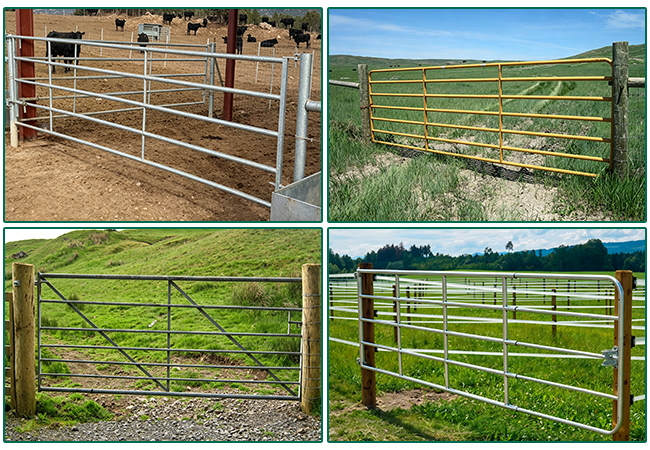
2. Why Anti-Pinch Design Matters
Horses move, turn, lean against barriers and interact with their surroundings in ways that can create risks around poorly designed fencing.
Potential hazards include gaps that trap legs, projecting fasteners, sharp edges and openings that allow a horse’s head or body to become caught.
Anti-pinch design aims to reduce foreseeable trapping and injury hazards through appropriate component geometry and installation.
Smooth Edges
Accessible metal edges should be finished to reduce the risk of cuts or abrasions.
Secure Connections
Rail joints, brackets and fasteners should be positioned and finished to minimize exposed projections.
Carefully Planned Openings
Rail spacing and gaps should be selected according to horse size, behavior and the intended use of the enclosure.
Suitable Gate Hardware
Gate hinges, latches and closing arrangements should minimize trapping points and allow safe handling by riders and stable staff.
Routine Inspection
Even a well-designed fence can become hazardous if connections loosen, components deform or damaged coatings expose sharp edges.
No fence can guarantee that injuries will never occur. The goal is to reduce foreseeable risks through suitable design, installation and maintenance.
3. Typical Equestrian Fence Specifications
Bendin can discuss customized configurations according to project drawings and product availability.
| Parameter | Typical Options |
|---|---|
| Product Type | Professional Equestrian Fence |
| Main Material | Steel Tube / Steel Profile |
| Fence Style | Horizontal Rails / Vertical Profiles / Selected Mesh Designs |
| Fence Height | Project-specific; approximately 1.2–1.5 m may be considered for some applications |
| Panel Width | Customized |
| Rail Quantity | Determined by fence design |
| Rail Spacing | Selected according to horse size and safety requirements |
| Post Type | Square / Rectangular / Other Compatible Profiles |
| Surface Treatment | Hot-Dip Galvanized / Powder Coated / Duplex Coating |
| Color | RAL Colors / Project-Specific Colors |
| Gate Options | Pedestrian / Horse Access / Vehicle Access |
| Mounting | Embedded Posts / Base Plates / Specified Fixings |
| Customization | Height / Width / Rail Spacing / Color / Gate |
These are indicative options, not a universal specification for every equestrian facility. Final height, rail spacing, post dimensions and structural requirements should be confirmed for the horses and intended application.
4. Main Types of Equestrian Fence
Horizontal Rail Fence
Horizontal rail fencing uses rails connected to vertical posts.
It provides a clearly defined boundary and can be configured for paddocks, riding areas and selected stable facilities.
The number of rails, spacing, post dimensions and connection details should be selected according to the intended use.
Tubular Steel Horse Fence
Tubular steel fencing uses steel tubes or profiles to create a structured enclosure.
It may be suitable where a durable metal fence with a consistent appearance is required.
The design should account for smooth edges, connection details, visibility and the risk of trapping.
Mesh Infill Fence
Some facilities use mesh panels for selected animal-management areas.
Mesh size and panel design must be evaluated carefully to reduce the risk of hoof or leg entrapment.
A general welded mesh panel should not automatically be treated as suitable for horses without assessing its openings, edges and connection details.
Paddock and Perimeter Fence
Paddock fencing defines outdoor exercise and grazing areas.
The required structure depends on the horses, terrain, boundary length and management practices of the facility.
5. Material Selection and Corrosion Protection
Equestrian fences are often installed outdoors and exposed to rain, sunlight, moisture and temperature changes.
Material and coating selection should reflect the local climate and intended service conditions.
Galvanized Steel
Galvanized steel uses a zinc coating to help protect the steel substrate against corrosion.
It is commonly considered for outdoor metal fencing.
Powder-Coated Steel
Powder coating provides a decorative finish and an additional protective layer when applied over an appropriately prepared substrate.
It also allows the fence to be coordinated with stable buildings, gates and landscape features.
Duplex Coating
A compatible galvanized base and powder-coated finish can be considered when both corrosion protection and appearance are important.
The coating specification should be confirmed according to the product design and environmental exposure.
A specific service-life claim, such as 20 years, should only be published when supported by product data and clearly defined environmental conditions.
6. Selecting Rail Spacing and Fence Height
Rail spacing and fence height should be determined according to the intended use of the enclosure.
Horse Paddocks
Paddock fences should create a clearly visible boundary and discourage horses from attempting to pass through or jump over the rails.
Riding Arenas
Arena fencing should allow riders and instructors to see the riding area while maintaining an appropriate physical boundary.
The design should avoid protrusions and openings that could interfere with horses or riders.
Stable Separation Areas
Internal separation fencing may require different rail arrangements from an outdoor perimeter fence.
The design should consider daily handling, animal movement and access for staff.
The final dimensions should be confirmed with an equestrian facility designer or qualified professional familiar with the horses and intended application.
7. Gate Design for Horse Safety
Gates are important components of an equestrian fence because they provide access for horses, riders, staff and equipment.
Gate selection should consider:
- Clear opening width
- Gate height
- Hinge arrangement
- Latch design
- Ground clearance
- Operating direction
- Vehicle access where required
- Safe handling and maintenance
Gate hardware should be installed to minimize sharp projections and trapping points.
The gate posts and foundations should be designed for the gate’s dimensions and operating loads rather than automatically using the same specification as intermediate fence posts.
8. Equestrian Fence for Riding Arenas
Riding arenas require a clearly defined boundary that supports horse movement and visibility.
Important considerations include:
- Arena dimensions
- Horse and rider movement
- Fence visibility
- Rail surface and edge finish
- Corner geometry
- Gate locations
- Maintenance access
The fence should be designed for the intended riding activity and the facility’s management requirements.
A fence intended to define an arena boundary should not automatically be treated as a fall-protection or vehicle-impact barrier.
9. Equestrian Fence for Paddocks and Training Facilities
Paddocks, training areas and stable yards may require different fence configurations.
A paddock fence may prioritize outdoor durability and boundary visibility, while a training arena may require a consistent rail arrangement and clearly defined corners.
Breeding and training facilities may also need separate handling areas and controlled access points.
The fence system should be selected according to horse behavior, the activities performed and the access requirements of staff.
10. Equestrian Fence vs. General Animal Fence
Although equestrian fencing and general animal fencing share some materials, their design priorities can differ.
| Feature | Equestrian Fence | General Animal Fence |
|---|---|---|
| Main Purpose | Horse containment and equestrian facility separation | Livestock or wildlife containment |
| Visibility | Important for horse movement | Depends on the species and application |
| Edge Treatment | Requires careful attention to exposed edges | Depends on the intended animals |
| Mesh Selection | Must consider hoof and leg entrapment | Depends on animal size and behavior |
| Rail Arrangement | Often designed around horse movement | May use woven mesh or other structures |
| Gate Design | Must support safe horse and handler access | Depends on the animal and facility |
The correct fence should be selected for the animal species and the actual use of the enclosure.
11. Illustrative Project Example: Equestrian Training Facility
An equestrian training facility requires a perimeter fence around an outdoor training area and several adjacent paddocks.
The project team considers a horizontal rail steel fence with a galvanized base and powder-coated finish.
Preliminary Configuration
| Item | Example Requirement |
|---|---|
| Application | Equestrian Training Facility |
| Fence Type | Horizontal Rail Steel Fence |
| Fence Height | Confirmed according to facility requirements |
| Rail Spacing | Selected for horse size and safety |
| Post Type | Suitable Steel Posts |
| Surface Treatment | Galvanized + Powder Coated |
| Color | Project-Specific RAL Color |
| Gates | Horse Access and Service Gates |
| Inspection | Regular checks of rails, posts and connections |
The final rail spacing, post dimensions, gate arrangement and foundations should be confirmed according to the horses, terrain and intended use.
This is an illustrative project scenario, not a completed Bendin customer installation.
12. Installation and Inspection
A typical equestrian fence installation includes the following steps.
Step 1: Assess the Site
Identify the paddock or arena boundary, terrain, access points and management requirements.
Step 2: Confirm the Fence Design
Select the fence height, rail arrangement, post dimensions and surface treatment.
Step 3: Install Posts
Position the posts according to the approved layout and foundation requirements.
Step 4: Fit Rails and Connections
Install the rails and connectors, checking alignment and the finish of all accessible edges.
Step 5: Install Gates
Confirm that the gates open and close correctly and that latches operate as intended.
Step 6: Inspect for Hazards
Check for protruding fasteners, sharp edges, loose components, damaged coatings and openings that could trap a horse.
Step 7: Maintain the Fence
Inspect the system periodically and repair damaged components before returning the affected area to use.
The inspection frequency should reflect the horses, facility use and environmental conditions.
13. Quality Control
Quality inspection for equestrian fencing may include:
- Steel profile dimensions
- Wall thickness
- Rail dimensions
- Post dimensions
- Connection quality
- Edge finish
- Coating condition
- Gate alignment
- Packaging and labeling
For projects requiring particular safety specifications or third-party testing, the applicable requirements and acceptance criteria should be confirmed before production.
14. Bendin Custom Equestrian Fence Solutions
Bendin supplies customizable metal fencing products for equestrian, agricultural and outdoor applications.
Depending on product design and manufacturing capabilities, customization may include:
- Fence height and length
- Rail arrangement
- Post profiles
- Panel dimensions
- Surface treatment
- Powder-coating color
- Gate design
- Mounting method
- Accessories
- Packaging and OEM requirements
Customers can provide drawings, site dimensions, reference photographs and details about the intended equestrian application for review before ordering.
For horse facilities, it is especially helpful to specify the horse types, intended activity, enclosure layout and any relevant safety requirements.
15. Frequently Asked Questions
What is an equestrian fence used for?
Equestrian fencing is used for horse paddocks, riding arenas, stable facilities, exercise yards and other areas where horse movement needs to be managed.
What is the standard height of a horse fence?
There is no single height suitable for every horse facility. The appropriate height depends on the horses, the enclosure type, the fence design and applicable local requirements.
What does anti-pinch design mean?
Anti-pinch design aims to reduce gaps, sharp projections and connection details that could trap or injure a horse. The effectiveness depends on the complete fence design and installation.
Is galvanized and powder-coated steel suitable for outdoor equestrian facilities?
It is commonly used for outdoor metal fencing. The appropriate coating depends on environmental exposure, product construction and maintenance requirements.
Can Bendin customize fence colors and dimensions?
Customization can be discussed according to product design, manufacturing capabilities and project requirements.
Can the fence include matching gates?
Yes. Compatible access gates can be discussed as part of the complete fencing system.
16. Request a Professional Equestrian Fence Quotation
Equestrian fencing should be selected according to horse behavior, enclosure purpose, fence height, rail spacing, material, coating and installation conditions.
A suitable system combines a clearly visible boundary with carefully designed rails, posts, connections and access gates.
Bendin supplies customizable metal fencing products for equestrian, agricultural and outdoor applications.
For a quotation, provide:
- Intended application
- Required fence height
- Rail arrangement or mesh type
- Post dimensions
- Surface treatment and color
- Gate requirements
- Total fence length
- Project location and destination
Bendin can review your requirements and discuss a suitable equestrian fence configuration for your project.