


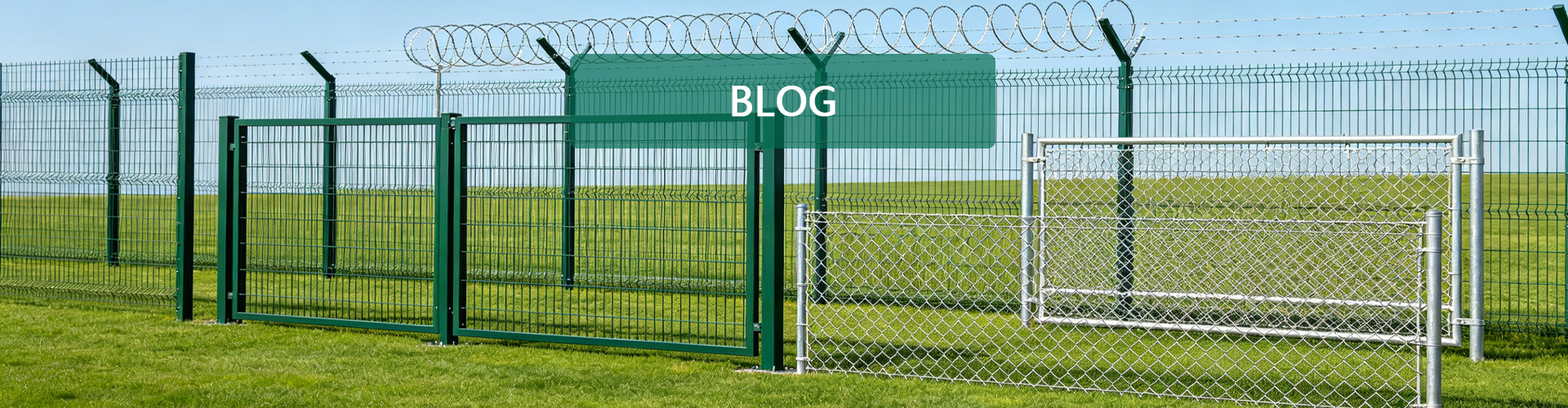
Custom Metal Fence: Materials, Design Options and Matching Gates
A well-designed fence does more than define a property boundary. It contributes to security, privacy, architectural appearance and the overall character of an outdoor space.
Custom metal fencing is widely used for villas, gardens, residential communities, commercial properties, parks and municipal landscaping projects. By combining suitable metal profiles, corrosion-protection treatments, decorative finishes and compatible gates, a fencing system can be tailored to different architectural styles and site requirements.
Bendin (Hebei Bendin Industrial Technology Co., Ltd.) supplies customizable metal fencing products for residential, commercial and outdoor applications. Depending on the selected product, options may include galvanized steel, tubular profiles, welded mesh panels, decorative metal components, powder-coated finishes and matching access gates.
This guide explains metal fence materials, design options, surface treatments, gate configurations and practical considerations for selecting a suitable fencing system.
1. What Is a Custom Metal Fence?
A custom metal fence is a boundary system manufactured or configured according to project-specific dimensions, appearance requirements and functional needs.
Depending on the design, it may use tubular steel, galvanized steel profiles, welded wire mesh or other suitable metal components.
A typical system may include:
- Metal fence panels
- Horizontal rails and vertical pickets
- Supporting posts
- Mounting brackets and fasteners
- Decorative caps and accessories
- Pedestrian gates
- Vehicle access gates
- Galvanized or powder-coated finishes
The final configuration depends on the required fence height, panel dimensions, architectural style, installation method, environmental exposure and budget.
Customizing the fence as a complete system helps coordinate the panels, posts, gates and accessories for a consistent appearance.
2. Choosing the Right Metal Fence Material
Material selection affects structural performance, corrosion resistance, appearance and maintenance requirements.
Galvanized Steel
Galvanized steel uses a zinc coating to help protect the steel substrate against corrosion.
It is commonly considered for outdoor fencing where durability and practical maintenance are important.
Tubular Steel
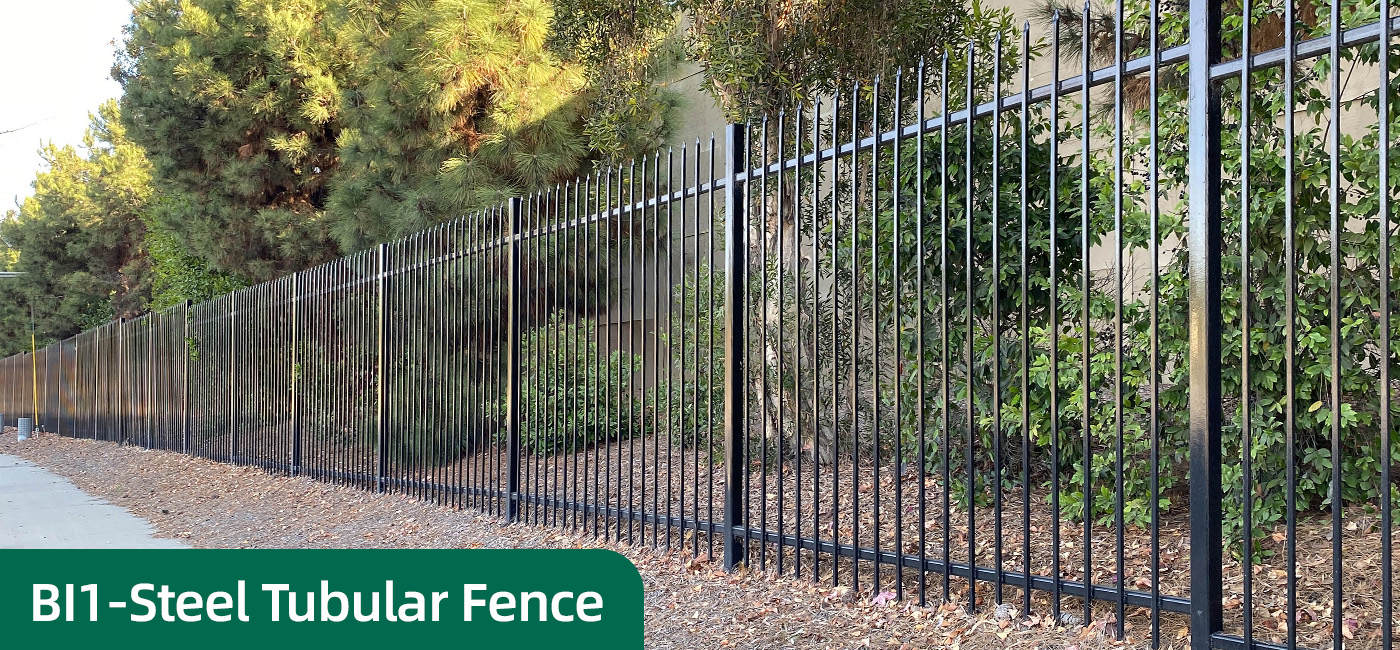
Tubular steel profiles are used in many metal fence designs, including horizontal rail fences, vertical picket fences and decorative boundaries.
The appropriate tube dimensions and wall thickness depend on the fence design and expected loading.
Welded Wire Mesh
Welded mesh fencing uses intersecting steel wires joined through resistance welding.
It may be suitable where an open-grid appearance, visibility and consistent mesh openings are required.
Aluminum
Aluminum fencing may be considered when lower weight and corrosion resistance are important.
Its suitability depends on the profile design, alloy, connections, finish and project requirements.
Composite Components
Selected composite materials may be incorporated into compatible fence designs.
The material’s properties, environmental suitability and compatibility with the metal framework should be confirmed before ordering.
Different materials should not be described as interchangeable. The most appropriate option depends on the intended application and the actual product specification.
3. Typical Custom Metal Fence Specifications
Bendin can discuss customized configurations according to product design and manufacturing capabilities.
| Parameter | Typical Options |
|---|---|
| Product Type | Custom Metal Fence |
| Main Material | Galvanized Steel / Tubular Steel / Other Specified Metal |
| Fence Style | Horizontal Rail / Vertical Picket / Welded Mesh / Decorative Design |
| Fence Height | Approximately 0.8–2.4 m for selected products, subject to design |
| Panel Width | Customized |
| Post Profile | Square / Rectangular / Round / Compatible Profiles |
| Surface Treatment | Galvanized / Powder Coated / Other Specified Finish |
| Color | RAL Colors / Project-Specific Colors |
| Gate Options | Single Swing / Double Swing / Sliding |
| Mounting | Embedded Posts / Base Plates / Specified Fixings |
| Accessories | Post Caps / Brackets / Locks / Hinges |
| Customization | Dimensions / Style / Color / Material / Gate / Packaging |
These are indicative options rather than a fixed specification for every product. Actual dimensions, material grades, wall thicknesses, coating requirements and connection details should be confirmed before ordering.
4. Custom Fence Designs for Different Architectural Styles
The appearance of a metal fence should complement the building and surrounding landscape.
Modern Minimalist Fence
Modern designs often use clean lines, simple geometric profiles and restrained colors.
Square or rectangular steel profiles may be suitable for contemporary villas, commercial properties and residential developments.
Classic Decorative Fence
Decorative metal fences can incorporate shaped pickets, ornamental details and coordinated post caps.
The design should balance appearance with practical requirements such as visibility, maintenance and gate operation.
Garden and Landscape Fence
Garden fencing may prioritize visual integration, boundary definition and a suitable relationship with plants, paths and landscape features.
The fence height, color and spacing can be selected according to the garden layout.
Residential Community Fence
Residential projects often require a consistent appearance across long boundary sections, entrances and pedestrian gates.
Standardized panels and compatible posts can help maintain visual consistency throughout the development.
Municipal and Public-Space Fence
Municipal fencing may be used around parks, public buildings, landscaped areas and selected pedestrian zones.
The specification should reflect the project’s durability, accessibility, appearance and maintenance requirements.
5. Surface Treatment and Corrosion Protection
Outdoor metal fencing may be exposed to rain, humidity, sunlight, pollution and coastal conditions.
The appropriate surface treatment depends on the base material, manufacturing process and expected environmental exposure.
Hot-Dip Galvanizing
Hot-dip galvanizing provides a zinc coating that helps protect steel against corrosion.
The required coating specification should be confirmed for the relevant product and manufacturing process.
Powder Coating
Powder coating provides a decorative finish and an additional protective layer when applied over an appropriately prepared substrate.
It also allows fence panels, posts and gates to be coordinated with the surrounding architecture.
Galvanizing Plus Powder Coating
A compatible galvanized substrate combined with powder coating may be selected when both corrosion protection and appearance are important.
The coating system should be specified according to the environmental exposure and maintenance requirements.
Wood and Composite Components
If a design incorporates timber or composite components, those materials require their own appropriate treatment and maintenance specifications.
Wood pressure impregnation is a wood-preservation process and should not be described as a treatment applied to ordinary metal fence components.
Any claim about environmental safety, non-toxicity or a specific service life should be supported by the relevant material documentation and test evidence.
6. Custom Fence Gates and Matching Accessories
A complete fencing project often requires gates that match the main fence in appearance, material and finish.
Single Swing Gates
Single swing gates may be suitable for pedestrian entrances and selected narrow openings.
The design should account for the clear opening, hinge arrangement, latch and available operating space.
Double Swing Gates
Double swing gates provide a wider opening through two moving leaves.
They may be considered for vehicle entrances where sufficient space is available for the gate leaves to open.
Sliding Gates
Sliding gates move laterally and may be suitable where swing clearance is limited.
The design must account for lateral space, ground conditions, guides, tracks or other specified supporting components.
Gate Hardware
Matching hardware may include:
- Hinges
- Latches and locks
- Gate frames
- Guide components
- Mounting brackets
- Compatible access-control accessories where required
Gate posts may require different dimensions and foundations from intermediate fence posts because they support hinge, latch and operating loads.
The gate configuration should be confirmed as part of the complete fence design.
7. Modular Design and Installation
Modular metal fencing uses coordinated panels, posts and fixing accessories to simplify assembly.
Depending on the system, components may be secured using clips, brackets, bolts or specified insert connections.
Benefits of Modular Construction
- Consistent panel dimensions
- Coordinated post and gate design
- Convenient transportation
- Replacement of individual panels
- Flexible layout planning
- Easier expansion where the system permits
Installation Considerations
Before installation, confirm:
- Fence-line dimensions
- Ground profile and foundation conditions
- Post spacing
- Panel and gate dimensions
- Mounting method
- Connection compatibility
- Drainage and ground clearance
- Access requirements
Actual installation efficiency depends on the design, site conditions, foundation preparation and installation team.
Modular construction can sim