



Color Fence for Urban Landscaping: Design, Specifications and Project Solutions
Modern urban landscaping requires fencing systems that provide perimeter protection while complementing the surrounding architecture and public environment.
For residential communities, schools, parks and municipal developments, fence design influences not only site security but also the overall appearance of the landscape.
BenDin manufactures customizable color fence systems for residential, commercial and public infrastructure projects. Different steel structures, panel dimensions, post configurations and powder-coated colors can be selected according to project requirements.
This guide explains how to select color fencing for different urban applications, including design considerations, technical specifications and project purchasing requirements.
Why Color Fencing Matters in Urban Landscaping
Traditional perimeter fencing is often selected mainly for boundary separation and security.
In modern urban projects, appearance has become another important consideration.
Color fencing allows project designers to coordinate perimeter barriers with buildings, roads, gardens and public spaces.
Its main advantages include:
- Clear perimeter separation
- Flexible architectural appearance
- Multiple color options
- Compatibility with different fence structures
- Outdoor corrosion protection
- Customized project dimensions
The final design should balance appearance, required security and long-term maintenance.
Types of Color Fence for Landscape Projects
Color fencing is not limited to one structural design.
Different steel fence systems can be finished in selected colors according to the intended application.

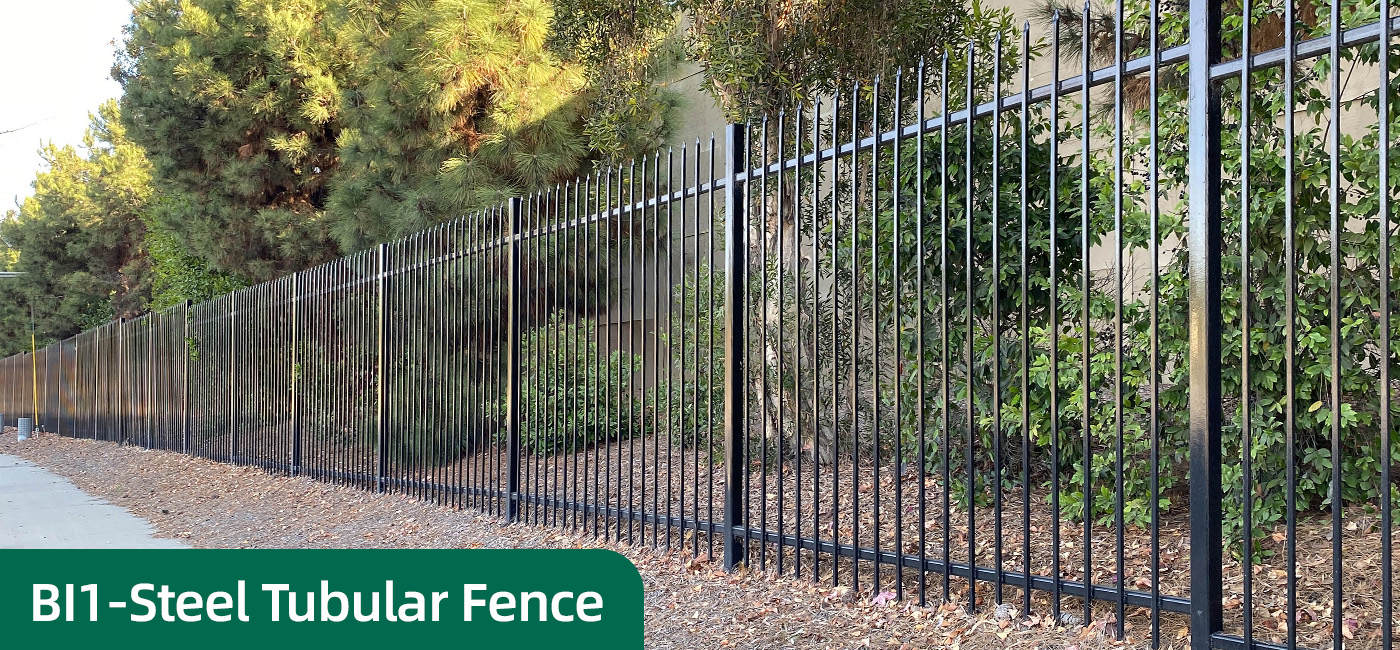
Steel Tubular Color Fence
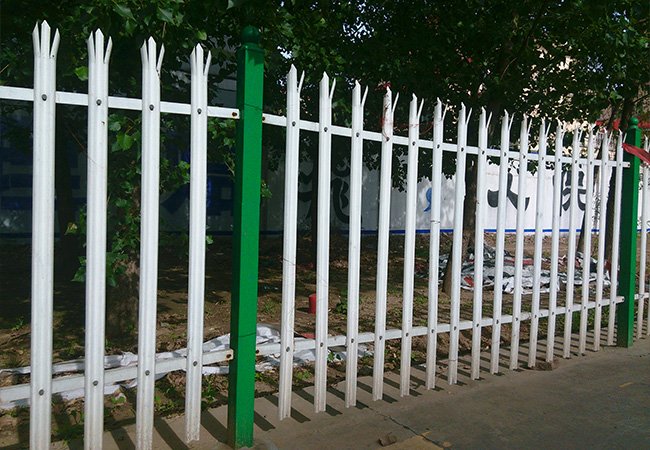
Steel tubular fencing provides a clean architectural appearance.
It is suitable for residential developments, commercial properties and public spaces where the fence is part of the overall building design.
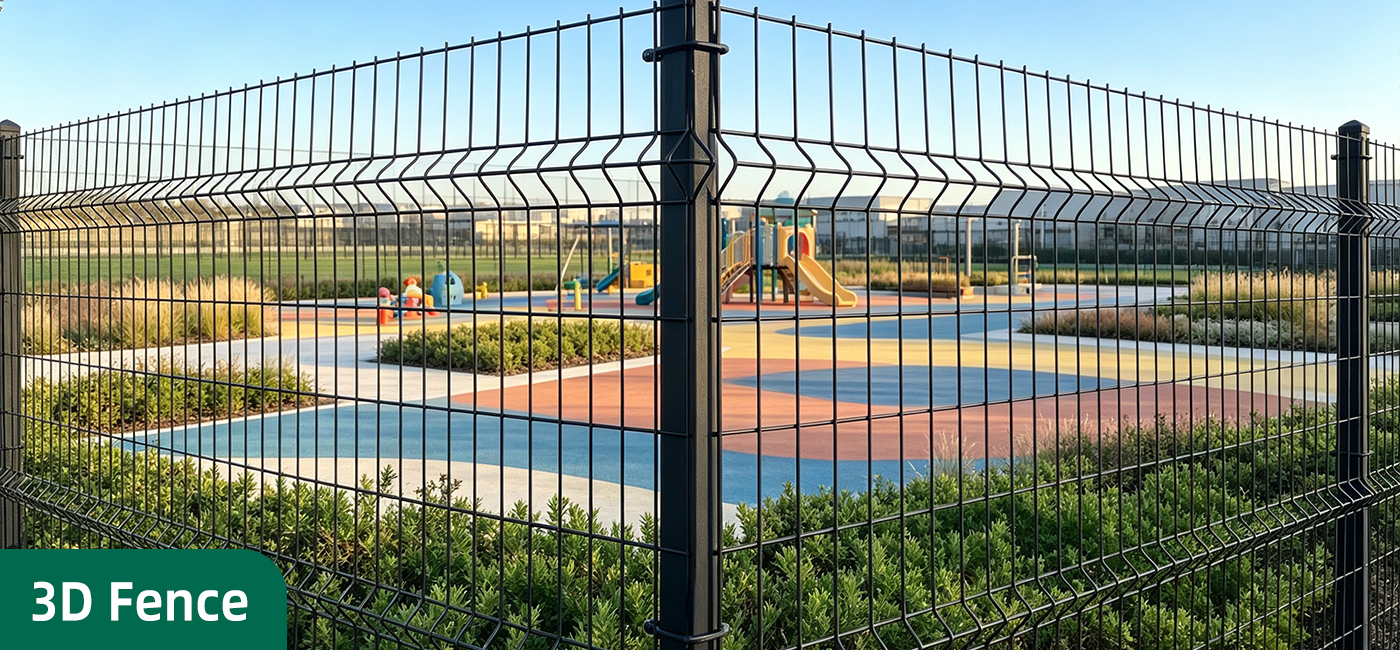
3D Welded Mesh Color Fence
3D welded mesh fencing incorporates horizontal reinforcement bends.
It offers visibility and practical perimeter separation for parks, schools, industrial sites and municipal projects.
Decorative Steel Color Fence
Decorative steel panels can be manufactured with customized patterns, profiles and colors.
These designs may be suitable for landscape projects where architectural appearance is a primary consideration.
Typical Color Fence Specifications
BenDin can manufacture color fencing according to project drawings and technical requirements.
| Item | Typical Options |
|---|---|
| Material | Carbon Steel |
| Fence Type | Tubular / 3D Mesh / Decorative |
| Panel Height | 1.0–2.4 m |
| Panel Width | 2.0–3.0 m |
| Post Type | Square / Round / Customized |
| Surface Treatment | Galvanized + Powder Coated |
| Color System | RAL |
| Common Colors | Green, Blue, Black, White, Gray |
| Installation | Embedded Posts / Base Plates |
| Gates | Pedestrian / Vehicle Gates |
These are typical manufacturing options. Final dimensions, structural details and coatings should be confirmed according to the selected fence type and project requirements.
Color Fence for Residential Communities
Residential fencing should provide a clear boundary while complementing the architecture.
Common design considerations include:
- Fence height
- Visibility
- Picket or mesh spacing
- Gate access
- Architectural style
- Coating color
- Maintenance requirements
Black and anthracite gray are commonly selected for modern residential developments.
White and other lighter colors may be considered where a brighter architectural appearance is preferred.
The appropriate color should be confirmed against the building design and project requirements.
Color Fence for Schools and Kindergartens
Schools and kindergartens require particular attention to safety and access control.
Color fencing can help create an attractive environment, but safety-related design requirements must take priority.
Important considerations include:
- Suitable fence height
- Safe panel openings
- Smooth or appropriately finished edges
- Secure gates
- Suitable spacing between components
- Visibility for supervision
- Appropriate installation details
Color selection can support the visual identity of the facility.
However, a brightly colored fence should not be assumed to meet child-safety requirements without evaluation of the complete design.
Color Fence for Parks and Public Landscapes
Parks and public green spaces often require fencing that visually integrates with natural surroundings.
Green fencing can coordinate with vegetation, while dark gray and black can provide a more understated appearance.
Typical applications include:
- Public parks
- Botanical gardens
- Walking paths
- Recreation areas
- Landscape boundaries
- Scenic facilities
The appropriate fence type depends on whether the project requires decorative separation, access control or stronger perimeter protection.
Color Fence for Municipal Projects
Municipal fencing may be installed along selected public roads, utility areas and public facilities.
Design considerations can include:
- Consistent appearance
- Corrosion protection
- Visibility
- Maintenance access
- Site-specific safety requirements
- Replacement of damaged sections
For roadside applications, fencing should be selected according to the applicable road and pedestrian safety requirements.
Decorative color fencing should not be used as a substitute for an engineered vehicle restraint barrier.
Choosing RAL Colors for Different Projects
RAL colors provide a standardized reference for architectural coating selection.
| RAL Code | Color | Suggested Application |
|---|---|---|
| RAL 6005 | Moss Green | Parks and Green Spaces |
| RAL 9005 | Jet Black | Residential and Commercial |
| RAL 7016 | Anthracite Grey | Modern Urban Developments |
| RAL 9016 | Traffic White | Decorative and Public Projects |
| RAL 5015 | Sky Blue | Selected Educational and Recreational Areas |
| RAL 7035 | Light Grey | Municipal and Industrial Facilities |
Color selection should consider the surrounding environment and architectural design.
For large orders, a physical color sample should be approved before production.
Example: 450-Meter Residential Landscape Project
Consider a residential community requiring approximately 450 meters of color fencing.
A preliminary configuration might include:
| Item | Example Specification |
|---|---|
| Total Fence Length | 450 m |
| Fence Height | 1.5 m |
| Panel Width | 2.5 m |
| Fence Type | Steel Tubular |
| Surface Treatment | Galvanized + Powder Coated |
| Color | RAL 7016 Anthracite Grey |
| Post Type | Square Steel Post |
| Gates | According to Site Layout |
Using 2.5-meter-wide panels:
450 ÷ 2.5 = approximately 180 panel sections.
Additional components may be required for corners, gates, changes in elevation and special installation areas.
This is an illustrative procurement example, not a claimed completed BenDin customer project.
Corrosion Protection for Outdoor Projects
Outdoor color fencing is exposed to rain, sunlight, humidity and temperature changes.
A suitable protective coating helps maintain the appearance and condition of steel fencing.
For many outdoor projects, galvanized steel combined with polyester powder coating is a practical option.
However, coating performance depends on:
- Surface preparation
- Galvanizing specification
- Powder coating material
- Coating thickness
- Application process
- Environmental exposure
The appropriate finish should be selected according to the project’s durability requirements.
Custom Color Fence Manufacturing
BenDin can manufacture color fencing according to architectural drawings and project specifications.
Customization options include:
- Fence type
- Panel height and width
- Mesh or tubular dimensions
- Post type
- Surface treatment
- RAL colors
- Decorative elements
- Pedestrian gates
- Vehicle gates
- Installation accessories
For project orders, customers can provide drawings and approved color samples before production.
How to Select Color Fence for a Project
When choosing color fencing, project buyers should evaluate more than appearance.
1. Application
Determine whether the fence is intended for residential, educational, landscape or municipal use.
2. Structural Design
Select a suitable tubular, welded mesh or decorative structure.
3. Safety Requirements
Confirm height, openings, gates and other site-specific safety considerations.
4. Surface Treatment
Choose a coating system appropriate for the installation environment.
5. Color Consistency
Confirm RAL color codes and approved samples.
6. Installation
Specify post dimensions, foundations and connection methods.
7. Maintenance
Consider cleaning, inspection and replacement of damaged components.
These details help buyers compare complete fencing solutions rather than only decorative appearance.
Frequently Asked Questions
What is a color fence?
A color fence is a fencing system finished in a selected decorative color, commonly using powder-coated steel.
Which color is suitable for landscape fencing?
Green, black and gray are common choices. The best color depends on the surrounding architecture and landscape design.
Can color fencing be used for schools?
Yes, provided the complete fence design meets the relevant project safety requirements.
Is galvanized and powder-coated fencing suitable for outdoor use?
Yes, when the coating system is appropriately specified and applied for the intended environment.
Can BenDin customize fence colors and dimensions?
Yes. BenDin can manufacture different panel dimensions, structures, colors, posts and gates according to confirmed project requirements.
Request a Custom Color Fence Quote
BenDin supplies customizable color fencing for residential communities, schools, parks, commercial developments and municipal projects.
For an accurate quotation, provide:
Project application + fence type + total length + height + panel width + RAL color + surface treatment + gates + destination.
BenDin can manufacture matching fence panels, posts, gates and accessories according to confirmed project specifications.