


How Long Does a Chain Link Fence Last? Materials, Corrosion Protection and Maintenance
Chain link fencing is widely used for industrial sites, warehouses, commercial properties, sports facilities and outdoor perimeter protection. Its interwoven steel wire structure offers flexibility, visibility and practical security at a competitive cost.
However, the service life of a chain link fence depends on more than the strength of its steel wire. Material quality, galvanizing, coating thickness, environmental exposure, installation and maintenance all affect long-term performance.
BenDin manufactures customizable chain link fencing systems for international distributors, contractors and industrial project buyers. This guide explains the main factors affecting fence durability and how to select a suitable system for different operating environments.
How Long Does a Chain Link Fence Last?
A properly specified and maintained chain link fence can remain functional for many years. However, there is no single lifespan that applies to every installation.
Service life depends on:
- Steel wire quality and diameter
- Zinc coating type and thickness
- Additional polymer coatings
- Environmental conditions
- Fence installation quality
- Mechanical loading
- Maintenance frequency
A fence installed in a relatively dry inland environment may experience different corrosion conditions from one installed near the coast or in an industrial area with chemical exposure.
For this reason, buyers should evaluate coating specifications and installation conditions rather than relying only on a supplier’s advertised service-life figure.

Why Material Quality Matters
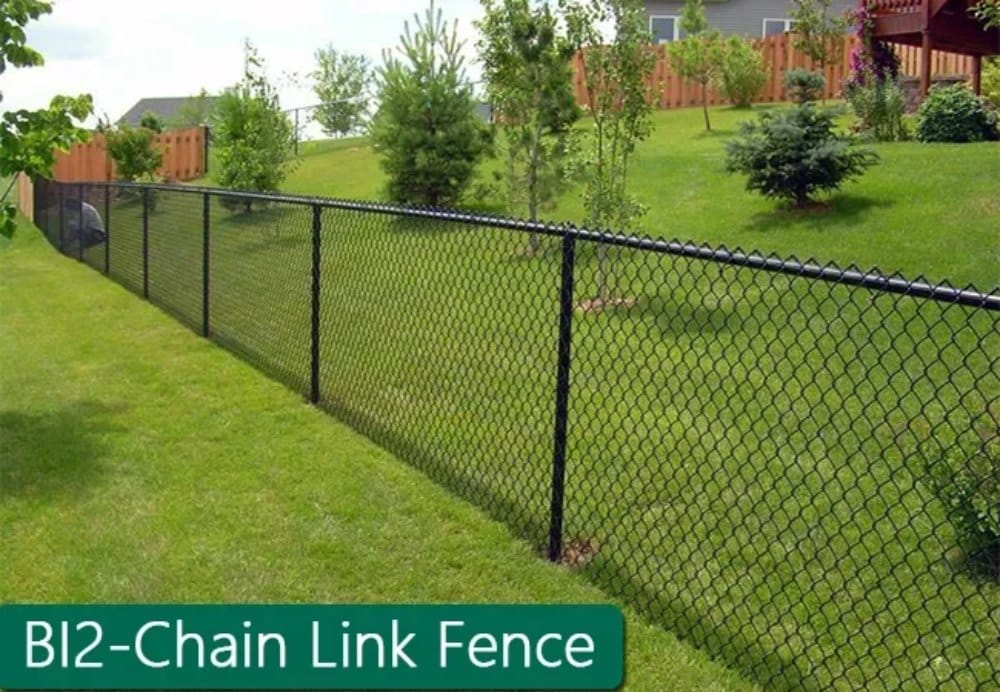
Chain link fencing normally consists of interwoven steel wire supported by posts, rails and tensioning components.
The mesh itself is flexible, but the complete fence relies on the supporting structure to maintain tension and stability.
BenDin offers galvanized steel wire mesh and steel supporting components manufactured according to confirmed project specifications.
Important material considerations include:
Wire Diameter: Thicker wire generally provides greater resistance to deformation.
Steel Quality: Consistent wire properties help maintain uniform mesh construction.
Post Strength: Post diameter, wall thickness and spacing influence overall fence stability.
Connection Quality: Tension bars, bands, ties and fasteners must be compatible with the fence design.
The complete system should be evaluated rather than judging durability from mesh wire diameter alone.
Typical Chain Link Fence Specifications
The following specifications represent common manufacturing options for industrial and commercial projects.
| Item | Typical Options |
|---|---|
| Wire Material | Galvanized Carbon Steel |
| Wire Diameter | 2.0–5.0 mm |
| Common Wire Sizes | 2.5, 3.0, 3.5, 4.0 mm |
| Mesh Opening | 40×40, 50×50, 60×60 mm |
| Fence Height | 1.0–3.0 m |
| Mesh Edge | Knuckled / Twisted |
| Post Material | Q235 Steel or Specified Equivalent |
| Post Type | Round / Square Steel Tube |
| Surface Treatment | Galvanized / Polymer Coated |
| Common Colors | Green / Black |
| Installation | Embedded Posts / Base Plates |
These are indicative manufacturing options. Actual product specifications and available coating processes should be confirmed with BenDin before ordering.
How Galvanizing Protects Chain Link Fence
Galvanizing applies a zinc coating to steel to reduce corrosion.
Zinc provides a protective barrier and can also offer sacrificial protection to exposed steel in appropriate conditions.
For chain link fencing, buyers should distinguish between different manufacturing processes.
Galvanized Before Weaving
Steel wire is galvanized before being formed into chain link mesh.
The finished mesh is then produced by interlocking the galvanized wires.
Galvanized After Weaving
The chain link mesh is formed first and then galvanized using a suitable process.
These two approaches can produce different coating characteristics.
When comparing quotations, buyers should confirm the manufacturing process and required zinc coating specification.
Galvanized vs Coated Chain Link Fence
Galvanized and polymer-coated chain link fencing can both be suitable for outdoor use.
| Feature | Galvanized Fence | Polymer-Coated Fence |
|---|---|---|
| Corrosion Protection | Zinc Coating | Depends on Steel Substrate and Polymer System |
| Appearance | Metallic | Colored |
| Common Colors | Silver / Gray | Green / Black |
| Main Consideration | Zinc Coating Thickness | Steel Core, Coating Material and Thickness |
| Applications | Industrial / Commercial | Commercial / Residential / Sports |
| Maintenance | Periodic Inspection | Periodic Inspection |
Polymer-coated mesh should not automatically be described as galvanized plus coated. Buyers should confirm whether the steel wire core is galvanized.
Likewise, powder coating is more commonly specified for rigid steel components such as posts and gates, while flexible chain link mesh often uses PVC or another suitable polymer coating.
What Causes Chain Link Fence to Rust?
Corrosion can develop when the protective coating becomes damaged, insufficient or unsuitable for the operating environment.
Common causes include:
1. Coastal Exposure
Airborne salts can increase the corrosion risk for outdoor steel fencing.
2. Industrial Pollution
Certain industrial environments may expose fencing to corrosive substances.
3. Damaged Coatings
Scratches, cut edges and installation damage may expose the underlying steel.
4. Standing Water
Poor drainage around posts and foundations can increase moisture exposure.
5. Inadequate Maintenance
Failure to inspect damaged components can allow localized corrosion to progress.
Selecting a suitable coating system and maintaining drainage can help reduce these risks.
How to Extend Chain Link Fence Service Life
Regular inspection and maintenance can help identify problems before they affect the complete fence.
Recommended maintenance practices include:
- Inspect mesh and posts periodically
- Check for damaged coatings
- Remove accumulated debris
- Maintain drainage around posts
- Inspect tension wires and fittings
- Tighten loose connections where necessary
- Repair damaged protective coatings using appropriate methods
- Replace severely corroded components
Maintenance frequency should be based on environmental exposure and the importance of the perimeter.
Chain Link Fence for Different Environments
Industrial Facilities
Industrial sites may require heavier wire, robust posts and suitable corrosion protection.
Buyers should consider mechanical exposure, site access and maintenance requirements.
Coastal Properties
Coastal projects may require enhanced corrosion protection due to salt exposure.
The coating specification should be selected according to the local environment.
Warehouses and Commercial Sites
Chain link fencing can provide practical perimeter separation while maintaining visibility.
Post spacing, gates and tensioning components should be selected according to the site layout.
Sports Facilities
For sports applications, fence height, mesh size and wire coating should be selected according to the activity and required containment.
Example: 500-Meter Industrial Perimeter Project
Consider a warehouse facility requiring approximately 500 meters of chain link fencing.
A preliminary specification might include:
| Item | Example Requirement |
|---|---|
| Total Length | 500 m |
| Fence Height | 2.0 m |
| Wire Diameter | 3.0 mm |
| Mesh Opening | 50×50 mm |
| Mesh Finish | Galvanized |
| Post Material | Q235 Steel |
| Post Spacing | 2.5 m |
| Gates | According to Site Layout |
At a nominal post spacing of 2.5 meters:
500 ÷ 2.5 = approximately 200 fence spans.
The final post quantity will depend on the number of corners, gates and separate fence runs.
This is an illustrative procurement example, not a completed BenDin customer project.
How to Choose a Durable Chain Link Fence
For long-term projects, buyers should confirm the following details before placing an order.
1. Wire Diameter
Confirm the actual steel core diameter, especially for coated mesh.
2. Zinc Coating
Request the required galvanizing process and coating specification.
3. Mesh Opening
Choose the mesh size according to the intended perimeter function.
4. Post Dimensions
Confirm post diameter, wall thickness and spacing.
5. Coating System
Specify whether the mesh and posts are galvanized, polymer-coated or finished using another approved system.
6. Installation Environment
Identify whether the project is inland, coastal or exposed to industrial corrosion.
7. Accessories
Confirm tension bars, bands, ties, gates and fasteners.
Comparing complete specifications helps avoid choosing a lower-priced product with insufficient material or coating protection.
Custom Chain Link Fence Manufacturing
BenDin supplies chain link fencing according to confirmed project requirements.
Available customization options include:
- Wire diameter
- Mesh opening
- Fence height
- Roll length
- Galvanized finish
- Polymer coating
- Colors
- Post dimensions
- Rails and tension wires
- Gates and accessories
- Export packaging
For industrial and commercial projects, customers can provide technical drawings or detailed specifications before production.
Frequently Asked Questions
Does galvanized chain link fence rust?
Galvanizing helps protect steel against corrosion, but it does not make fencing permanently rust-proof. Long-term performance depends on coating quality and environmental exposure.
Is PVC-coated chain link fence more durable?
A suitable polymer coating can provide additional protection, but performance depends on the coating system, steel substrate and installation environment.
What wire diameter is suitable for industrial fencing?
Common options include 3.0 mm, 3.5 mm and 4.0 mm. The correct specification depends on the required performance and project design.
How often should chain link fencing be inspected?
Inspection frequency depends on the environment, site use and risk level. Fencing in corrosive or high-traffic areas may require more frequent checks.
Can damaged chain link fence components be replaced?
Yes. Mesh sections, posts, tensioning accessories and gates can often be replaced individually depending on the system design.
Request a Chain Link Fence Quote
BenDin supplies customizable chain link fencing for industrial, commercial, residential and infrastructure projects worldwide.
For an accurate quotation, provide:
Fence height + total length + wire diameter + mesh opening + coating specification + post dimensions + accessories + destination.
BenDin can manufacture chain link mesh, posts, gates and accessories according to confirmed project requirements.