



Bending Fence Post Types: Eight Profiles, Specifications and Applications
The post is a critical component of a bending fence system. It supports the welded mesh panels, provides fixing points and helps maintain the alignment and stability of the complete fence.
Different post profiles offer different connection arrangements, appearances and structural characteristics. Selecting a suitable post depends on the fence panel design, required height, site conditions, installation method, surface treatment and project budget.
Bendin (Hebei Bendin Industrial Technology Co., Ltd.) offers a range of fence post configurations for compatible 3D bending fence systems, including peach-shaped, square, rectangular, round, dovetail, I-beam, CM and BD posts, subject to product design and availability.
This guide compares the eight post profiles, explains their typical applications and provides practical guidance for specifying a compatible fence system.
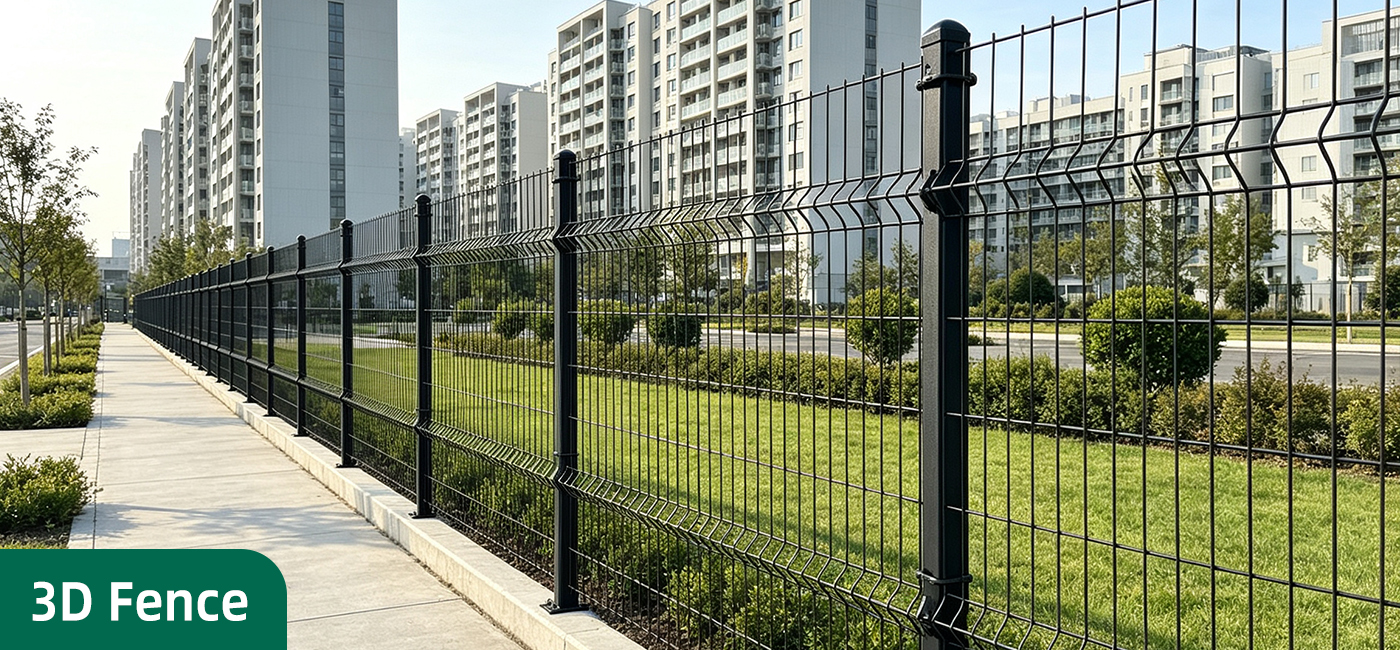
1. Why Fence Post Selection Matters
A bending fence system typically consists of V-bend welded mesh panels, supporting posts, fixing accessories and foundations.
The posts transfer loads from the fence panels to the supporting ground or structure. Their dimensions, section geometry, material properties and installation conditions affect the behavior of the complete fence.
When selecting a post, buyers should consider:
- Fence height and panel width
- Mesh wire diameter and opening
- Post section dimensions and wall thickness
- Connection type and fixing locations
- Wind exposure and expected loading
- Ground conditions and foundation design
- Corrosion protection requirements
- Appearance and project budget
A particular post profile should not automatically be considered stronger than another. Structural performance depends on the actual dimensions, material, loading direction, connections and installation.
2. Overview of the Eight Fence Post Types
Bendin’s post selection can include eight profile types for compatible bending fence systems.
| Post Type | Main Design Characteristic | Typical Selection Consideration |
|---|---|---|
| Peach-Shaped Post | Distinctive shaped profile | Appearance and dedicated panel connections |
| Square Post | Symmetrical square section | Modular installation and regular appearance |
| Rectangular Post | Rectangular section | Section dimensions and structural requirements |
| Round Post | Circular section | Diameter and compatible clamps |
| Dovetail Post | Profile-specific connection geometry | Compatibility with the designated fixing system |
| I-Beam Post | I-shaped section | Section orientation and structural design |
| CM Post | Product-specific profile | Verified connection details and system compatibility |
| BD Post | Bendin-designated profile | Actual dimensions and compatible accessories |
These descriptions provide a general selection guide. Final characteristics should be confirmed against the manufacturer’s technical drawings because proprietary post names do not establish a universal cross-section or performance rating.
3. Peach-Shaped Fence Post
Peach-shaped posts use a distinctive profile and are often selected where the appearance of the complete fence is important.
Main Characteristics
- Shaped profile with a distinctive visual appearance
- Dedicated connection components, depending on the system
- Options for compatible welded mesh panels
- Potential coordination with residential and landscape designs
Typical Applications
Peach-shaped posts may be considered for residential communities, parks, gardens and selected municipal projects.
Before ordering, confirm the exact post cross-section, fixing method, panel compatibility and available dimensions.
4. Square Fence Post
Square posts use a symmetrical cross-section and are commonly used in modular welded mesh fencing.
Main Characteristics
- Regular geometric appearance
- Defined mounting faces
- Compatibility with suitable clips or brackets
- Flexible section dimensions, subject to availability
Typical Applications
Square posts may be suitable for residential boundaries, schools, commercial properties, parks and industrial perimeters.
Their structural performance depends on section dimensions, wall thickness, steel properties, post spacing, connections and foundation conditions.
5. Rectangular Fence Post
Rectangular posts have a longer and shorter cross-sectional dimension.
This geometry may be useful where the post’s orientation and section properties need to be coordinated with the fence design.
Main Characteristics
- Rectangular section geometry
- Defined orientation for installation
- Compatibility with suitable fixing arrangements
- Project-specific dimensions and wall thicknesses
Typical Applications
Rectangular posts may be considered for larger fence panels, selected industrial boundaries and projects with specific structural or visual requirements.
The actual performance advantage depends on the section dimensions and the direction of loading. A rectangular post is not automatically stronger than a square post under every loading condition.
6. Round Fence Post
Round posts use a circular cross-section and can be paired with compatible mesh panels and connection accessories.
Main Characteristics
- Circular profile
- Simple appearance
- Compatibility with suitable clamps or brackets
- Options for different diameters and wall thicknesses
Typical Applications
Round posts may be considered for parks, schools, general perimeter fencing and selected agricultural or commercial projects.
The connection system should be designed for the actual post diameter and panel arrangement.
7. Dovetail Fence Post
Dovetail posts use a specialized profile whose geometry and connection method depend on the product design.
Main Characteristics
- Distinctive profile
- Potential use with dedicated panel fixing components
- Product-specific connection geometry
- Customization subject to manufacturing capabilities
Typical Applications
Dovetail posts may be considered for compatible fence systems where the designated connection arrangement provides an installation or design advantage.
The term “dovetail post” alone does not establish that the post has barbed edges, anti-climb features or a particular security rating. Those characteristics should be confirmed from the actual drawing and product specification.
8. I-Beam Fence Post
I-beam posts use an I-shaped cross-section.
They may be considered where the project calls for a particular structural section or an engineered connection arrangement.
Main Characteristics
- I-shaped cross-section
- Defined section orientation
- Project-specific dimensions
- Compatible fixings where designed
Typical Applications
I-beam posts may be considered for selected industrial and infrastructure fencing projects.
Their suitability depends on the post dimensions, material properties, loading direction, foundation and connection details.
The I-shaped profile alone does not prove a specific impact rating or security classification.
9. CM Fence Post
CM post is a product-specific designation rather than a universal industry-standard profile.
Its exact geometry, connection method and performance should be confirmed using the relevant technical drawing.
Main Characteristics
- Product-specific section design
- Compatible fixing accessories, where specified
- Defined installation arrangement
- Potential customization according to product availability
Typical Applications
CM posts may be considered for compatible bending fence systems where their actual connection design meets the project requirements.
If a CM post is promoted as improving installation efficiency, the claim should be supported by the actual fixing arrangement and a clearly defined comparison.
10. BD Fence Post
BD post is a Bendin-designated profile. Its exact shape, dimensions and connection method should be confirmed using Bendin’s product drawings.
Main Characteristics
- Product-specific profile
- Intended for compatible panels and fixing accessories
- Options subject to the product design
- Potential coordination with matching gates and accessories
Typical Applications
BD posts may be considered for projects where the corresponding mesh panel and connection system have been verified.
The BD designation alone does not establish a particular load rating, anti-climb performance or security classification.
Before ordering, confirm the section drawing, wall thickness, fixing locations and compatible panel models.
11. Comparing Post Profiles for Project Selection
The eight post types should be compared using measurable specifications rather than names alone.
| Selection Factor | What to Confirm |
|---|---|
| Cross-Section | Actual shape and dimensions |
| Steel Thickness | Specified wall or section thickness |
| Material | Steel grade and relevant documentation |
| Panel Compatibility | Compatible panel models and fixing points |
| Connection Method | Clips, brackets, bolts or dedicated accessories |
| Installation | Embedded posts or base-plate mounting |
| Loading Requirements | Applicable structural design conditions |
| Surface Treatment | Galvanizing, powder coating or other specified finish |
| Appearance | Profile and color requirements |
| Maintenance | Inspection and component replacement requirements |
For a meaningful comparison, the post options should be assessed using equivalent design conditions and the actual technical specifications.
12. Typical Bending Fence Specifications
Bendin can discuss customized configurations according to product drawings and manufacturing capabilities.
| Parameter | Typical Options |
|---|---|
| Fence Type | 3D Bending Welded Mesh Fence |
| Mesh Opening | Common configurations include 50 × 200 mm, subject to design |
| Wire Diameter | Selected configurations may use approximately 3.0–6.0 mm wire |
| Panel Height | Approximately 1.0–2.4 m, subject to availability |
| Panel Width | Commonly around 2.0–2.5 m, customized |
| Reinforcement | V-Shaped Horizontal Bends |
| Post Types | Peach / Square / Rectangular / Round / Dovetail / I-Beam / CM / BD |
| Surface Treatment | Galvanized / Powder Coated / Other Specified Finishes |
| Color | RAL Colors / Project-Specific Colors |
| Connection | Clips / Brackets / Bolted Fixings |
| Gates | Compatible pedestrian and vehicle gates, where available |
| Customization | Panel / Post / Fixing / Color / Gate |
These are indicative configuration options rather than a fixed specification for every product. Final wire diameters, mesh openings, panel dimensions, post sections, coating requirements and connection details should be confirmed before production.
13. Post and Panel Compatibility
The connection between the mesh panel and post is a key part of the complete fence system.
Clips and Brackets
Clips and brackets connect panels to compatible posts. Their dimensions and fixing arrangements depend on the selected profile.
Bolted Connections
Bolted connections may be used where the design requires mechanical fixing or convenient component replacement.
Dedicated Fixing Systems
Some post profiles require dedicated clips or brackets. Peach, dovetail, CM and BD posts should not be assumed to share the same fixing system unless compatibility has been confirmed.
Gate Posts
Gate posts may require different dimensions and foundations from intermediate posts because they support hinges, latches and operating loads.
Before ordering, confirm that the mesh panels, posts, fixing accessories and gates are designed to work together as a complete system.
14. Surface Treatment and Corrosion Protection
Outdoor fence posts may be exposed to rain, humidity, sunlight, pollution and coastal conditions.
The appropriate surface treatment depends on the steel specification, manufacturing process and intended environment.
Hot-Dip Galvanizing
Hot-dip galvanizing provides a zinc coating that helps protect steel against corrosion.
The required coating specification should be confirmed for the relevant product and manufacturing process.
Powder Coating
Powder coating provides a decorative finish and additional surface protection when applied over an appropriately prepared substrate.
It allows posts and panels to be coordinated with the surrounding buildings and landscape.
Galvanizing Plus Powder Coating
A compatible zinc coating combined with powder coating may be selected when both corrosion protection and appearance are important.
The coating system should be specified according to environmental exposure and maintenance requirements.
A fixed service-life claim should only be published when supported by product data and clearly defined environmental conditions.
15. Illustrative Project Example: Municipal Boundary Fence
A municipal project requires 500 meters of 3D bending fence around a public facility.
The project team compares square, round and peach-shaped posts to evaluate appearance, fixing compatibility and installation requirements.
Preliminary Configuration
| Item | Example Requirement |
|---|---|
| Application | Municipal Boundary |
| Total Fence Length | 500 m |
| Fence Height | 1.8 m |
| Panel Width | 2.5 m |
| Mesh Type | V-Bend Welded Mesh |
| Post Options | Square / Round / Peach-Shaped |
| Surface Treatment | Galvanized + Powder Coated |
| Color | Project-Specific RAL Color |
| Connections | Compatible Clips or Brackets |
| Gates | Matching access gates, where required |
Preliminary Panel Quantity
Using a nominal panel width of 2.5 meters:
500 ÷ 2.5 = 200 nominal panel positions
The final quantity should account for gate openings, corners, changes in direction and installation allowances.
The post profile, section dimensions, connection hardware, foundations and gate requirements should be confirmed before manufacturing.
This is an illustrative project scenario, not a completed Bendin customer installation.
16. Installation and Inspection
A typical installation process includes the following steps.
Step 1: Confirm the Fence Layout
Measure the fence line and identify corners, ground-level changes and gate positions.
Step 2: Select the Post Profile
Choose a suitable post based on the panel design, installation requirements, appearance and project specification.
Step 3: Confirm the Fixing System
Verify the compatibility of clips, brackets, bolts and panel fixing points.
Step 4: Prepare the Foundations
Determine whether posts will be embedded or fixed using base plates and suitable anchors.
Step 5: Install the Posts
Position posts according to the approved layout and foundation requirements.
Step 6: Attach the Panels
Fit the mesh panels using the specified fixing accessories.
Step 7: Inspect the Completed Fence
Check panel alignment, post stability, fixing security and coating condition.
Installation should follow the approved drawings and applicable project requirements.
17. Quality Control
Quality inspection for a multi-post bending fence system may include:
- Post section dimensions
- Steel thickness
- Post straightness
- Surface coating
- Panel dimensions
- Wire diameter and mesh opening
- Weld quality
- Fixing compatibility
- Packaging and labeling
For projects requiring specific structural performance or third-party inspection, the applicable test methods and acceptance criteria should be agreed before production.
18. Bendin Custom Bending Fence Post Solutions
Bendin supports customizable post and mesh configurations for residential, municipal, commercial and selected industrial applications.
Customization may include:
- Post profile and dimensions
- Steel thickness
- Panel height and width
- Wire diameter
- Mesh opening
- Connection accessories
- Surface treatment
- Powder-coating color
- Gate compatibility
- Packaging and OEM requirements
Customers can provide drawings, site dimensions, reference photographs and technical specifications for review before ordering.
For large projects, coordinating the panels, posts, fixings and gates under one specification can simplify procurement and installation planning.
19. Frequently Asked Questions
How many post types are available?
The product range described in this guide includes peach-shaped, square, rectangular, round, dovetail, I-beam, CM and BD post types. Actual availability should be confirmed for the required fence system.
Which post type is the strongest?
There is no universal answer. Structural performance depends on section dimensions, steel properties, loading direction, post spacing, connections and foundations.
Can all eight post types use the same fence panel?
Not necessarily. Compatibility depends on the post profile, fixing arrangement and panel design. The connection details should be confirmed before ordering.
Can Bendin customize post dimensions and colors?
Customization can be discussed according to product design, manufacturing capabilities and project requirements.
Can matching gates be supplied?
Compatible pedestrian and vehicle gates can be discussed as part of the complete fencing system.
Which surface treatment is suitable for outdoor use?
Galvanized and powder-coated configurations may be considered depending on environmental exposure, coating specifications and maintenance requirements.
20. Request a Bending Fence Post Quotation
Selecting a suitable fence post requires more than choosing a profile name. The post, mesh panel, fixing accessories, surface treatment and foundation should be evaluated as a complete system.
Bendin supplies customizable bending fence components and compatible mesh systems for international distributors, contractors and project owners.
For a quotation, provide:
- Required fence height
- Panel width and mesh opening
- Wire diameter
- Preferred post profile
- Post dimensions or drawings
- Connection method
- Surface treatment and color
- Gate requirements
- Total fence length
- Project location and destination
Bendin can review your requirements and discuss a suitable bending fence post configuration for your project.