



Australian Standard Temporary Fence: Complete Guide for Construction & Project Buyers
Temporary fencing is widely used across Australia for construction sites, civil works, road projects, public events and temporary restricted areas. For contractors, fencing distributors and project procurement teams, choosing a temporary fence is not simply a matter of comparing panel prices. Panel dimensions, wire diameter, frame strength, surface treatment, footing systems and transportation efficiency can all affect the performance and total cost of a temporary fencing system.
Hebei Bending Fence Technology Company manufactures temporary fencing systems for Australian and international markets. This guide explains the typical specifications, construction, surface treatments and applications of Australian-style temporary fencing and provides practical information for B2B buyers sourcing temporary fence systems for projects or distribution.
What Is an Australian Standard Temporary Fence?
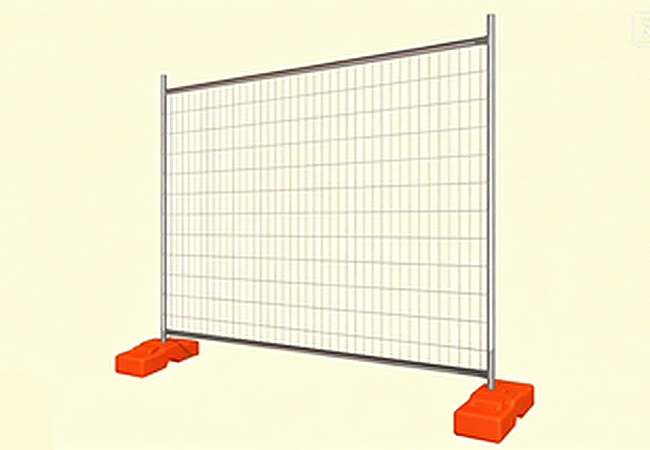
An Australian-style temporary fence is a reusable freestanding fencing system normally consisting of welded mesh panels, tubular steel frames, removable feet and panel clamps.
Unlike permanent fencing, the system does not normally require posts to be permanently embedded in the ground. Individual panels can be connected using clamps and supported by concrete or plastic temporary fence feet.
This modular design makes temporary fencing suitable for locations where a secure perimeter needs to be installed quickly and later removed or relocated.
Typical applications include:
- Construction and building sites
- Road and infrastructure projects
- Civil engineering works
- Residential developments
- Mining and industrial sites
- Public events
- Temporary storage areas
- Restricted access zones
- Demolition projects
For project buyers, the main advantage is the combination of fast installation, reusability and relatively low transportation and labor requirements.
Typical Australian Temporary Fence Specifications
Temporary fence specifications should be selected according to the required security level, project duration, wind exposure, transportation requirements and expected number of reuse cycles.
A typical specification range is shown below.
| Item | Typical Specification |
|---|---|
| Panel Size | 2100 × 2400 mm |
| Alternative Panel Size | 1800 × 2400 mm or customized |
| Mesh Opening | 60 × 150 mm |
| Alternative Mesh | 50 × 100 mm, 50 × 150 mm or customized |
| Wire Diameter | 3.0–5.0 mm |
| Frame Tube | 32 mm OD |
| Horizontal Tube | 32 mm OD |
| Steel Material | Low-carbon steel |
| Surface Treatment | Hot-dip galvanized |
| Optional Finish | Galvanized + powder coated |
| Fence Feet | Concrete-filled or plastic feet |
| Connection | Temporary fence clamps |
| Accessories | Clamps, braces, feet and gates |
These figures represent common manufacturing options rather than one universal specification. Final dimensions and materials should be confirmed according to the purchaser’s project requirements and applicable Australian regulations.
Why Panel Construction Matters
A temporary fence panel is repeatedly transported, installed, removed and stacked. As a result, its structural requirements are different from those of a permanent welded mesh fence.
Three components are particularly important.
1. Welded Mesh
The welded wire mesh forms the main barrier of the panel.
A smaller mesh opening and heavier wire generally provide greater rigidity and resistance to deformation. However, increasing wire diameter also increases panel weight and transportation cost.
For large projects, buyers should therefore balance:
- Required security level
- Panel weight
- Manual handling
- Transportation capacity
- Expected reuse frequency
2. Tubular Frame
The surrounding steel tube provides structural support to the welded mesh.
Frame tube diameter and wall thickness affect panel rigidity and resistance to handling damage. Temporary fencing that will be repeatedly installed and dismantled normally benefits from a stronger frame construction.
3. Welded Connections
The quality of the welds between the mesh and frame is especially important.
Poor welding can result in broken mesh wires or separation from the frame after repeated transportation and installation. Buyers purchasing large quantities should therefore evaluate welding consistency in addition to comparing panel dimensions and steel weight.
Hot-Dip Galvanized Temporary Fence
Corrosion protection is particularly important for fencing that will remain outdoors for extended periods.
Hot-dip galvanizing is one of the most commonly selected surface treatments for Australian temporary fencing. The zinc coating protects the steel from direct exposure to moisture and environmental conditions.
Hot-dip galvanized temporary fencing is commonly selected for:
- Construction sites
- Infrastructure projects
- Outdoor storage
- Coastal project supply
- Rental fence fleets
- Long-term outdoor use
For distributors and rental companies, corrosion resistance is particularly important because the same panels may be used on multiple projects.
Galvanized and Powder-Coated Temporary Fence
Where project appearance or color identification is important, galvanized steel can also be combined with powder coating.
Typical applications include:
- Events
- Commercial developments
- Municipal projects
- Branded construction sites
- Restricted areas requiring color identification
Colors can be selected according to project requirements.
For most general construction projects, galvanized fencing remains the standard choice because of its practical balance between durability and cost.
Concrete Feet vs Plastic Temporary Fence Feet
The fence foot is another important component of a temporary fencing system.
Concrete-Filled Feet
Concrete feet provide substantial weight at ground level and are widely used for construction applications.
Advantages include:
- High weight
- Simple installation
- Good support for standard fence panels
- Suitable for repeated site use
Plastic Feet
Plastic temporary fence feet are manufactured with molded openings for the fence frame and can be filled or designed with weighted internal material depending on the specification.
Advantages can include:
- Consistent dimensions
- Easier stacking
- Reduced damage during transportation
- Different hole positions for installation flexibility
The correct footing system should be selected according to the site conditions and required fence configuration.
Temporary Fence Clamps and Bracing
Fence panels are normally joined using steel clamps.
A complete temporary fencing system may include:
- Fence panels
- Temporary fence feet
- Panel clamps
- Support braces
- Brace feet
- Temporary gates
- Shade cloth or screening accessories
For exposed construction sites, the fence should not be evaluated only by the strength of an individual panel. The complete system—including feet, clamps, bracing and any attached screening—needs to be considered.
This becomes particularly important when shade cloth, advertising banners or other materials are attached because they can significantly increase wind loading on the fencing system.
Example Project Configuration
For example, consider a construction contractor requiring approximately 500 linear metres of temporary perimeter fencing.
Using nominal 2.4 m-wide panels, the initial quantity calculation would be:
500 ÷ 2.4 ≈ 209 panels
The actual order quantity should then be adjusted for:
- Site entrances
- Temporary gates
- Corners
- Spare panels
- Layout changes
- Replacement requirements
A typical project order could therefore include approximately:
| Component | Example Quantity |
|---|---|
| 2.1 × 2.4 m Fence Panels | 215–220 pcs |
| Temporary Fence Feet | 215–220 pcs |
| Panel Clamps | 215–220 sets |
| Support Braces | According to site layout |
| Temporary Access Gates | According to entrance requirements |
This type of calculation helps buyers estimate quantities before requesting a quotation.
Important: This is an illustrative procurement example rather than a record of a completed project. Final quantities and bracing requirements must be calculated according to the actual site design.
Example Temporary Fence Selection for an Australian Construction Project
Consider a commercial construction project requiring fencing for approximately 12 months.
The buyer’s priorities may include:
- Repeated repositioning as construction progresses
- Outdoor corrosion resistance
- Fast installation
- Easy replacement of damaged panels
- Container-efficient transportation
- Compatibility between panels, feet and clamps
A suitable configuration might use:
Panel: 2100 × 2400 mm
Mesh: 60 × 150 mm
Wire: selected according to project loading and security requirements
Frame: welded tubular steel
Finish: hot-dip galvanized
Footing: heavy-duty temporary fence feet
Accessories: clamps, braces and temporary access gates
For a project like this, purchasing the complete system from one manufacturer can help ensure dimensional compatibility between the panels and accessories.
Custom Temporary Fence Manufacturing
Not every Australian project requires exactly the same temporary fence specification.
Hebei Bending Fence Technology Company can manufacture temporary fencing according to customer drawings, tender requirements and purchasing specifications.
Custom options can include:
- Panel width and height
- Mesh opening
- Wire diameter
- Frame tube diameter
- Tube wall thickness
- Galvanizing requirements
- Powder-coated colors
- Fence foot design
- Clamp configuration
- Support braces
- Temporary pedestrian gates
- Vehicle access gates
- Packaging requirements
For distributors, OEM identification and customized packaging can also be discussed according to order requirements.
Container Loading and Export Considerations
For imported temporary fencing, buyers should consider more than the unit price.
Because temporary fence panels occupy significant container space, packaging and loading efficiency can influence the landed cost of the product.
Before placing an order, buyers should confirm:
- Number of panels per package
- Package dimensions
- Package weight
- Number of panels per container
- Quantity of feet and clamps
- Loading method
- Port of destination
- Required documentation
Panels, feet and accessories should be planned together to make efficient use of container capacity.
For Australian buyers, shipments can be arranged according to the agreed Incoterms and destination port requirements.
How to Choose a Temporary Fence Supplier
When comparing temporary fencing suppliers, purchasing decisions should not be based only on price per panel.
B2B buyers should compare the complete specification.
Check the Steel Specification
Confirm:
- Wire diameter
- Tube diameter
- Tube wall thickness
- Panel weight
- Mesh dimensions
Two panels with the same external dimensions can have significantly different steel content and structural performance.
Check the Surface Treatment
Ask the manufacturer to clearly identify whether the product is:
- Pre-galvanized
- Hot-dip galvanized after welding
- Galvanized and powder coated
These processes should not be treated as identical specifications.
Check Accessories
Make sure the quotation clearly states whether it includes:
- Feet
- Clamps
- Braces
- Gates
- Additional connectors
Check Packaging
Export packaging should protect the fence panels while allowing efficient loading, unloading and storage.
Check Manufacturing Capability
For project orders and repeat distribution, buyers should evaluate whether the supplier can maintain consistent dimensions, welding and surface treatment across different production batches.
Temporary Fence for Australian Distributors and Contractors
Different buyers have different purchasing priorities.
Construction contractors often focus on project compliance, delivery schedule and system stability.
Fence rental companies may place greater emphasis on panel durability and repeated reuse.
Importers and distributors usually need stable specifications, consistent production and container loading efficiency.
Infrastructure contractors may require customized drawings, project documentation and specific accessories.
Providing the intended application when requesting a quotation allows the manufacturer to recommend a more appropriate configuration.
Why Source Temporary Fencing from Hebei Bending Fence Technology Company?
Hebei Bending Fence Technology Company supplies metal fencing products for international construction, industrial and security applications.
For Australian temporary fencing requirements, manufacturing can be arranged according to the customer’s confirmed drawings and technical specifications.
Our temporary fence supply capabilities include:
- Welded temporary fence panel manufacturing
- Multiple panel and mesh specifications
- Hot-dip galvanized finishes
- Powder-coated options
- Temporary fence feet
- Panel clamps
- Support braces
- Temporary access gates
- Customized specifications
- Export packaging
- Container loading support
For project-based orders, buyers can provide drawings, required quantities, destination ports and technical requirements for quotation and specification confirmation.
Request a Temporary Fence Quotation
When requesting a quotation for Australian temporary fencing, providing complete purchasing information can significantly improve quotation accuracy.
We recommend including:
- Required panel size
- Mesh opening
- Wire diameter
- Frame tube specification
- Surface treatment
- Required quantity
- Fence feet
- Clamps and braces
- Gate requirements
- Destination country and port
If the exact specification has not yet been determined, provide the application, required fence length and project environment so that an appropriate temporary fencing configuration can be discussed.
Hebei Bending Fence Technology Company provides Australian-style temporary fencing for construction contractors, importers, distributors and project buyers.
Contact our team with your required specifications, drawings or project information to request a quotation.