



Anti-Climbing Fence System: Multi-Post Options for High-Security Applications
For high-security sites, perimeter fencing must do more than define a boundary. It needs to make unauthorized climbing difficult, maintain structural stability, provide clear visibility for surveillance, and remain reliable under demanding outdoor conditions.
Bendin develops anti-climbing fence systems for applications where perimeter security is a primary requirement. The system can be configured with different post structures, including square posts, H-shaped posts, round posts, I-beam posts, and flat-bar-supported designs, allowing contractors and project owners to select a configuration according to security requirements, site conditions, installation method, and budget.
Typical applications include correctional facilities, military compounds, airports, industrial facilities, substations, logistics centers, critical infrastructure, and other restricted-access areas.

What Is an Anti-Climbing Fence?
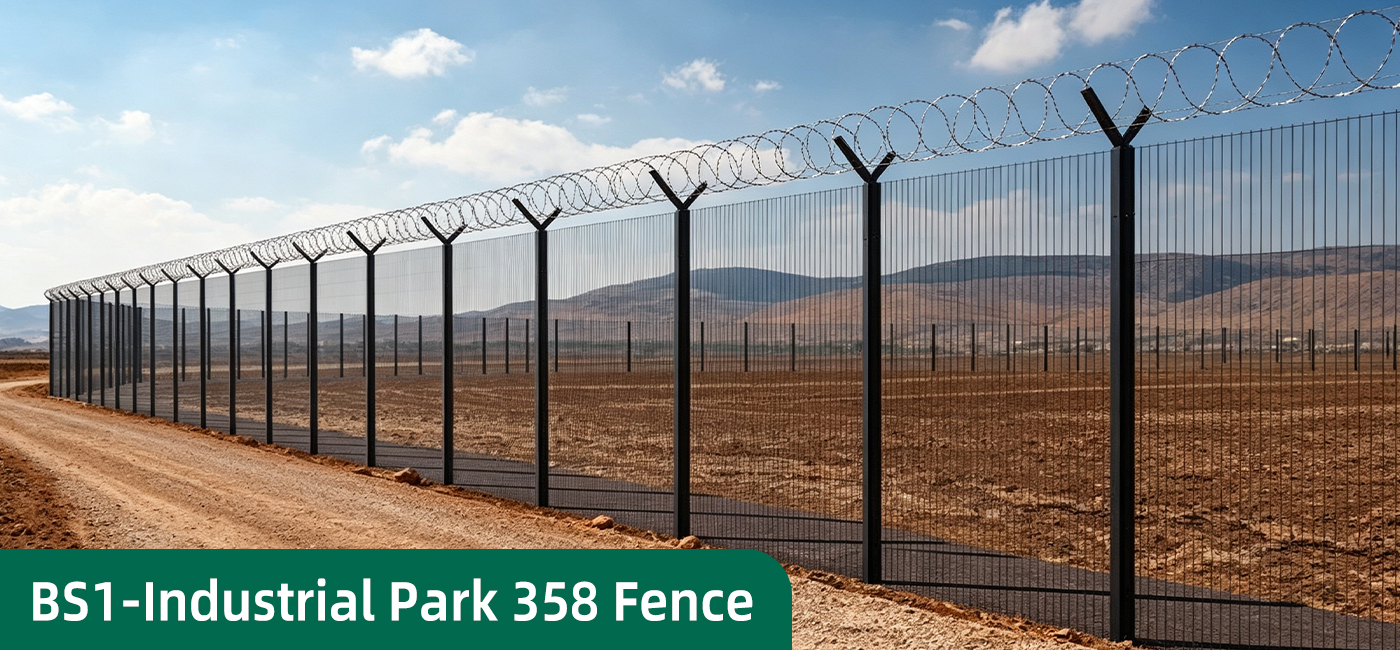
An anti-climbing fence is a security fencing system designed to reduce opportunities for a person to grip, step on, or pass through the fence structure.
Unlike conventional decorative fencing, an anti-climbing system normally combines several elements:
- Narrow mesh openings
- Welded or rigid mesh construction
- Limited horizontal footholds
- Strong panel-to-post connections
- Appropriate fence height
- Reinforced posts and foundations
- Optional top security components
- Corrosion-resistant surface treatment
The objective is not simply to make the fence taller. The overall geometry of the panel, post, connection system, and foundation should work together to create a stable perimeter barrier.
For high-security projects, the final configuration should be selected according to the site’s security assessment and applicable local requirements.
Bendin Multi-Post Anti-Climbing Fence System
One of the advantages of the Bendin system is configuration flexibility.
Instead of forcing every project to use the same post profile, the fence can be supplied with different post structures.
1. Square Post
Square posts provide a straightforward structural configuration and are suitable for many standard security and perimeter fencing projects.
Typical advantages:
- Simple visual appearance
- Convenient panel connection
- Suitable for standard welded mesh panels
- Easy integration with common gate systems
- Available in different wall thicknesses and heights
Square posts are often considered when installation simplicity and overall project cost are important.
2. H-Shaped Post
H-shaped posts provide a larger structural section and can be selected for projects requiring additional post rigidity.
Typical applications include:
- Industrial compounds
- Large infrastructure sites
- Restricted-access facilities
- Long perimeter runs
- Projects exposed to higher wind or mechanical loads
The appropriate post dimensions and foundation design should be determined according to engineering calculations for the actual site.
3. Round Post
Round posts offer a clean appearance and can be combined with different welded mesh panel configurations.
They are suitable for projects where the perimeter needs to balance security, appearance, and installation efficiency.
Round-post configurations are commonly considered for:
- Industrial parks
- Utility facilities
- Commercial properties
- Schools and institutional sites
- General perimeter protection
4. I-Beam Post
I-beam posts provide a heavier structural profile for demanding security applications.
Depending on the project design, I-beam posts can be used where additional resistance to lateral loading or mechanical impact is required.
They are particularly suitable for projects where the fence is part of a broader high-security perimeter system.
5. Flat-Bar Design
Flat-bar-supported configurations can be used to create a clean and rigid connection between the fence panel and support structure.
For anti-climbing applications, the important consideration is not simply the appearance of the flat bar. The complete fence assembly should minimize unnecessary horizontal surfaces or structural elements that could become convenient footholds.
Anti-Climbing Mesh Configuration
Bendin can supply welded mesh configurations designed for security applications.
For high-security fencing, narrow rectangular apertures are commonly selected because they make it more difficult to obtain a firm grip or foothold compared with conventional large-opening mesh.
One widely used security configuration is:
| Parameter | Typical Configuration |
|---|---|
| Product | Anti-Climbing Security Fence |
| Mesh Type | Welded steel mesh |
| Common Mesh | 76.2 × 12.7 mm |
| Wire Diameter | Project-dependent |
| Panel Height | Project-dependent |
| Panel Width | Project-dependent |
| Post Type | Square / H / Round / I-Beam / Flat-Bar Configuration |
| Surface Treatment | Galvanized / Powder Coated / Duplex Coating |
| Color | RAL 6005 / RAL 7016 / RAL 9005 or customized |
| Connection | Security clips / flat bar / project-specific connection |
| Top Protection | Optional security topping |
| Gate Integration | Swing Gate / Double Gate / Sliding Gate |
The table represents configurable options rather than a single fixed specification. Bendin can adjust the panel, post, connection, coating, and gate configuration according to the project drawings and required performance.
Why Narrow-Mesh Welded Fence Is Used for High Security
The security performance of a fence depends heavily on its opening geometry.
A narrow mesh pattern provides several practical benefits:
Reduced Climbing Opportunities
Small openings provide fewer places for hands and feet to obtain stable support.
Improved Cut Resistance
Compared with conventional chain link mesh, closely spaced welded wires can make it more difficult to create a sufficiently large opening using common hand tools.
Better Visibility
The open mesh structure maintains visibility through the perimeter, allowing security personnel and surveillance cameras to monitor the area outside and inside the fence.
Rigid Panel Structure
Welded panels maintain their geometry better than flexible woven mesh when properly supported by suitable posts and connections.
This makes welded anti-climbing panels particularly suitable for security zones where both visibility and physical resistance are required.
Anti-Climbing Fence Surface Treatment
Outdoor security fencing can be exposed to rain, humidity, UV radiation, industrial pollutants, and coastal salt environments.
Bendin offers several surface-treatment options depending on the application:
Galvanized Finish
A zinc coating provides basic corrosion protection for steel components and is suitable for many general outdoor environments.
Powder Coated Finish
A powder-coated finish adds a protective and decorative layer over the prepared steel surface. It also allows the fence to be supplied in different RAL colors.
Duplex Protection
For demanding environments, a galvanized substrate combined with powder coating can provide an additional barrier against environmental exposure.
The required coating system should be selected according to local environmental conditions, expected service requirements, and applicable specifications rather than relying on a single universal service-life figure.
Recommended Configurations by Project Type
Different high-security sites do not necessarily require the same fence configuration.
| Project Type | Recommended Configuration | Main Considerations |
|---|---|---|
| Prison / Correctional Facility | Narrow-mesh panel + heavy-duty post | Anti-climb performance and controlled access |
| Airport Perimeter | Narrow mesh + reinforced posts | Visibility, perimeter monitoring and access control |
| Military Facility | Security mesh + heavy-duty post | Structural strength and restricted access |
| Substation | Welded anti-climb panel | Visibility and perimeter security |
| Industrial Facility | Welded panel + square/H post | Security, installation efficiency and cost |
| Logistics Center | Welded panel + round/square post | Boundary control and visibility |
| Critical Infrastructure | Engineered high-security configuration | Site-specific security assessment |
These are application recommendations, not claims that every project should use one fixed configuration.
Project Example 1: Industrial Restricted Zone
A manufacturing facility may need to separate production areas from external traffic while maintaining visibility for security personnel.
A practical configuration can include:
- Narrow-opening welded mesh
- Square or H-shaped steel posts
- Galvanized and powder-coated finish
- Controlled-access swing gates
- Optional CCTV integration
- Concrete foundations designed for site conditions
The open mesh allows operators to monitor the perimeter without creating a visually closed environment.
Project Example 2: Airport Perimeter
Airport fencing requires careful coordination between physical security, visibility, access control, and local aviation requirements.
A project-specific Bendin system can combine:
- Anti-climbing welded mesh
- Reinforced steel posts
- Security gates
- Intrusion detection interfaces
- CCTV monitoring
- Controlled access points
- Corrosion-resistant coating systems
For airports, final specifications should always be reviewed against the airport operator’s engineering requirements and applicable aviation/security regulations.
Project Example 3: Critical Infrastructure
For substations, utility facilities, and other restricted infrastructure, the fence is often only one part of the security system.
A complete perimeter solution may include:
Fence Panel → Reinforced Post → Security Connection → Gate → Access Control → CCTV / Detection System
This approach allows the physical barrier to work together with electronic security systems rather than functioning as an isolated product.
How to Select the Right Anti-Climbing Fence
Before placing an order, project owners and contractors should confirm several key factors.
1. Required Security Level
Determine whether the project requires general perimeter protection, anti-climbing performance, enhanced cut resistance, or a higher-security engineered system.
2. Fence Height
The required height depends on the site’s risk assessment, local regulations, terrain, and overall security strategy.
3. Mesh Opening
Smaller openings are generally preferred where climbing and tool access are major concerns.
4. Post Structure
Choose between square, H-shaped, round, I-beam, or other structural configurations according to span, loading, installation method, and engineering requirements.
5. Ground Conditions
Fence foundations should account for soil conditions, wind exposure, slope, drainage, and local construction requirements.
6. Surface Treatment
Coating selection should reflect the local environment, particularly for coastal, industrial, high-humidity, or chemically exposed locations.
7. Gate and Access Control
The gate should be designed as part of the same security system. A strong fence with an unsuitable gate can create a weak point in the perimeter.
Bendin Anti-Climbing Fence Manufacturing Capability
Bendin is based in Anping, Hebei, a major wire mesh manufacturing center in China.
The company’s fencing production covers welded mesh panels, security fencing, chain link fencing, tubular fencing, temporary fencing, fence gates, and related perimeter protection products.
For anti-climbing fence projects, production can involve:
- Steel wire preparation
- Wire straightening and cutting
- Automated mesh welding
- Panel forming and processing
- Post fabrication
- Surface treatment
- Component inspection
- Packaging
- Export delivery
The manufacturing process is designed to maintain consistent mesh dimensions, welding quality, panel geometry, and connection compatibility.
Custom Anti-Climbing Fence Solutions
Standard products are not always appropriate for high-security projects.
Bendin supports project-based customization of:
- Panel height
- Panel width
- Wire diameter
- Mesh opening
- Post profile
- Post dimensions
- Post thickness
- Foundation requirements
- Connection hardware
- Surface treatment
- RAL color
- Gate dimensions
- Gate operating method
- Security topping
- Access-control interfaces
Customers can provide drawings, site dimensions, security requirements, or simply the basic project parameters. Bendin can then recommend a suitable fence configuration for further engineering review.
Frequently Asked Questions
What is the difference between anti-climbing fence and ordinary welded fence?
The main difference is the security-oriented design. Anti-climbing systems typically use narrower openings, rigid panels, carefully designed connections, and fewer convenient footholds or handholds.
Which post is strongest: square, H-shaped, round, or I-beam?
There is no universal answer. Post performance depends on section dimensions, steel grade, wall thickness, post spacing, foundation design, wind loading, and the complete fence assembly. I-beam and H-shaped posts may be selected for demanding applications, while square and round posts can be appropriate for other projects.
Can anti-climbing fence be used with automatic gates?
Yes. The fence can be coordinated with swing gates, double gates, or sliding gates. Access-control systems can also be integrated according to project requirements.
Can the fence be installed on uneven ground?
Yes, but the panel layout and post foundation design should be adjusted to the terrain. Sloping sites may require stepped or specially engineered installation details.
What colors are available?
Common options include RAL 6005 green, RAL 7016 anthracite grey, and RAL 9005 black. Other RAL colors can be considered for customized projects.
Bendin: Engineered Perimeter Protection for Global Projects
An effective anti-climbing fence is not defined by one component alone. The mesh opening, wire diameter, panel geometry, post structure, connection method, foundation, coating system, gate, and security equipment all contribute to the final performance of the perimeter.
Bendin provides configurable anti-climbing fence systems for contractors, distributors, security integrators, and project owners who need more than a standard fence panel.
From square and round posts to H-shaped and I-beam structures, Bendin can develop a fence configuration around the actual requirements of the project.
For a project quotation, send us the required fence height, panel width, mesh opening, wire diameter, post type, installation location, quantity, and surface-treatment requirements. Bendin can provide a corresponding product configuration and quotation for review.