



All-Weather Industrial Safety Systems: Materials, Specifications and Applications
Industrial facilities operate under a wide range of environmental conditions. Rain, humidity, ultraviolet exposure, temperature changes, airborne salt and industrial pollutants can affect the condition and performance of metal safety equipment over time.
For factories, logistics parks, warehouses and outdoor industrial facilities, selecting safety equipment requires more than checking its initial strength. Materials, surface treatment, installation methods and maintenance requirements must match the actual operating environment.
Bendin (Hebei Bendin Industrial Technology Co., Ltd.) supplies customizable industrial fencing, machine guarding and cable management products for manufacturing facilities, commercial properties and infrastructure projects.
This guide explains how to select industrial safety equipment for demanding environments, compare corrosion-protection options, confirm technical specifications and plan maintenance for long-term use.
1. Why Environmental Conditions Matter for Industrial Safety Equipment
Different environments place different demands on industrial safety products.
Rain and High Humidity
Persistent moisture can accelerate corrosion when steel surfaces, welds or connections have inadequate protection. Water accumulation around posts, foundations and mounting points can also contribute to deterioration.
Coastal Salt Exposure
Airborne salt can accelerate corrosion of exposed metal components. Coastal installations may require more carefully specified materials, coating systems and inspection procedures.
Ultraviolet Exposure
Prolonged sunlight can affect some polymer coatings, plastic components and other exposed materials. The actual resistance depends on the material formulation and product specification.
Temperature Changes
Repeated heating and cooling can cause dimensional changes and place additional demands on connections, coatings and supporting structures.
Industrial Dust and Pollutants
Dust, chemical residues and airborne contaminants may accumulate on safety equipment. Depending on their composition, these deposits can affect coating condition, cleaning requirements and maintenance intervals.
The correct solution is not simply to choose the heaviest product. It is to match the material, structural design, surface treatment and maintenance plan to the actual site conditions.
2. Weather-Resistant Industrial Perimeter Fencing
Outdoor perimeter fencing is continuously exposed to the environment. A suitable system must combine appropriate structural design with corrosion protection and installation details that match the site.
Common Fence Options
3D welded wire fence
Welded mesh panels with formed V-bends may be suitable for residential, commercial and general industrial boundaries.
Double wire mesh fence
Selected double-wire configurations provide a reinforced mesh structure for projects requiring particular panel characteristics.
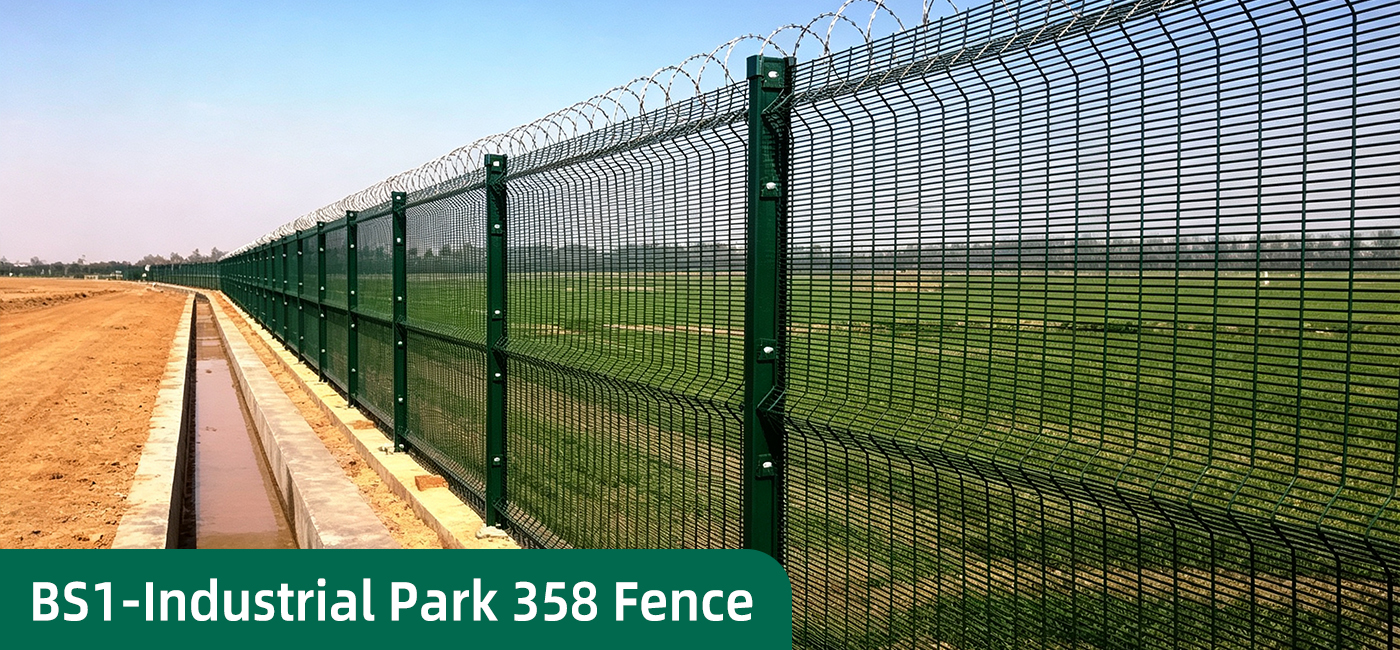
358 anti-climb fence
Dense rectangular mesh may be considered for restricted-access areas where increased resistance to climbing is required.
Tubular steel fence
Tubular fencing can provide a more architectural appearance for commercial properties, industrial campuses and selected public facilities.
Each fence type has different structural and functional characteristics. The correct configuration depends on the site’s security requirements, layout, environmental exposure and applicable specifications.
Selecting Corrosion Protection
Depending on the product design and manufacturing process, possible finishes include:
- Hot-dip galvanized steel
- Pre-galvanized steel with a compatible additional coating
- Galvanized steel followed by powder coating
- Other specified coating systems suitable for the intended environment
The manufacturing sequence matters. Welding, cutting and drilling may affect existing protective coatings, so the treatment of processed areas should be confirmed.
Important Design Considerations
When specifying an outdoor perimeter fence, confirm:
- Steel grade and component dimensions
- Panel height and width
- Mesh opening and wire diameter
- Post profile and wall thickness
- Connection and foundation arrangements
- Coating type and relevant specifications
- Environmental exposure
- Gate locations and maintenance access
Wind resistance depends on the complete system, including panel dimensions, posts, connections, foundations and site exposure. A galvanized or powder-coated finish does not automatically establish a wind-load rating.
3. Machine Guarding for Variable Workshop Environments
Machine guarding separates people from hazardous machinery and helps establish controlled operating zones around automated equipment.
Although most machine guarding is installed indoors, workshop conditions may include humidity, dust, cleaning agents, temperature changes and occasional mechanical contact.
Modular Welded Mesh Guarding
Modular machine guarding may use welded mesh panels, steel frames, posts, brackets and access gates.
Potential advantages include:
- Visibility through compatible mesh panels
- Standardized panel dimensions
- Replacement of selected damaged sections
- Flexible layout planning
- Easier coordination of access gates and maintenance routes
The actual configuration should be selected according to the machine layout and risk assessment.
Selecting Materials and Finishes
The required material and coating depend on the workshop environment.
For example, a dry assembly area may have different requirements from a humid processing room or a facility that uses frequent washdown procedures.
Before ordering, confirm:
- Frame and panel dimensions
- Mesh opening and wire diameter
- Steel specification
- Mounting and fixing details
- Coating suitability for the environment
- Cleaning and maintenance requirements
- Access gate and interlock requirements, where applicable
Preserving Machine Safety Functions
Weather resistance does not replace machine safety requirements.
Guard height, mesh opening, distance from hazardous moving parts, gate design and any required safety interlocks must be determined through the appropriate machinery risk assessment.
If guarding is relocated or modified, the revised arrangement must be checked before the machine returns to operation.
4. Industrial Cable Management for Challenging Environments
Cable management systems support and organize power, control, communication and instrumentation cables.
Their performance depends on tray construction, material, surface treatment, support arrangement, cable loading and environmental exposure.
Common Cable Management Products
Mesh cable trays
Open-wire trays provide a ventilated support structure for compatible cable installations.
Perforated cable trays
Perforated trays provide a supporting base with openings that may assist ventilation and drainage.
Solid-bottom cable trays
Solid-bottom trays provide a continuous supporting surface for suitable cable installations.
Cable trunking
Cable trunking provides a more enclosed route for selected cable installations.
Selecting Suitable Materials and Coatings
The material and finish should match the installation environment.
For example, outdoor cable routes may require different corrosion protection from dry indoor installations. Environments involving chemicals or regular washdown may require additional compatibility checks.
Before ordering, confirm:
- Tray type and dimensions
- Cable types and estimated quantities
- Total cable weight
- Support spacing and span
- Material and surface treatment
- Connectors and mounting accessories
- Indoor or outdoor exposure
- Inspection and maintenance access
Load capacity depends on the tray design, support spacing, span, connections and loading conditions. The actual installation should be checked against the manufacturer’s technical data.
Cable trays organize and support cables but do not automatically provide waterproofing, electrical insulation or complete protection against environmental hazards. The complete electrical installation must meet its applicable requirements.
5. Matching Surface Treatments to Environmental Conditions
The correct surface treatment depends on the base material, manufacturing process and expected exposure.
| Surface Treatment | Main Function | Important Considerations |
|---|---|---|
| Hot-Dip Galvanizing | Provides a zinc coating that helps protect steel against corrosion | Confirm coating specification and manufacturing sequence |
| Powder Coating | Provides a decorative finish and an additional protective layer | Confirm surface preparation, coating specification and curing |
| Galvanizing Plus Powder Coating | Combines zinc protection with a colored finish | Confirm compatibility of the complete coating system |
| Polymer-Coated Components | May provide additional surface protection for selected products | Confirm material compatibility, UV resistance and product-specific requirements |
No single finish is automatically the best option for every industrial environment.
For coastal and highly corrosive locations, the selected coating system should be based on the actual exposure and relevant product data. Claims about corrosion resistance should be supported by applicable specifications and test reports.
Salt-spray test hours should not be directly converted into a guaranteed number of outdoor service years.
6. Technical Specifications for All-Weather Industrial Safety Equipment
Before ordering, prepare a specification for each product category.
Perimeter Fencing
| Parameter | What to Confirm |
|---|---|
| Fence Type | 3D / Double Wire / 358 / Tubular / Other Specified System |
| Panel Height and Width | According to the site layout |
| Mesh Opening | According to the intended function |
| Wire or Tube Dimensions | Product-specific |
| Post Profile | Compatible with the selected panels |
| Connection Method | Clips / Brackets / Specified Fasteners |
| Surface Treatment | According to environmental exposure |
| Foundations | According to the approved design |
| Gates | According to site access requirements |
Machine Guarding
| Parameter | What to Confirm |
|---|---|
| Guard Type | Full Mesh / Mesh with Solid Panel / Other Specified Design |
| Panel Dimensions | According to the machine layout |
| Mesh Opening | According to the risk assessment |
| Frame and Posts | Compatible with the selected panels |
| Surface Treatment | Suitable for the workshop environment |
| Access Gates | According to operating and maintenance needs |
| Safety Interlocks | Where required by the validated safety design |
Cable Management
| Parameter | What to Confirm |
|---|---|
| Tray Type | Mesh / Perforated / Solid-Bottom / Trunking |
| Tray Width and Height | According to the cable schedule |
| Material | Steel or other specified material |
| Surface Treatment | According to environmental exposure |
| Support Spacing | According to the installation design |
| Loading Requirements | Based on cable weight and applicable design criteria |
| Accessories | Connectors / Brackets / Supports / Covers |
These are specification checklists rather than fixed product specifications. Actual dimensions, materials, coatings, loading requirements and connection arrangements should be confirmed before ordering.
7. Installation Planning for Outdoor and Industrial Sites
Correct installation helps preserve the intended performance of industrial safety equipment.
Site Assessment
Before installation, identify:
- Ground conditions and drainage
- Wind exposure
- Coastal salt or industrial pollutants
- Underground utilities
- Fence routes and access points
- Machine operating zones
- Cable routes and support locations
- Maintenance access requirements
Foundation and Mounting Design
Post foundations, base plates and anchors should be selected according to the product design, ground conditions and expected loads.
A mounting arrangement suitable for one site may not be suitable for another, especially where the ground surface, wind exposure or supporting structure differs.
Protecting Coated Components
During transportation, storage and installation, avoid unnecessary abrasion and impact that may damage protective coatings.
Any coating damage should be assessed and repaired using a method compatible with the selected finish.
Drainage and Water Accumulation
Where practical, installation planning should avoid unnecessary water accumulation around posts, foundations and other exposed components.
Drainage requirements depend on the site layout and supporting structure.
Final Inspection
Inspect panel alignment, post stability, connections, gate operation, coating condition and other relevant acceptance criteria before handover.
8. Maintenance for Year-Round Industrial Operation
Routine maintenance helps identify damage before it develops into a more serious problem.
The appropriate inspection frequency depends on the environment, usage and project requirements.
Regular Visual Inspection
Check for:
- Loose fasteners
- Damaged or deformed panels
- Post movement
- Scratched or peeling coatings
- Visible corrosion at joints and exposed edges
- Damaged cable tray supports
- Gate hinge and latch problems
- Water or debris accumulation
Cleaning
Remove dust, dirt and other contaminants using methods suitable for the selected material and coating.
Coastal installations may require more frequent cleaning to remove salt deposits. Industrial sites may require cleaning procedures appropriate for the contaminants present.
Local Repairs
Repair coating damage using a compatible method and follow the manufacturer’s instructions.
Where structural components are deformed or damaged, assess whether repair or replacement is appropriate before returning the equipment to service.
Maintenance Records
For larger industrial facilities, maintain records of inspections, repairs and replaced components.
These records can help identify recurring environmental problems and support maintenance planning.
9. Illustrative Project Example: Coastal Industrial Facility
A coastal industrial facility requires an outdoor perimeter fence, machine guarding in a humid workshop and organized cable routes for selected equipment.
The project team evaluates the three product categories separately while coordinating their specifications and installation interfaces.
Preliminary Configuration
| Area | Proposed System | Main Verification |
|---|---|---|
| Outdoor Perimeter | Galvanized or otherwise specified corrosion-protected fence | Material, coating, posts, foundations and wind exposure |
| Humid Workshop | Compatible modular machine guarding | Coating suitability, access gates and machinery risk assessment |
| Cable Routes | Cable trays with suitable material and surface treatment | Cable loading, support spacing and environmental exposure |
| Shared Site Layout | Coordinated installation plan | Access routes, mounting points and maintenance clearance |
| Project Handover | Inspection and technical documentation | Approved specifications and acceptance criteria |
The final product selection should be based on the actual site exposure, project specifications and applicable requirements.
This is an illustrative project scenario, not a completed Bendin customer installation.
10. How to Evaluate an All-Weather Safety Equipment Supplier
When comparing suppliers, evaluate the actual product specifications and supporting information rather than relying solely on general claims about durability.
Material and Coating Information
Confirm the specified material, coating process and environmental suitability.
Technical Drawings
Request drawings showing panel dimensions, post profiles, connection details, mounting arrangements and relevant interfaces.
Quality Documentation
Agree on the inspection scope and identify any required test reports or certificates.
Product Compatibility
Confirm that panels, posts, gates, cable trays and accessories match the intended installation arrangement.
Maintenance Requirements
Ask which inspections, cleaning procedures and coating repairs are recommended for the actual product and environment.
Warranty and Support
Request the actual warranty terms and clarify the covered products, exclusions and maintenance conditions.
For customized projects, approve the final drawings and bill of materials before production begins.
11. Bendin Industrial Safety Solutions
Bendin supplies customizable industrial fencing, machine guarding and cable management products for manufacturing plants, warehouses, logistics facilities and infrastructure projects.
Depending on product design and manufacturing capabilities, customization may include:
- Fence type, panel dimensions and mesh openings
- Post profiles and fixing accessories
- Machine guarding layouts and access gates
- Galvanized and powder-coated finishes
- Cable tray dimensions and configurations
- Compatible supports and installation accessories
- Packaging and OEM requirements
Customers can provide site drawings, environmental information, machine layouts, cable schedules and technical specifications for review before ordering.
For demanding environments, providing details about moisture, salt exposure, pollutants, cleaning procedures and expected loads helps establish a more suitable product specification.
12. Frequently Asked Questions
What makes industrial safety equipment suitable for outdoor use?
Suitability depends on the material, coating system, structural design, installation and environmental exposure. The actual product specification should match the site conditions.
Is hot-dip galvanizing enough for coastal environments?
It may be suitable for some applications, but the appropriate protection depends on the exposure, coating specification, product design and maintenance plan.
Can machine guarding be installed in humid workshops?
Yes, provided the selected materials and coatings are suitable for the environment and the guarding design meets the applicable machinery safety requirements.
Are cable trays waterproof?
Not necessarily. Mesh, perforated and solid-bottom trays have different characteristics. Cable protection must be assessed as part of the complete electrical installation.
Does a corrosion-resistant coating guarantee a fixed service life?
No. Service life depends on the material, coating specification, environmental exposure, installation, maintenance and physical damage.
Can Bendin customize products for harsh environments?
Customization can be discussed according to product design and manufacturing capabilities. The intended environment and project specifications should be provided before the configuration is finalized.
13. Request an Industrial Safety Equipment Quotation
All-weather industrial safety planning begins with understanding the site’s environmental exposure, operational requirements and maintenance conditions.
Bendin (Hebei Bendin Industrial Technology Co., Ltd.) supplies customizable perimeter fencing, machine guarding and cable management products for international distributors, contractors and industrial project owners.
For a quotation, provide:
- Project location and application
- Environmental exposure and operating conditions
- Fence type, height and required dimensions
- Machine guarding requirements
- Cable tray type, dimensions and estimated loading
- Material and surface-treatment preferences
- Applicable project specifications
- Quantities and delivery destination
Bendin can review your requirements and discuss suitable product configurations for your industrial project.