



A security fence works as a complete system. The mesh is only one of many parts to consider when purchasing a fence: the posts, how the panels connect to each other, the gates, the foundations and the fasteners used at the top of the perimeter fence. One weak point can jeopardise the whole fence, even if the panels themselves look very heavy.
When designing perimeter protection for industrial sites, power facilities, data centers, airports, warehouses, etc., you start with the level of protection you require and then go on to consider issues such as mesh size, structural support, access points and anti-climb devices in practical order.
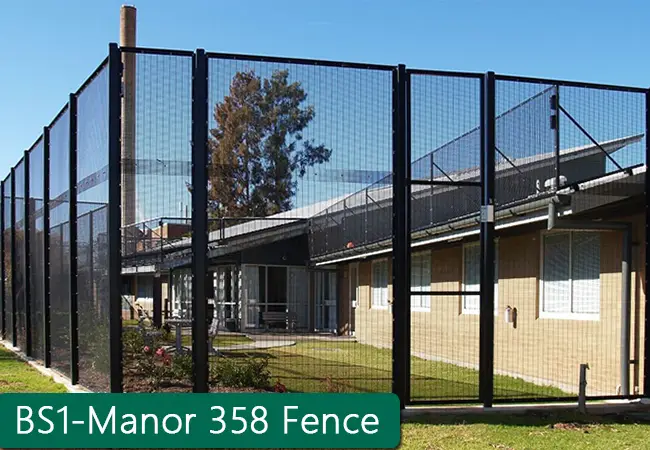
What Defines an Effective Security Fence Design?
Before choosing panel dimensions or post sizes, you need a clear idea of how the perimeter will be used. A boundary around a normal industrial yard does not need the same design as a restricted power facility.
Security Level Comes Before Fence Type
Start by considering what the fence must prevent. Some sites mainly need boundary control and visible separation. Others need to delay climbing, cutting, prying, or forced access.
High-risk sites usually need a denser mesh, stronger posts, tamper-resistant connections, controlled gates, and additional anti-climb hardware. This is where a high-security welded mesh system becomes more relevant than a standard perimeter fence.
Site Conditions Shape the Final Specification
The same panel can perform very differently on two sites. Wind exposure, coastal air, uneven ground, vehicle traffic, and soil conditions all affect the final design.
You also need to think about how the fence works with CCTV, lighting, patrol routes, and access control. Good security fencing should create a clear boundary without making daily operation harder.
Deterrence, Delay and Visibility Must Work Together
A fence should discourage intrusion before anyone touches it. If someone still attempts entry, the structure should slow them down and remain difficult to climb or cut.
Visibility also matters. Dense solid barriers may block surveillance, while welded security mesh can keep sightlines open. For many controlled industrial sites, balancing physical resistance with clear visibility gives better overall perimeter control.
How Should Mesh Be Selected for Anti-Climb and Anti-Cut Performance?
Mesh selection is one of the first technical decisions. The size of the opening, wire diameter, welding quality, and panel stiffness all influence how difficult the fence is to climb or damage.
Mesh Aperture Determines Climbing Resistance
Large openings can provide space for hands and shoes. Smaller openings make it harder to find a usable grip.
For areas with higher security requirements, 358 FENCE is a practical option. Its typical 76.2 × 12.7 mm mesh opening is narrow enough to limit hand and foot access while still allowing security staff and cameras to see through the perimeter.
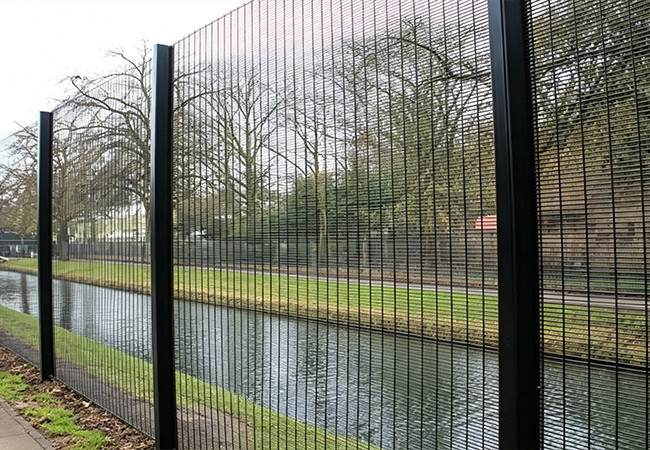
Wire Diameter and Weld Strength Affect Cutting Resistance
A small mesh opening alone is not enough. Wire thickness and weld quality also matter.
A common 358 mesh uses 4.0 mm wire. Combined with a rigid welded structure, this makes access with ordinary cutting tools more difficult. Good weld consistency also helps the panel resist local deformation when pressure is applied.
Panel Rigidity Matters as Much as Mesh Size
A security panel should not flex excessively when pushed or pulled. This is especially important on tall fences.
Panel width, wire diameter, post spacing, and the connection system all affect rigidity. For high-security projects, it is better to evaluate the complete installed structure rather than compare mesh specifications alone.
How Do Posts and Panel Connections Affect Fence Security?
The panel gets most of the attention, but posts and connections often decide whether the installed system stays strong over time.
Post Strength Must Match Fence Height and Site Loads
Taller fences place more load on posts, especially in open areas with strong wind. Post section, wall thickness, spacing, and foundation design should match the panel height and site conditions.
A heavy security panel fixed to light posts may look strong on paper but perform poorly once installed. The support structure should be designed as part of the fence, not chosen afterward.
Panel-to-Post Connections Should Resist Prying
Flat bars, clamps, brackets, bolts, and other fittings connect the panel to the support structure. They should hold the panel firmly without creating easy removal points.
On higher-security sites, fasteners should also be difficult to tamper with from the public side. The goal is simple: the connection should not become an easier attack point than the mesh.
Foundation Type Changes the Installation Method
Posts can be embedded into concrete or fixed to prepared surfaces with base plates. Each method has its place.
Embedded posts are common where new foundations can be prepared. Base-mounted systems may suit existing concrete surfaces or projects that need a different installation sequence. Ground condition should be checked before the fence specification is finalized.
What Should Be Considered When Designing Security Gates?
Every perimeter needs access, and gates create movement in a structure that is otherwise fixed. That makes them one of the most important parts of security fence design.
Pedestrian and Vehicle Gates Need Different Structures
A pedestrian gate carries different loads from a wide vehicle entrance. Vehicle access may require double swing, sliding, or cantilever configurations depending on available space and traffic frequency.
The supporting posts must match the gate size. A wide gate with undersized posts can sag, move out of alignment, and create gaps over time.
Gate Hardware Should Not Become the Weakest Point
Hinges, locks, latches, ground bolts, wheels, and guide components all need to suit the security level of the surrounding fence.
If you install a high-security perimeter and then use light gate hardware, the entrance becomes the obvious weak point. Hardware should be selected for both daily operating cycles and resistance to forced access.
Access Control Should Be Planned With the Layout
Gate position affects vehicle turning, pedestrian movement, emergency access, CCTV coverage, and guard operations.
It is usually easier to plan these points before finalizing fence quantities. Moving a gate later can change post locations, panel widths, foundations, and cable routes for electronic access systems.
Which Anti-Climb Hardware Fits Different Security Levels?
Not every site needs razor wire or security spikes. Top protection should match the real risk level and local project requirements.
Barbed Wire and Y-Arms Add a Clear Deterrent
Barbed wire mounted on angled arms increases effective fence height and makes climbing over the top more difficult.
It is often used around industrial compounds, utilities, storage areas, and other controlled sites where visible deterrence is useful. The arm and wire should be properly fixed so they do not loosen under tension.
Razor Wire Is Better Suited to High-Risk Perimeters
Razor wire provides a much stronger physical deterrent and is usually reserved for locations with stricter access control.
It may be considered for critical infrastructure, detention areas, restricted government facilities, or other sites where the perimeter must provide more delay against intrusion. Its use should always match local safety rules and project requirements.
Security Tops Should Work With the Main Fence
Bent tops, spikes, barbed wire, and other additions should not be treated as separate decorations. They change the forces acting on the fence and may require stronger posts or different brackets.
A properly configured anti-climb 358 mesh system can combine narrow welded mesh with suitable top protection when a project calls for a higher level of perimeter security.
How Should You Specify a Complete 358 Security Fence System?
Once you know the required security level, the next job is turning it into a clear specification. This makes supplier comparison easier and reduces changes during production.
Match the Specification to the Application
An industrial park may focus on boundary control, long service life, and vehicle access. A substation may place more weight on anti-climb performance and clear surveillance.
Airports, data centers, and other controlled facilities may need higher panels, stronger posts, restricted-access gates, and additional top security. The site purpose should always drive the specification.
Define Mesh, Height, Posts and Finish Together
A useful RFQ should state the mesh opening, wire diameter, panel height, panel width, post size, connection method, gate requirements, installation method, surface finish, and any anti-climb top.
Writing only “358 fence required” leaves too much open to interpretation. Two quotations may look similar in price while covering very different structural specifications.
Treat Corrosion Protection as a Security Issue
Rust is not only an appearance problem. Over time, corrosion can weaken welds, posts, connections, and gate hardware.
Galvanized surfaces, powder-coated finishes, or combined protection can be selected based on the installation environment. Coastal, humid, or chemical sites may require more attention than a normal inland project.
How Can BENDIN Support Your Security Fencing Project?
Once the design is clear, manufacturing capability and project support become more important. You need a supplier that can turn the specification into a complete system rather than quote panels alone.
Custom 358 Fence Systems for Different Sites
BENDIN manufactures metal fencing, gates, barrier systems, workshop protection products, and cable management products for international projects. Its security fencing range includes 358 FENCE and related posts, gates, connection hardware, and perimeter accessories.
For a 358 project, dimensions, post configurations, surface treatment, gates, and top security components can be matched to the actual site rather than forcing every project into one fixed setup.
Design and Project Support Before Production
For larger projects, drawing confirmation and specification checks can prevent expensive mistakes later. Panel layout, gate locations, post dimensions, colors, packaging, and installation details are easier to correct before production starts.
You can use the company’s project support resources when preparing specifications, reviewing technical details, or arranging project-specific requirements.
Service Should Continue After the Order
A fencing order does not end when panels leave the factory. Packaging, shipping coordination, installation guidance, replacement parts, and communication during the project also matter.
If you already know your perimeter length, required height, site type, gate quantities, and security level, you can contact BENDIN with those details and build the quotation around the actual project.
FAQ
Q1: What makes 358 FENCE difficult to climb?
A1: Its narrow mesh opening leaves very little room for hands or feet to gain a secure hold. The welded steel structure also creates a rigid surface that is harder to deform during a climbing attempt.
Q2: What mesh size is commonly used for 358 security fencing?
A2: A typical 358 mesh opening is 76.2 × 12.7 mm, commonly paired with 4.0 mm wire. Final specifications can vary with project security requirements.
Q3: Are stronger fence posts necessary for taller security fences?
A3: Yes. Fence height increases structural load, especially in exposed or windy locations. Post section, wall thickness, spacing, and foundation should be selected together.
Q4: Can gates provide the same security level as the fence panels?
A4: They can if the gate frame, posts, hinges, locks, and other hardware are designed to match the surrounding perimeter. A light gate inside a heavy security fence creates an obvious weak point.
Q5: When should anti-climb hardware be added to a 358 fence?
A5: It is generally considered when the site needs more protection than the mesh panel alone provides. Barbed wire, angled arms, razor wire, or security tops can be selected according to the site risk level, local rules, and project specification.