



Tubular Steel Fence: Specifications, Installation and Maintenance
A successful tubular steel fence project requires more than selecting attractive panels. Material specifications, post foundations, surface treatment, installation accuracy and routine maintenance all influence the performance and appearance of the finished fence.
For residential developments, schools, commercial properties, industrial facilities and municipal projects, a well-planned tubular fencing system helps define boundaries, manage access and maintain a consistent architectural appearance.
Bendin (Hebei Bendin Industrial Technology Co., Ltd.) supplies customizable tubular steel fencing solutions for international distributors, contractors, developers and project owners. Depending on the project, options may include square or rectangular steel tube frames, vertical tubular infill, decorative tops, matching gates and galvanized or powder-coated finishes.
This guide explains the complete tubular fence project process, from initial site assessment and product customization to manufacturing, installation, inspection and long-term maintenance.
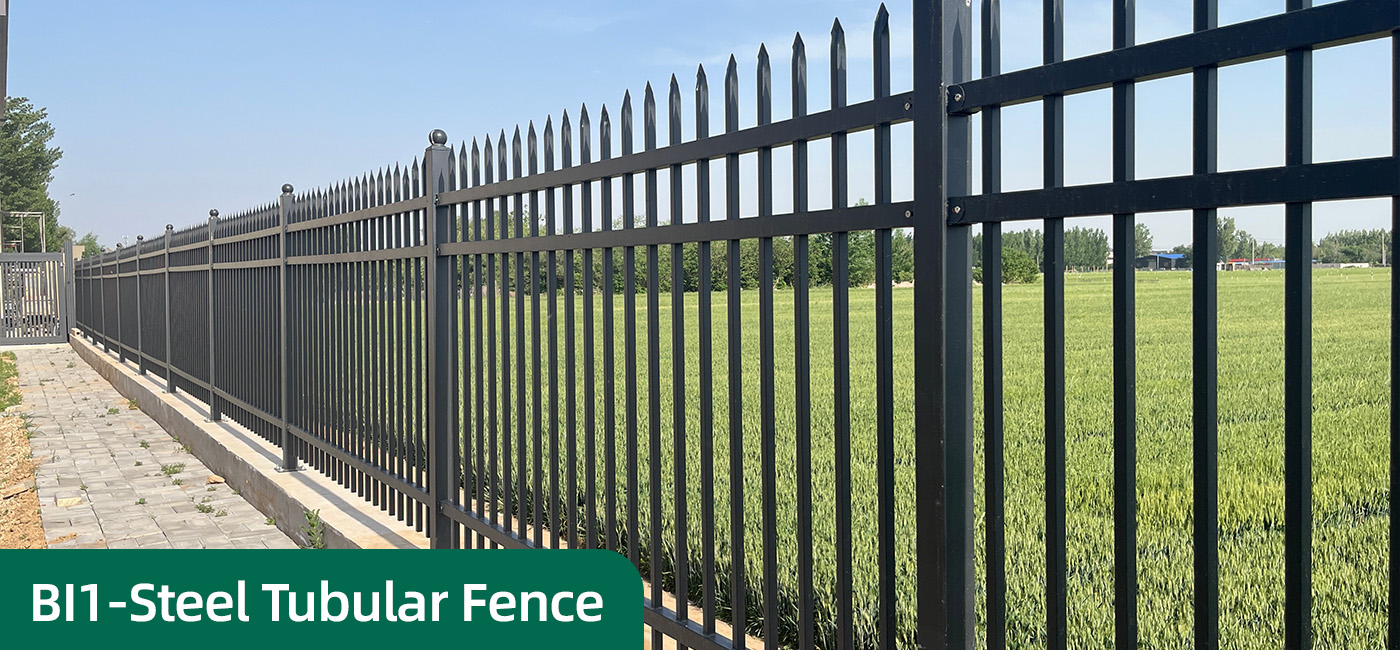
1. Tubular Fence Selection: Assessing Project Requirements
The first step is to select a fence configuration that matches the site’s function, environmental conditions, appearance requirements and budget.
Site and Ground Conditions
Before preparing a quotation, assess:
- Total boundary length and fence height
- Flat or sloping terrain
- Soil conditions and existing foundations
- Wind exposure and other relevant environmental loads
- Coastal salt, humidity or industrial pollutants
- Underground utilities and drainage
- Pedestrian and vehicle access points
These details help determine the panel layout, post configuration, foundation method and surface treatment.
Security and Fence Height
Different applications require different fencing configurations.
| Application | Typical Design Considerations |
|---|---|
| Residential and Garden Boundaries | Appearance, boundary definition and access |
| Schools and Public Areas | Safe edges, appropriate vertical-bar spacing and access control |
| Commercial Properties | Architectural appearance, gates and boundary management |
| Industrial and Logistics Sites | Structural requirements, access management and durability |
| Municipal Projects | Consistent appearance, site conditions and maintenance access |
Fence heights such as 1.2 m, 1.5 m, 1.8 m, 2.0 m and 2.4 m may be considered as project options, subject to the product design and applicable requirements.
These are indicative options rather than a universal standard. The appropriate height, bar spacing and structural specification must be confirmed for the actual application.
Surface Finish Selection
The surface treatment should match the base material, manufacturing process and expected environmental exposure.
Possible options include:
- Pre-galvanized steel with a compatible powder-coated finish
- Hot-dip galvanized steel
- Hot-dip galvanizing followed by powder coating
- Other specified finishes available for the selected product
Coastal and industrial environments may require a more carefully specified corrosion-protection system than conventional inland locations.
2. Tubular Fence Customization and Design
Standard panel dimensions may not suit every boundary. Customization helps accommodate terrain, architectural requirements, gate openings and project-specific installation conditions.
Panel Dimensions and Tube Specifications
A customized tubular fence design may specify:
- Panel height and width
- Vertical tube diameter or profile
- Horizontal rail dimensions
- Tube wall thickness
- Vertical-bar spacing
- Post profile and dimensions
- Connection and fixing details
- Surface treatment and color
The selected tube dimensions should be based on the intended application, panel geometry, support spacing and applicable structural requirements.
Increasing tube thickness alone does not guarantee that the complete fence system will perform as required. Posts, connections and foundations must also be considered.
Top Styles and Appearance
Depending on the selected product range, design options may include:
- Flat-top tubular fencing
- Spear-top designs
- Decorative curved tops
- Simple vertical-bar arrangements
- Coordinated panels and gates
The top design should suit the intended use and comply with applicable safety requirements, especially around schools, public walkways and other accessible areas.
Color Customization
Powder-coated finishes can be selected to coordinate with building façades, landscaping and project design requirements.
Where a specific RAL color is required, confirm the color reference and finish before production. Actual color appearance can vary with coating type, texture, lighting and the substrate.
Gates and Accessories
A complete tubular fencing project may include:
- Pedestrian gates
- Double-leaf gates
- Sliding gates, where available
- Hinges and latches
- Gate posts
- Mounting brackets and fasteners
- Other compatible accessories
Gate dimensions, opening direction, operating space and foundation requirements should be included in the initial design rather than added after panel production.
3. Manufacturing Process and Quality Control
Manufacturing quality affects panel alignment, weld integrity, coating appearance and installation accuracy.
Bendin can discuss manufacturing and inspection requirements according to the selected product and project specification.
Raw Material Inspection
Check the specified steel grade, tube dimensions, wall thickness and material condition against the approved product requirements.
Material specifications should be confirmed for the actual product rather than assumed to be identical across every fence model.
Cutting and Forming
Steel tubes are cut and formed according to the approved drawings.
Accurate dimensions help maintain consistent panel widths, post positions and connection locations during installation.
Welding and Surface Finishing
Welded joints should be suitable for the intended structural function and checked against the agreed quality criteria.
Where required, welds and exposed edges should be finished appropriately to remove hazardous projections and prepare the product for its specified surface treatment.
Corrosion Protection
Depending on the product, surface treatment may include galvanizing, powder coating or a compatible combination of both.
The production sequence should be confirmed because cutting, welding and other fabrication operations can affect protective coatings.
Finished Product Inspection
Inspection may include:
- Panel dimensions and geometry
- Tube dimensions and wall thickness, where specified
- Weld appearance and integrity
- Post and panel connection compatibility
- Coating uniformity and visible defects
- Gate alignment and accessory fit
- Packaging and product identification
Any required performance test or certification should be specified in advance, including the applicable method and acceptance criteria.
4. Tubular Fence Installation: Step-by-Step Guide
A correctly manufactured fence can still perform poorly if installed on unsuitable foundations or assembled inaccurately.
The installation method should follow the approved design, site conditions and manufacturer’s instructions.
Step 1: Site Survey and Line Marking
Measure the boundary and identify:
- Starting and ending points
- Corners and changes in direction
- Gate openings
- Sloping sections
- Underground utilities
- Existing concrete or other supporting structures
Mark the fence line before excavation or drilling begins. Check the layout against the approved drawings.
Step 2: Determine the Foundation Method
The foundation design depends on fence height, post dimensions, ground conditions, wind exposure and the intended structural requirements.
Possible installation arrangements include:
- Posts embedded in concrete foundations
- Posts fixed to suitable concrete surfaces using base plates and specified anchors
- Other engineered mounting arrangements where supported by the product design
Post embedment depth should not automatically be set at one-third of the above-ground fence height. Foundation dimensions and anchoring requirements should be determined according to the actual design and site conditions.
Step 3: Install and Align the Posts
Position the posts according to the approved layout.
Check post spacing, vertical alignment, height and connection locations before proceeding.
For concrete foundations, allow the specified curing period before applying loads or installing panels, according to the concrete specification and site conditions.
For surface-mounted posts, verify that the supporting slab, base plate