



Industrial Safety Equipment Buying Guide: Quality Checks and Supplier Selection
Purchasing industrial safety equipment requires more than comparing quotations. Buyers must verify product specifications, material quality, installation compatibility, environmental suitability and the documentation required for their projects.
For factories, warehouses, logistics centers and industrial construction projects, three important categories are perimeter fencing, machine guarding and cable management. Each serves a different purpose, and selecting the wrong configuration can lead to installation problems, additional costs and safety concerns.
Bendin (Hebei Bendin Industrial Technology Co., Ltd.) supplies customizable industrial fencing, machine guarding and cable management products for international distributors, contractors and industrial customers.
This buying guide explains how to evaluate product quality, compare technical specifications, assess suppliers and prepare a clear procurement checklist before placing an order.
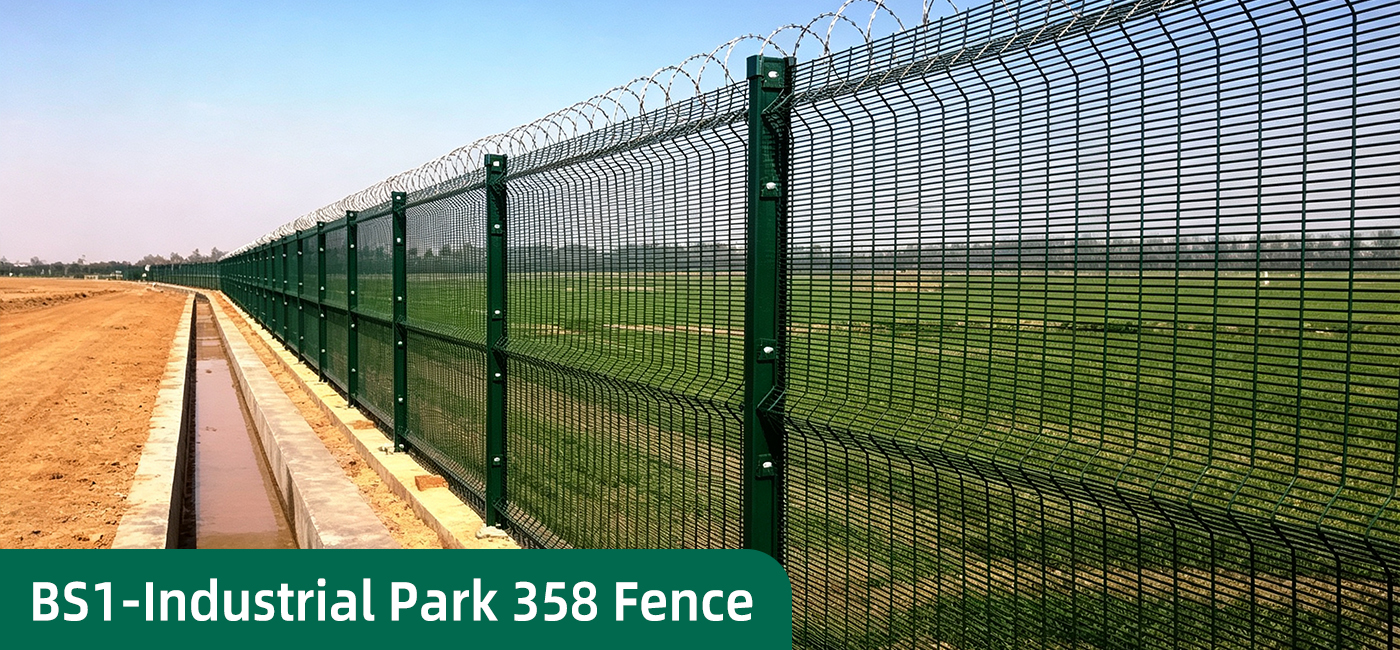
1. How to Purchase a Suitable Perimeter Protection System
Industrial perimeter fencing helps define site boundaries, manage access and separate facilities from surrounding areas.
The appropriate fence depends on the required security function, environmental exposure, site layout and project budget.
Choose the Right Fence Type
Welded mesh fencing
Suitable for many general industrial boundaries, warehouse yards and commercial properties where a regular mesh structure and modular installation are required.
Anti-climb fencing
Dense mesh configurations can make unauthorized climbing more difficult. They may be considered for restricted-access compounds and higher-security applications.
Chain link fencing
Woven diamond mesh may be suitable for long boundaries, selected outdoor facilities and applications where flexible installation is useful.
Palisade fencing
Vertical steel pales connected to horizontal rails may be suitable for industrial boundaries requiring a robust steel structure and open visibility.
Check Material and Structural Specifications
Before purchasing, confirm:
- Steel grade and wire diameter
- Panel height and width
- Mesh opening or pale profile
- Post dimensions and wall thickness
- Connection method
- Foundation and anchoring requirements
- Gate dimensions and operating arrangements
- Applicable project specifications
Q235 steel may be suitable for selected components, but the material grade should be confirmed for the actual product and its intended loading conditions.
A fence panel should not be evaluated independently of its posts, connections and foundations.
Check Corrosion Protection
Industrial fences may be exposed to rain, humidity, coastal salt or industrial pollutants.
Potential surface treatments include hot-dip galvanizing, powder coating and compatible duplex coating systems.
Confirm the actual coating process, specified coating thickness or mass, inspection method and environmental suitability before ordering.
Do not assume that every product uses the same coating system or that a particular finish guarantees a fixed outdoor service life.
2. Core Purchasing Criteria for Machine Guarding
Machine guarding establishes a physical boundary around hazardous machinery and automated production areas.
The correct system depends on the equipment layout, identified hazards, access requirements and applicable machinery safety requirements.
Evaluate Panel and Frame Construction
Check the following details:
- Panel material and dimensions
- Mesh opening and wire diameter
- Weld quality
- Frame and post dimensions
- Mounting brackets and fixings
- Panel alignment and rigidity
- Compatibility with the installation location
A thicker frame does not automatically establish that a machine guard meets a particular safety requirement. The complete guarding arrangement must be suitable for the machine and its operating conditions.
Confirm Access and Maintenance Requirements
The layout should identify pedestrian gates, maintenance access points and any sections that need to be removed for equipment servicing.
Where safety interlocks are required, confirm the intended device and interface requirements. The machine integrator or responsible safety engineer must ensure that the complete safety function is appropriately designed and validated.
Consider Future Layout Changes
Modular guarding can make certain adjustments and panel replacements easier.
However, any modification must preserve the required guarding distances and safety functions. The equipment should not return to operation until the revised arrangement has been reviewed as required.
3. How to Select Industrial Cable Management Products
Cable management systems support and organize power, control, communication and instrumentation cables.
The appropriate product depends on the cable schedule, installation environment, support arrangement and applicable electrical requirements.
Common Product Types
Mesh cable trays
Open-wire construction can provide ventilation and convenient access for compatible cable installations.
Perforated cable trays
A supporting base with openings may assist drainage and ventilation, depending on the design.
Solid-bottom cable trays
These provide a continuous supporting surface for suitable cable installations.
Cable trunking
Enclosed trunking may be appropriate where a more enclosed cable route is required.
Check Technical Parameters
Before placing an order, confirm:
- Tray type and dimensions
- Cable types and quantities
- Estimated total cable weight
- Support spacing and span
- Material and coating
- Connector and bracket requirements
- Indoor or outdoor installation conditions
- Required cable separation
- Access for inspection and future expansion
Load capacity depends on the tray design, support spacing, connections and loading conditions.
Request applicable load data for the actual configuration rather than relying on a general claim of high load-bearing capacity.
Cable trays help organize cable routes but do not eliminate every electrical hazard. The complete installation must meet the applicable electrical design and installation requirements.
4. Technical Documents to Request Before Ordering
A clear technical specification helps prevent misunderstandings between the buyer, supplier, installation team and project engineer.
Depending on the product, request the following documents.
| Document | What to Verify |
|---|---|
| Product Specification | Dimensions, materials, finishes and configuration |
| Technical Drawing | Panel layout, post positions, connections and mounting details |
| Material Information | Applicable steel grade and component specifications |
| Coating Information | Coating type and specified thickness or mass |
| Inspection Records | Relevant dimensional and visual inspection results |
| Test Reports | Test method, tested sample and acceptance criteria |
| Certificates | Certificate holder, scope, validity and covered product |
| Installation Instructions | Assembly sequence, fixing requirements and maintenance |
| Packaging Details | Bundle dimensions, labeling and shipping protection |
Not every product requires every document. The required documentation should be agreed according to the contract, application and applicable standards.
A supplier’s quality management certificate should not automatically be treated as product-specific certification.
5. How to Evaluate an Industrial Safety Equipment Supplier
Product selection is only one part of procurement. The supplier must also be able to manufacture the specified configuration and provide the agreed documentation.
Manufacturing Capability
Ask whether the supplier can manufacture the required dimensions, materials, coatings and accessories.
For customized projects, technical drawings and a confirmed bill of materials are especially important.
Quality Control
Confirm which characteristics are inspected, how the results are recorded and what acceptance criteria apply.
Where a particular test is required, identify the test method and the product to which it applies.
Customization and Compatibility
Verify that panels, posts, brackets, gates and other accessories are designed to work together.
For cable management, confirm compatibility between trays, connectors, supports and covers where applicable.
Export and Delivery Requirements
For international orders, clarify:
- Product packaging
- Labeling requirements
- Shipping dimensions and weights
- Delivery terms
- Required export documentation
- Production and dispatch schedule
- Procedures for handling discrepancies
After-Sales Support
Confirm how technical questions, missing components, product discrepancies and replacement requirements will be handled.
The supplier’s commitments should be recorded in the quotation, contract or other agreed documentation.
6. Common Procurement Mistakes to Avoid
Choosing by Unit Price Alone
A low unit price may not reflect the complete cost of transportation, installation, maintenance and replacement.
Compare quotations using the same technical specification and delivery scope.
Using Incomplete Specifications
Descriptions such as “heavy-duty fence” or “high-load cable tray” are insufficient on their own.
Define the actual dimensions, materials, coating requirements and relevant performance criteria.
Ignoring Installation Compatibility
Fence panels may not fit the selected posts, and cable trays may not match the proposed supports or connectors.
Confirm the complete assembly before production.
Assuming All Products Meet the Same Standards
Standards apply to particular product categories and intended uses. Confirm the relevant requirements for each product rather than relying on a general statement that the supplier meets international standards.
Over-Specifying Low-Risk Areas
Not every boundary or internal separation requires the highest available specification.
Select equipment according to the actual function and risk assessment to avoid unnecessary expenditure.
Failing to Confirm the Final Drawing
Changes to panel dimensions, gate positions, mounting arrangements or cable routes after production can lead to rework.
Approve the final drawings and bill of materials before manufacturing begins.
7. Illustrative Procurement Example: Factory Safety Upgrade
A manufacturing facility plans to replace part of its external boundary, install guarding around an automated production cell and reorganize cable routes.
The purchasing team prepares a coordinated specification for all three categories.
Preliminary Procurement Plan
| Product Category | Key Requirements | Documents to Confirm |
|---|---|---|
| Perimeter Fencing | Fence height, mesh, posts, coating and gates | Product specification and layout drawing |
| Machine Guarding | Panel dimensions, mesh opening, mounting and access | Guarding drawing and applicable safety requirements |
| Cable Management | Tray type, dimensions, cable loading and supports | Tray specification and installation layout |
| Installation Accessories | Compatible fixings, brackets and connectors | Bill of materials and assembly details |
| Quality Verification | Agreed inspection and acceptance criteria | Inspection records and applicable test reports |
Illustrative Cost Comparison
The purchasing team compares two technically suitable alternatives over a planned 10-year period.
| Cost Item | Option A | Option B |
|---|---|---|
| Initial Purchase | $10,000 | $12, |