


Temporary Fence: Materials, Specifications and Installation
Temporary fencing provides a practical way to define boundaries, control access and separate work areas without constructing a permanent fence. It is widely used at construction sites, infrastructure projects, outdoor events, maintenance areas and temporary storage facilities.
Unlike permanent fencing, a temporary fence is designed around portability, convenient assembly, repeated use and flexible site layouts. Its performance depends on the steel frame, mesh panel, connection system, surface treatment, supporting bases and installation conditions.
Bendin (Hebei Bendin Industrial Technology Co., Ltd.) supplies customizable temporary fencing products for contractors, event organizers, rental companies and industrial customers. Depending on the selected product, configurations may include welded mesh panels, galvanized steel frames, detachable connectors, compatible bases and project-specific dimensions.
This guide explains temporary fence materials, technical specifications, corrosion protection, installation methods and purchasing considerations for different applications.
1. What Is a Temporary Fence?
A temporary fence is a movable or demountable barrier used to separate a designated area for a limited period or where the site layout may change.
A typical temporary fencing system may include:
- Welded wire mesh panels
- Steel tube frames
- Vertical and horizontal frame members
- Detachable panel connectors
- Freestanding bases or specified ground fixings
- Pedestrian gates where required
- Optional privacy screening, where compatible with the system
The exact configuration depends on the intended application, expected use period, ground conditions, environmental exposure and applicable safety requirements.
Temporary fencing should not automatically be treated as a permanent security fence, fall-protection system or vehicle-impact barrier. Each application requires a suitable product design.
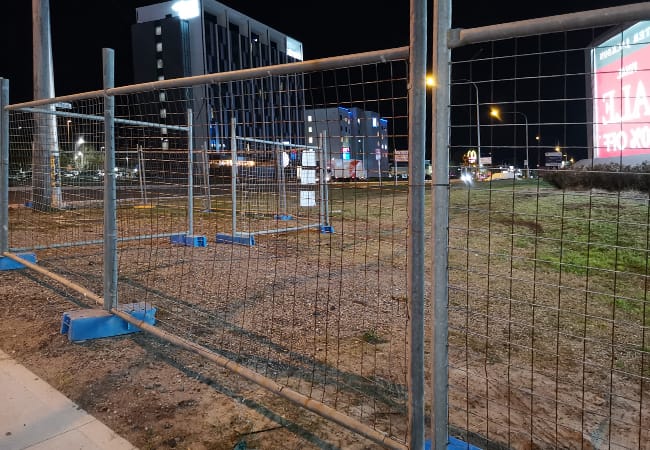
2. Steel Tubes and Frame Materials
The steel frame supports the mesh panel and provides the connection points needed for assembly and handling.
Galvanized Steel Tubes
Galvanized steel tubes have a zinc coating that helps protect the underlying steel against corrosion.
They may be suitable for temporary fencing used outdoors at construction sites, maintenance areas and events.
Tube diameter, wall thickness and steel grade should be selected according to the panel dimensions, expected loads and system design.
Q235 Steel Components
Q235 steel may be used for selected frame components, depending on the product specification.
The actual material grade should be confirmed for the specific product rather than assumed to apply to every component in the range.
Frame Design
The frame should support the mesh panel and maintain its intended geometry during normal handling, installation and use.
Important design factors include:
- Tube dimensions and wall thickness
- Frame joint construction
- Weld quality
- Panel flatness
- Connector position
- Compatibility with the selected base
- Resistance to deformation during normal handling
A larger tube diameter does not automatically guarantee better performance. The frame must be evaluated as a complete structure.
3. Typical Temporary Fence Specifications
Bendin can discuss customized configurations according to product design, manufacturing capabilities and project requirements.
| Parameter | Typical Options |
|---|---|
| Product Type | Temporary Fence / Portable Fence Panel |
| Panel Structure | Welded Mesh with Steel Tube Frame |
| Frame Material | Specified Steel Tube |
| Tube Diameter | Product-specific; confirm the selected model |
| Tube Wall Thickness | Product-specific |
| Panel Height | Common options may include approximately 1.2–2.4 m |
| Panel Width | Common options may include approximately 2.0–3.5 m |
| Mesh Opening | Product-specific |
| Wire Diameter | Product-specific |
| Surface Treatment | Galvanized / Powder Coated / Other Specified Finish |
| Connectors | Detachable Clips / Clamps / Specified Fasteners |
| Bases | Compatible Freestanding Bases or Specified Fixings |
| Customization | Dimensions / Mesh / Frame / Finish / Accessories |
These are indicative configuration ranges, not guaranteed specifications for every product. Actual panel dimensions, tube diameters, wall thicknesses, wire sizes, connector types and base arrangements should be confirmed before ordering.
For projects subject to local regulations or a named safety standard, the selected configuration must be checked against the applicable requirements.
4. Welded Mesh Panels and Surface Quality
The mesh panel provides the physical separation between the designated area and its surroundings.
Welded Wire Mesh
Welded wire mesh uses intersecting steel wires joined at their intersections through resistance welding.
Its regular grid pattern can provide visibility through the fence while helping define the boundary.
Mesh Opening
Mesh opening should be selected according to the intended application, required visibility and relevant safety considerations.
A panel intended for a construction-site boundary may have different requirements from a barrier used for pedestrian separation at an event.
Wire Diameter and Weld Quality
Wire diameter and weld quality influence the panel’s rigidity and structural performance.
These properties should be confirmed through the product specification and relevant quality checks.
Smooth Edges and Finish
Cut wire ends, frame edges and connectors should be checked for burrs, sharp projections and other visible defects.
The finished product should be suitable for its intended handling and use. A claim of compliance with a particular safety standard requires the relevant product and installation evidence.
5. Corrosion Protection for Temporary Fencing
Temporary fences may be repeatedly exposed to rain, humidity, sunlight, dirt and handling during transportation.
The appropriate surface treatment depends on the base material, manufacturing process and expected environment.
Hot-Dip Galvanizing
Hot-dip galvanizing provides a zinc coating that helps protect steel against corrosion.
The required coating specification should be confirmed for the actual product and manufacturing process.
Powder Coating
Powder coating provides a decorative finish and an additional protective layer when applied over an appropriately prepared substrate.
It also allows the fence to be supplied in selected colors for site identification or project requirements.
Galvanizing Plus Powder Coating
A compatible galvanized substrate combined with powder coating may be suitable where both corrosion protection and appearance are important.
The manufacturing sequence should be confirmed because welding, cutting and other processing can affect protective coatings.
Choosing the Right Finish
Before ordering, confirm:
- Base material and coating type
- Coating thickness or mass, where specified
- Whether galvanizing occurs before or after fabrication
- Whether powder coating is included
- Environmental exposure
- Inspection method
- Maintenance requirements
A specific service-life claim should only be made when supported by product data and clearly defined environmental conditions.
6. Detachable Connectors and Repeated Use
The connector system is an important part of a reusable temporary fence.
Connectors allow compatible panels to be joined and separated when the site layout changes or the fence is relocated.
Common Connector Requirements
- Compatibility with the selected frame tubes
- Secure engagement between adjacent panels
- Convenient assembly and disassembly
- Resistance to unintended loosening during normal use
- Suitability for the selected base and installation arrangement
- Availability of replacement components
The exact connector design depends on the temporary fencing system.
A detachable connection should not be assumed to be tool-free unless the product is specifically designed for that purpose.
Planning for Reuse
Temporary fencing is often moved between projects or stored between periods of use.
To support reuse, inspect the panels, connectors and bases before redeployment. Replace damaged components and confirm that the assembled fence remains suitable for the new site conditions.
7. Temporary Fence Bases and Stability
The base arrangement affects the stability of a freestanding temporary fence.
Different systems may use compatible freestanding bases, specified ground fixings or other approved support arrangements.
Freestanding Bases
Freestanding bases support the panels without requiring permanent post foundations.
Their suitability depends on the panel design, ground conditions, exposure and expected loads.
Ground Fixings
Some applications may require specified fixings where the surface and product design permit them.
The installation method should follow the manufacturer’s instructions and applicable site requirements.
Wind and Screening Considerations
Wind exposure is an important factor when selecting temporary fencing.
Privacy screens, banners and other coverings can substantially change wind loading. A fence that is suitable as an open mesh panel may not be suitable after screening material is added.
The fence, bases, connectors and any accessories should be evaluated together for the intended installation conditions.
Temporary fencing should not be assumed suitable for crowd loading, fall protection or vehicle-impact protection without an appropriate design and supporting evidence.
8. Temporary Fence Applications
Construction Sites
Temporary fencing can define site boundaries, separate work areas from public routes and help manage access around construction activities.
Selection should consider site layout, ground conditions, wind exposure and local construction-site requirements.
Outdoor Events
Event fencing may be used to organize queues, define access areas and separate operational zones.
The required configuration depends on crowd-management arrangements, expected loads, gate positions and applicable event safety requirements.
A general-purpose temporary fence should not automatically be used as a crowd-control barrier where a specifically designed system is required.
Maintenance and Repair Work
Temporary fencing can separate maintenance areas from normal pedestrian or vehicle movement.
Its layout should preserve emergency access, service routes and other required clearances.
Warehouses and Industrial Facilities
Temporary panels can define short-term storage areas, maintenance zones or restricted work areas.
The system should be suitable for the expected handling, environmental conditions and intended level of separation.
Infrastructure Projects
Temporary fencing may be used around roadworks, utility maintenance and other infrastructure activities.
Traffic-management requirements, visibility, access control and local regulations should be considered before installation.
9. Temporary Fence vs. Permanent Fence
| Feature | Temporary Fence | Permanent Fence |
|---|---|---|
| Main Purpose | Temporary separation and access management | Long-term boundary or security protection |
| Installation | Designed |