



Grid Cable Tray: Materials, Specifications and Industrial Applications
Modern industrial facilities rely on organized cable management systems to support power distribution, communication networks and automation equipment.
A well-designed cable tray system helps arrange cables efficiently, improves maintenance access and supports future electrical expansion.
Grid cable trays, also known as wire mesh cable trays or basket cable trays, are widely used in factories, data centers, commercial buildings and industrial projects due to their lightweight structure, ventilation performance and installation flexibility.
BenDin manufactures customizable grid cable tray systems using steel wire mesh, protective coatings and matching accessories for international industrial projects.
This guide explains the structure, materials, specifications, applications and purchasing considerations of grid cable tray systems.

What Is a Grid Cable Tray?
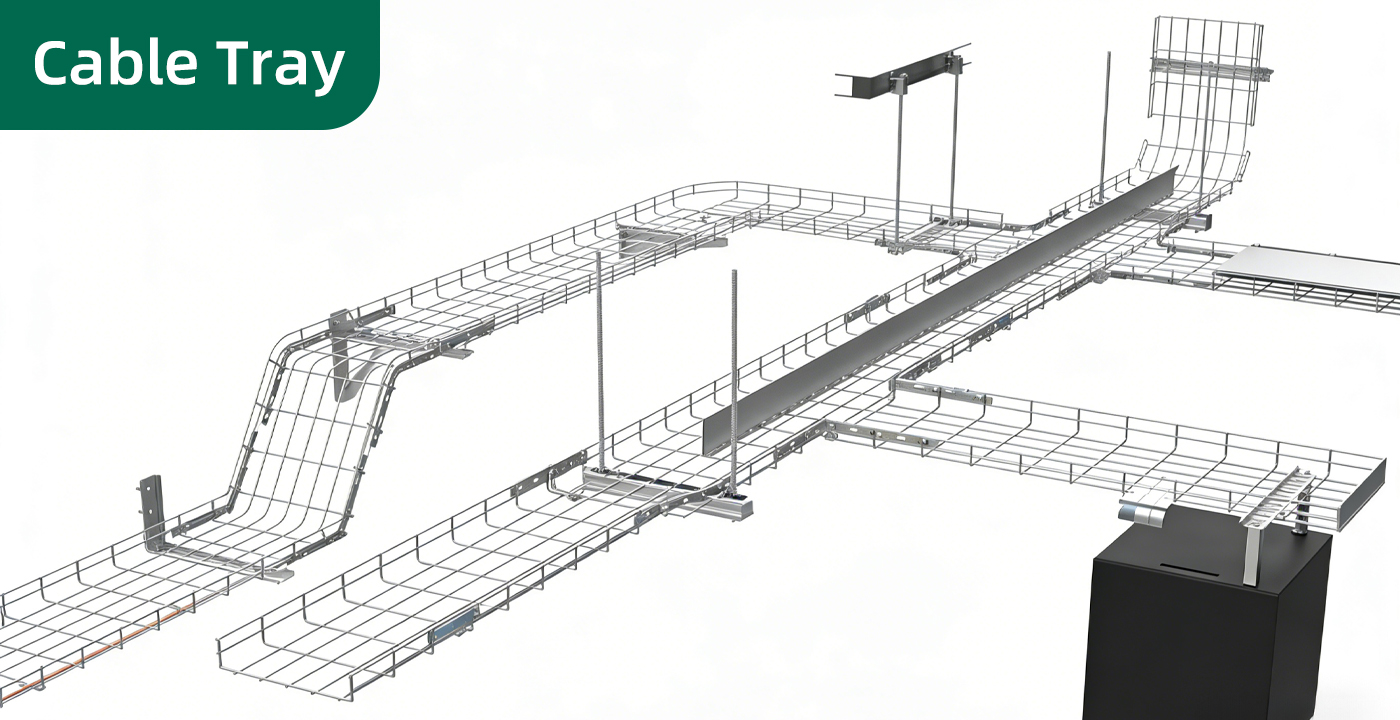
A grid cable tray is an open mesh cable support system manufactured from welded steel wire.
Unlike solid cable trunking, the open grid structure provides:
- Better ventilation
- Easier cable inspection
- Flexible cable routing
- Reduced dust accumulation
- Convenient installation of cable accessories
A typical grid cable tray system includes:
- Wire mesh tray sections
- Connecting plates
- Support brackets
- Mounting accessories
- Covers (optional)
- Bends and accessories
The complete system should be selected according to cable type, loading requirements and installation environment.
Main Materials of Grid Cable Tray
Steel Wire Mesh Structure
The main body of a grid cable tray is manufactured from welded steel wire mesh.
BenDin can provide different wire diameters according to the required load capacity and project specifications.
Typical wire diameter options include:
- 2.2 mm
- 3.0 mm
- 3.5 mm
- 3.8 mm
The correct wire diameter depends on:
- Cable weight
- Tray span
- Support spacing
- Installation environment
Wire diameter alone does not determine the complete load capacity of a cable tray system.
Q235 Steel Components
Supporting frames, brackets and accessories may use carbon steel components according to project requirements.
Steel selection affects:
- Structural stability
- Welding performance
- Installation reliability
- Long-term service performance
The final design should consider the complete tray system, including supports and fixing methods.
Typical Grid Cable Tray Specifications
BenDin manufactures grid cable trays according to customer drawings and project requirements.
| Item | Typical Options |
|---|---|
| Product Type | Grid / Wire Mesh Cable Tray |
| Material | Carbon Steel / Stainless Steel |
| Wire Diameter | 2.2–3.8 mm |
| Width | 50–600 mm |
| Height | 30–150 mm |
| Length | Customized |
| Surface Treatment | Electro Galvanized / Hot-Dip Galvanized / Powder Coated |
| Structure | Welded Wire Mesh |
| Accessories | Connectors, Brackets, Supports |
| Installation | Ceiling / Wall / Floor Mounted |
| Color | Metallic / Black / Customized |
Specifications vary according to production design and project requirements.
Advantages of Grid Cable Tray Systems
Excellent Ventilation
The open mesh structure allows airflow around cables.
This can help reduce heat accumulation compared with some enclosed cable management systems.
Easy Cable Inspection
The open design allows maintenance personnel to quickly identify cable routes and installation conditions.
Flexible Installation
Cables can be added, removed or adjusted more easily.
Lightweight Structure
Compared with some heavier cable support systems, wire mesh trays can simplify transportation and installation.
Easy Customization
Grid cable trays can be customized with different:
- Widths
- Heights
- Lengths
- Support methods
- Surface treatments
Corrosion Protection Options
Cable trays are often installed in environments where corrosion protection is important.
BenDin provides different surface treatment options.
Electro Galvanized Finish
Suitable for many indoor applications requiring basic corrosion protection.
Hot-Dip Galvanized Finish
Provides a thicker zinc coating and is commonly selected for outdoor or demanding environments.
Applications include:
- Industrial plants
- Outdoor equipment areas
- Infrastructure projects
- Utility facilities
Powder Coated Finish
Provides color options and additional surface protection.
Common colors include:
- Black
- Gray
- Custom RAL colors
The appropriate coating should be selected according to:
- Indoor or outdoor installation
- Humidity
- Chemical exposure
- Temperature conditions
Grid Cable Tray Applications
Industrial Factories
Industrial facilities use cable trays for:
- Power cables
- Control cables
- Automation wiring
- Communication cables
Typical locations include:
- Production workshops
- Equipment rooms
- Control areas
- Maintenance zones
Data Centers and Communication Facilities
Wire mesh cable trays are commonly used where cable visibility and accessibility are important.
Applications include:
- Network cable routing
- Communication systems
- Server room infrastructure
Commercial Buildings
Cable tray systems can support organized electrical installations in:
- Office buildings
- Shopping centers
- Public facilities
Automation and Smart Factories
Modern automated factories require flexible cable routing solutions.
Grid cable trays support:
- Robot systems
- Sensors
- Control networks
- Industrial communication cables
The modular structure allows easier modification when production equipment changes.
Cable Tray Selection Factors
When selecting a grid cable tray system, buyers should consider:
Cable Loading
The tray should be selected according to:
- Cable quantity
- Cable weight
- Support spacing
- Safety requirements
Tray Size
Important dimensions include:
- Width
- Height
- Length
- Bend radius requirements
Installation Method
Common installation methods include:
- Ceiling suspension
- Wall mounting
- Floor support
Environmental Conditions
Consider:
- Indoor or outdoor use
- Corrosion exposure
- Temperature conditions
- Chemical environment
Accessories
A complete system may require:
- Connectors
- Brackets
- Supports
- Covers
- Grounding accessories
Grid Cable Tray vs Traditional Cable Trunking
| Feature | Grid Cable Tray | Cable Trunking |
|---|---|---|
| Structure | Open Mesh | Enclosed |
| Ventilation | Excellent | Limited |
| Cable Visibility | High | Lower |
| Maintenance Access | Easy | More Limited |
| Cable Addition | Flexible | More Restricted |
| Weight | Usually Lower | Usually Higher |
The suitable choice depends on cable protection requirements and installation conditions.
Example: Industrial Cable Management Project
A manufacturing plant requires approximately 500 meters of cable management system for a new production line.
Example configuration:
| Item | Requirement |
|---|---|
| Application | Automated Production Line |
| Tray Type | Grid Cable Tray |
| Width | 300 mm |
| Height | 100 mm |
| Wire Diameter | 3.5 mm |
| Finish | Hot-Dip Galvanized |
| Installation | Ceiling Supported |
| Accessories | Connectors and Brackets |
The final quantity depends on:
- Cable route design
- Bends
- Vertical drops
- Support spacing
- Equipment layout
This is an illustrative project example, not a completed BenDin customer project.
Custom Grid Cable Tray Manufacturing
BenDin provides customized cable tray solutions according to project requirements.
Customization options include:
- Tray width
- Tray height
- Wire diameter
- Mesh structure
- Length
- Surface treatment
- Color
- Support accessories
- Connection components
For large industrial projects, customers can provide:
- Cable layout drawings
- Load requirements
- Installation conditions
- Project specifications
before production.
Quality Control for Cable Tray Production
Quality inspection may include:
- Wire diameter checking
- Mesh dimension inspection
- Welding quality
- Tray size verification
- Surface coating inspection
- Accessory matching
- Packaging inspection
Consistent manufacturing quality helps ensure easier installation and system compatibility.
How to Choose a Grid Cable Tray Supplier
Before purchasing, buyers should confirm:
Product Specifications
Including:
- Width
- Height
- Wire diameter
- Material
Surface Treatment
Confirm:
- Galvanizing method
- Coating requirements
- Environmental suitability
Load Requirements
Provide:
- Cable quantity
- Cable weight
- Support spacing
Installation Requirements
Confirm:
- Mounting method
- Accessories
- Project drawings
Export Capability
Evaluate:
- Packaging
- Documentation
- Production consistency
Frequently Asked Questions
What is a grid cable tray?
A grid cable tray is an open welded wire mesh cable support system used for organizing and supporting electrical cables.
What is the difference between grid cable tray and basket cable tray?
They are commonly used to describe similar wire mesh cable management products, although naming may vary by region and manufacturer.
Is galvanized cable tray suitable for outdoor use?
Hot-dip galvanized cable trays are commonly selected for outdoor applications where enhanced corrosion protection is required.
Can BenDin customize cable tray sizes?
Yes. Width, height, wire diameter, length, coating and accessories can be customized according to project requirements.
What industries use grid cable trays?
Common applications include factories, automation facilities, data centers, commercial buildings and infrastructure projects.
Request a Grid Cable Tray Quote
BenDin supplies customizable grid cable tray systems for industrial, commercial and automation projects worldwide.
For an accurate quotation, provide:
Cable application + tray size + cable load + installation method + surface treatment + quantity + destination.
BenDin can manufacture cable tray systems and accessories according to confirmed project specifications.