


Tubular Steel Fence: Specifications, Applications and Customization
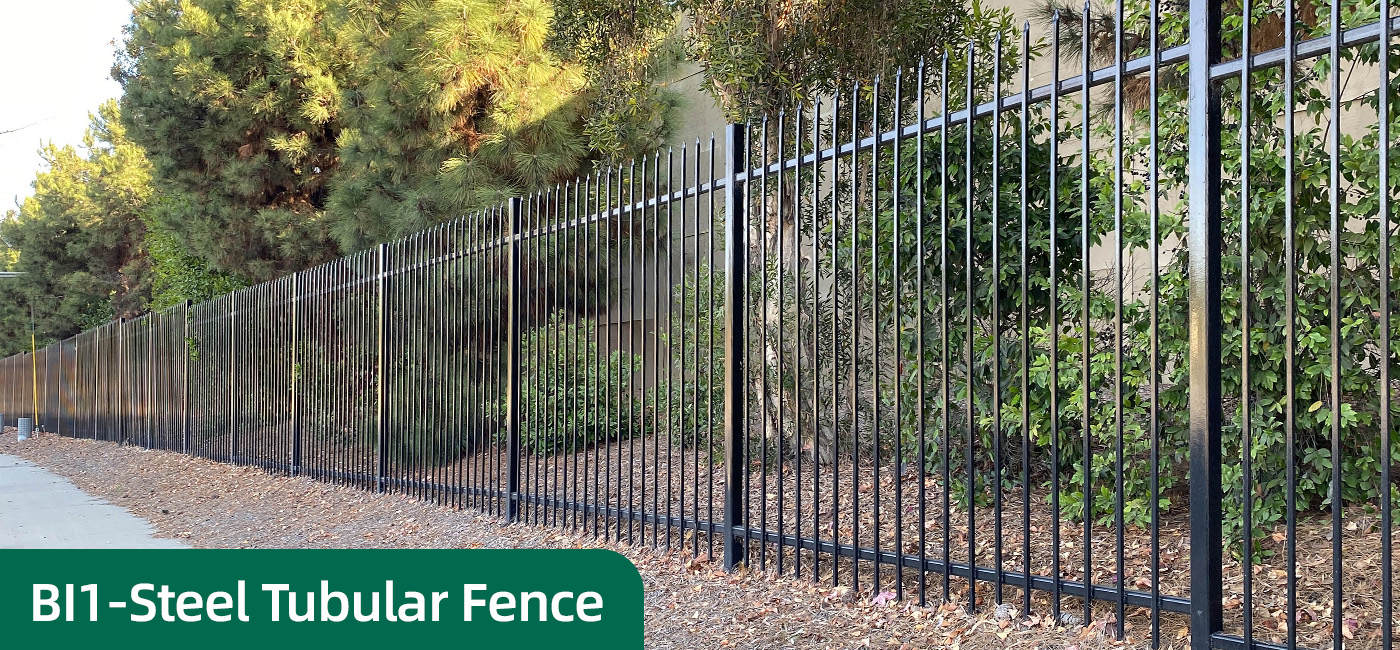
Tubular steel fencing is widely used for industrial facilities, residential communities, commercial properties, schools, public parks and selected infrastructure projects. Its combination of vertical steel tubes, horizontal rails and supporting posts provides a structured perimeter barrier with customizable dimensions and architectural finishes.
For international buyers, choosing a tubular steel fence involves more than selecting a design. Tube dimensions, wall thickness, bar spacing, post configuration, surface treatment and installation method all influence the suitability of the complete fence system.
Bendin (Hebei Bendin Industrial Technology Co., Ltd.) supplies customizable tubular steel fencing for importers, distributors, contractors, developers and project owners. Depending on the selected product, options may include square or rectangular steel tubes, different panel heights, decorative tops, galvanized or powder-coated finishes, and compatible pedestrian or vehicle gates.
This guide explains tubular steel fence specifications, materials, manufacturing quality, applications and customization options to help buyers prepare accurate project requirements.
1. About Bendin: Tubular Steel Fence Manufacturing
Based in Anping, Hebei, China, Bendin focuses on manufacturing metal fencing products for domestic and international markets.
The company offers tubular steel fencing configurations for residential, commercial, industrial and municipal applications. Depending on the selected product and project requirements, the supply scope may include fence panels, supporting posts, matching gates and installation accessories.
For international procurement, a clear technical specification helps align product dimensions, manufacturing, packaging and delivery.
When evaluating a manufacturer, buyers should confirm:
- Available tube profiles and dimensions
- Panel fabrication and welding capabilities
- Surface-treatment options
- Product inspection procedures
- Customization and sampling arrangements
- Technical drawings and installation information
- Export packaging and delivery requirements
Company experience, production capacity, certifications and warranty coverage should be verified against current company records and supporting documents.
2. Key Applications of Tubular Steel Fencing
Tubular steel fencing can be configured for different environments by adjusting panel dimensions, tube profiles, bar spacing, post design and surface finish.
Industrial Facilities and Storage Yards
Industrial sites may use tubular fencing to define property boundaries, separate storage areas and manage access around operational facilities.
The required structural design depends on fence height, post spacing, site conditions and the intended function.
Where enhanced security or vehicle-impact protection is required, a separately specified and verified system may be necessary.
Residential Communities and Private Properties
Residential tubular fencing provides a defined boundary while maintaining an open architectural appearance.
Common selection factors include panel style, fence height, color, gate compatibility and maintenance requirements.
Schools and Educational Facilities
School fencing may require particular attention to bar spacing, exposed edges, top design and gate locations.
The selected configuration should meet the requirements applicable to the specific campus and intended use.
Commercial Buildings and Public Parks
Commercial properties and public parks often prioritize consistent appearance, coordinated colors and compatibility with landscaping.
Flat-top or decorative tubular designs may be considered according to the site layout and applicable safety requirements.
Infrastructure and Service Facilities
Tubular fencing may be used for selected service areas, utility facilities and infrastructure boundaries.
The required configuration should reflect environmental exposure, access arrangements and the project’s technical specifications.
3. Tubular Steel Fence Structure and Materials
A typical tubular steel fence system may include vertical tubes, horizontal rails, supporting posts, connection hardware and a specified surface finish.
Vertical Steel Tubes
Vertical tubes form the main infill structure of the fence panel.
Their dimensions, wall thickness and spacing affect the appearance, weight and structural behavior of the finished panel.
Horizontal Rails
Horizontal rails connect and support the vertical tubes, helping maintain panel geometry.
Rail dimensions and connection details should be selected according to the panel design and installation requirements.
Supporting Posts
Posts transfer the loads acting on the fence to the ground or supporting structure.
Depending on the product design, post options may include square or rectangular steel profiles.
Post dimensions, wall thickness, spacing and foundation arrangements should be confirmed for the actual project.
Connecting Components
Brackets, bolts, hinges, latches and other accessories connect panels, posts and gates.
These components should match the approved design and be suitable for the installation environment.
4. Tubular Steel Fence Specifications
Bendin can discuss customized configurations according to product design, manufacturing capabilities and project requirements.
| Parameter | Typical Options |
|---|---|
| Product Type | Tubular Steel Fence |
| Main Material | Specified Steel Tube |
| Vertical Tube Profile | Square / Rectangular / Other Available Profiles |
| Tube Dimensions | Product-specific |
| Tube Wall Thickness | Product-specific |
| Horizontal Rails | Compatible Steel Tube Profiles |
| Fence Height | Project-specific |
| Panel Width | Customized according to the layout |
| Vertical-Bar Spacing | According to design and application |
| Post Profile | Square / Rectangular / Other Compatible Profiles |
| Top Design | Flat / Spear / Decorative / Other Available Styles |
| Surface Treatment | Galvanized / Powder Coated / Other Specified Finish |
| Color | Selected RAL reference or other agreed finish |
| Mounting | Embedded Posts / Base Plates / Other Approved Arrangement |
| Gates | Compatible Pedestrian and Vehicle Gates, where available |
| Accessories | Brackets / Fasteners / Hinges / Latches |
These are specification categories rather than a fixed specification for every product. Actual dimensions, wall thicknesses, bar spacing, post sections and coating requirements should be confirmed in the approved technical drawing.
Tube Dimensions and Wall Thickness
Tube dimensions should be specified clearly in the purchase order.
For round tubes, confirm the outside diameter and wall thickness. For square or rectangular tubes, specify the section dimensions and wall thickness.
A larger tube does not automatically guarantee a stronger complete fence. Panel geometry, steel properties, connections, post spacing and foundations must also be considered.
Panel Height and Width
Panel dimensions should match the site layout, boundary length, terrain and gate positions.
Standardized panel widths may simplify installation, while customized panels may be required at corners, slopes or irregular boundaries.
Vertical-Bar Spacing
Bar spacing affects appearance and suitability for the intended application.
Projects around schools, residential areas and public spaces may ha