


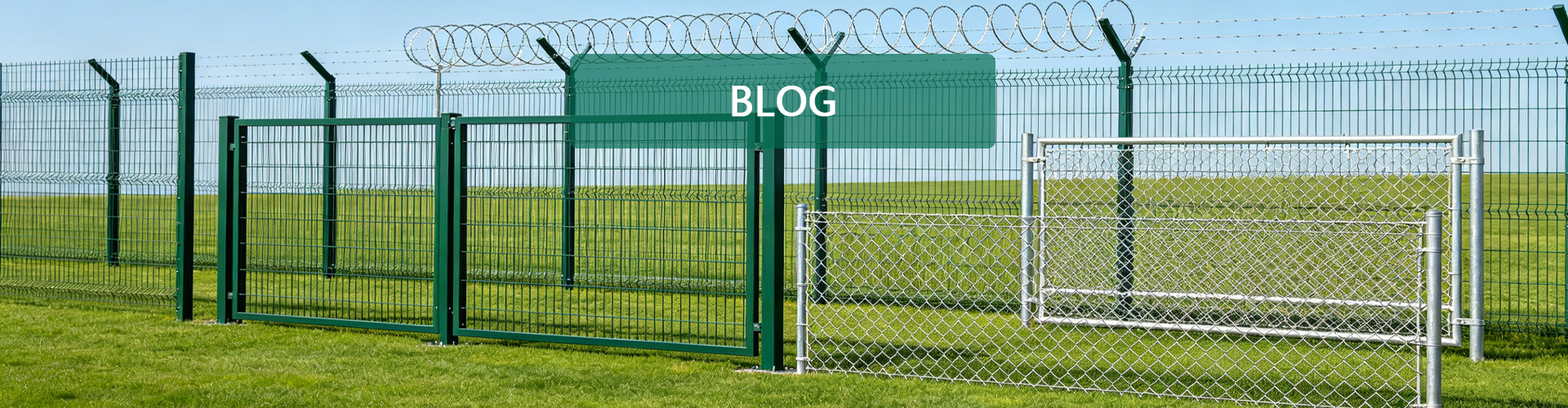
3D Fence for USA: Complete Guide for Industrial, Commercial & Security Projects
3D welded wire fencing is widely used for industrial facilities, warehouses, logistics centers, commercial properties, schools, utilities and perimeter security projects across the United States. Its combination of welded wire construction and V-shaped reinforcement bends provides a practical balance between rigidity, visibility, appearance and installation efficiency.
For contractors, distributors and project buyers, however, selecting a 3D fence involves more than choosing a panel height. Wire diameter, mesh opening, V-bend configuration, post design, coating system, environmental exposure and project security requirements all affect the performance and cost of the complete fencing system.
BenDin manufactures 3D welded wire fence panels and complete fencing systems for international markets, including projects and distributors serving the United States.
This guide explains typical 3D fence specifications, applications, surface treatments, customization options and purchasing considerations for US projects, with particular attention to markets such as Texas, California and Florida.
What Is a 3D Fence?
A 3D fence is a welded wire mesh fencing system reinforced with one or more horizontal V-shaped bends.
These reinforcement bends increase the rigidity of the panel without requiring excessively heavy wire throughout the entire structure. The result is a fence panel that combines structural stability with an open mesh design.
A complete 3D fencing system normally includes:
- Welded wire mesh panels
- Steel fence posts
- Post caps
- Clips or fixing brackets
- Bolts and fasteners
- Base plates or embedded posts
- Pedestrian gates
- Vehicle gates
Depending on the project, additional security components can also be incorporated into the perimeter fencing design.

Typical 3D Fence Specifications

3D fence specifications can be customized according to project drawings, security requirements and installation conditions.
Typical manufacturing options include:
| Item | Typical Options |
|---|---|
| Panel Height | 1.0–2.4 m |
| Panel Width | 2.0–3.0 m |
| Common Panel Width | 2.5 m |
| Mesh Opening | 50 × 200 mm |
| Alternative Mesh | 50 × 100 mm, 55 × 200 mm or customized |
| Wire Diameter | 4.0–5.0 mm |
| Reinforcement | V-shaped horizontal bends |
| Number of V-Bends | According to panel height |
| Post Type | Square or rectangular steel post |
| Surface Treatment | Galvanized + powder coated |
| Alternative Finish | Hot-dip galvanized |
| Color | Green, black, gray or customized |
| Installation | Embedded post or base plate |
| Gates | Pedestrian and vehicle gates available |
These are typical manufacturing ranges rather than a single mandatory specification. Final dimensions, wire diameter, coating and structural requirements should be determined according to the actual project design and applicable local requirements.
Why Does a 3D Fence Have V-Bends?
The V-shaped reinforcement is one of the most recognizable characteristics of a 3D fence.
A completely flat welded mesh panel can flex when subjected to pressure, particularly when the panel is relatively wide.
Adding horizontal reinforcement bends changes the geometry of the panel and increases rigidity.
This provides several practical advantages:
- Improved panel stiffness
- Reduced panel deformation
- Stable appearance after installation
- Efficient use of steel
- Easier handling compared with some heavier rigid fence systems
- Clear visibility through the fence
The number and location of reinforcement bends can vary according to panel height and design.
3D Fence Applications in the United States
The United States has diverse climates, project environments and security requirements. Therefore, the same fence specification should not automatically be applied to every project.
3D Fence for Texas Industrial Projects
Texas has extensive manufacturing, energy, warehousing, logistics and infrastructure sectors.
Typical fencing applications can include:
- Manufacturing facilities
- Distribution centers
- Warehouses
- Equipment yards
- Utility facilities
- Commercial properties
- Logistics parks
For industrial applications, buyers may prioritize panel rigidity, durable posts, secure connections and a coating system suitable for long-term outdoor exposure.
A heavier wire specification or reinforced post system can be selected where additional structural strength is required.
3D Fence for California Projects
California projects can involve very different environmental conditions depending on their location.
Coastal locations may require greater attention to corrosion protection, while inland commercial and logistics developments may prioritize cost efficiency, appearance and installation speed.
Typical applications include:
- Logistics centers
- Commercial facilities
- Warehouses
- Schools
- Utility sites
- Public facilities
- Industrial properties
For projects exposed to demanding environmental conditions, the coating system should be selected according to the actual site environment.
Galvanized steel combined with an appropriate powder-coated finish is one available option where both corrosion protection and appearance are important.
3D Fence for Florida Projects
Florida’s warm, humid environment means that corrosion resistance should be considered carefully when selecting outdoor steel fencing.
3D welded wire fencing can be used for:
- Commercial developments
- Schools
- Residential communities
- Public facilities
- Warehouses
- Industrial sites
- Utility facilities
For Florida projects, buyers should pay particular attention to surface treatment, installation conditions and project-specific wind requirements.
Fence height, post spacing, foundation design and other structural factors should always be determined according to the requirements of the specific project.
Galvanized and Powder-Coated 3D Fence
Surface treatment has a major influence on the long-term appearance and corrosion resistance of steel fencing.
A common option for 3D fencing is a combination of galvanized steel and powder coating.
The galvanized layer provides corrosion protection to the underlying steel, while the powder-coated surface provides an additional protective layer and allows different colors to be specified.
Common colors include:
- Green
- Black
- Gray
- White
- Custom project colors
Color selection may depend on architectural requirements, site branding or surrounding buildings.
For projects in aggressive environments, buyers should specify the required coating system rather than purchasing solely on the basis of color.
3D Fence vs. Traditional Welded Wire Fence
One common question from project buyers is whether a 3D fence is different from a standard flat welded wire fence.
The primary difference is the reinforcement geometry.
| Feature | 3D Fence | Flat Welded Wire Fence |
|---|---|---|
| Panel Design | V-bend reinforced | Flat |
| Rigidity | Enhanced by bends | Depends mainly on wire size |
| Visibility | High | High |
| Appearance | Architectural/modern | Simple |
| Custom Heights | Available | Available |
| Powder Coating | Available | Available |
| Typical Use | Industrial, commercial, perimeter | General perimeter applications |
Neither system is automatically better for every project.
The correct choice depends on the required security level, appearance, budget, installation method and site conditions.
3D Fence vs. 358 Security Fence
3D fence and 358 fence are also designed for different security requirements.
A 3D fence typically uses larger mesh openings and V-shaped reinforcement bends. This makes it suitable for general industrial, commercial and perimeter applications where visibility and panel rigidity are important.
A 358 security fence uses a much smaller mesh opening and is designed for applications requiring a higher level of anti-climb and anti-cut protection.
Typical 358 fence applications include:
- Prisons and correctional facilities
- Critical infrastructure
- High-security utilities
- Restricted industrial areas
- Other high-security perimeters
For standard industrial and commercial perimeter applications, 3D fencing can provide a more economical solution.
For high-security applications, buyers should evaluate whether a 358 fence or another specialized security fencing system is more appropriate.
How to Select the Right Wire Diameter
Wire diameter directly affects panel weight, rigidity, material consumption and price.
Typical options include:
4.0 mm Wire
Suitable for many general commercial and perimeter applications where cost efficiency and moderate rigidity are priorities.
4.5 mm Wire
Provides increased rigidity while maintaining a practical balance between weight and material cost.
5.0 mm Wire
Often selected for projects requiring a heavier and more rigid fence panel.
Buyers should avoid comparing quotations based only on panel dimensions.
For example, two suppliers may both quote a 2.0 × 2.5 m panel, but a difference in wire diameter, post thickness or coating specification can result in substantially different steel content and performance.
Selecting the Correct Fence Height
Fence height should be determined according to the purpose of the perimeter.
Typical options can include:
1.0–1.2 m:
Landscape boundaries and low-level access control.
1.5–1.8 m:
Commercial properties, schools and general perimeter fencing.
2.0 m:
Industrial facilities, warehouses and logistics centers.
2.4 m or customized:
Projects requiring a higher physical perimeter.
Height alone does not determine the security level of a fencing system. Mesh dimensions, wire diameter, post strength, connection design, gates and site layout should also be considered.
Post and Installation Options
A 3D fence system can be supplied with different post configurations.
Embedded Posts
Posts are installed directly into prepared foundations.
This method is commonly used for permanent perimeter fencing.
Base-Plate Posts
A welded steel base plate allows the post to be anchored to an existing concrete surface.
This option can be useful for:
- Warehouses
- Industrial facilities
- Concrete yards
- Existing foundations
The appropriate anchor design should be determined according to the project requirements and substrate conditions.
Example: 1,000-Meter Industrial Perimeter Project
Consider an industrial facility requiring approximately 1,000 meters of perimeter fencing.
If 2.5-meter-wide fence panels are selected:
1,000 ÷ 2.5 = approximately 400 panels
The actual project quantity will depend on:
- Corners
- Gate openings
- Building connections
- Changes in elevation
- Spare panels
- Site layout
An initial procurement estimate might therefore include approximately:
| Component | Example Quantity |
|---|---|
| 3D Fence Panels | Approx. 400+ |
| Fence Posts | Approx. 400+ |
| Fixing Sets | According to post design |
| Pedestrian Gates | According to project |
| Vehicle Gates | According to project |
| Spare Components | According to buyer requirements |
This example is provided to demonstrate the procurement calculation method. It is not presented as a completed BenDin customer project.
Final quantities should always be calculated from the actual site drawing.
Project Case Information for Buyers
For completed US or international projects, useful case-study information should include actual technical and logistics data rather than only stating that the fence was “successfully installed.”
A genuine BenDin project case can include:
Project Location: United States
Application: Industrial / logistics / commercial perimeter
Fence Type: 3D welded wire fence
Panel Size: Actual project specification
Wire Diameter: Actual specification
Mesh Size: Actual specification
Post: Actual post specification
Surface Treatment: Actual finish
Total Quantity: Actual quantity supplied
Accessories: Actual accessories supplied
Shipping: Actual shipment information
Project photographs, manufacturing photographs, packaging images and loading photographs can provide additional information for contractors and distributors evaluating a supplier.
Only verified project information should be published as an actual customer case.
Custom 3D Fence Manufacturing
Different US projects may require different panel and post configurations.
BenDin can manufacture 3D fencing according to confirmed drawings and purchasing specifications.
Customization options can include:
- Panel height
- Panel width
- Mesh opening
- Wire diameter
- Number of V-bends
- Post dimensions
- Post wall thickness
- Base plates
- Surface treatment
- Powder-coated color
- Fixing systems
- Pedestrian gates
- Vehicle gates
- Packaging
For project orders, drawings can be reviewed before production to confirm the major dimensions and system components.
What US Buyers Should Include in an RFQ
Providing complete technical information helps manufacturers prepare more accurate quotations.
A 3D fence RFQ should ideally include:
- Required fence height
- Panel width
- Mesh opening
- Wire diameter
- Post size and thickness
- Surface treatment
- Required color
- Total fence length or panel quantity
- Number and size of gates
- Installation method
- Destination
- Required delivery schedule
If the final specification has not yet been determined, buyers can provide project drawings, application details and required perimeter length for discussion.
Quality Control for 3D Fence Orders
For B2B and project orders, consistency across the complete production batch is important.
Quality inspections can focus on:
- Panel dimensions
- Mesh opening
- Wire diameter
- Welding quality
- V-bend dimensions
- Post dimensions
- Surface condition
- Coating appearance
- Accessory compatibility
- Packaging
For large orders, inspection requirements should be agreed before production.
Packaging and Container Loading
International buyers should also consider packaging and container utilization when comparing fencing quotations.
Panels are normally bundled for transportation, while posts and accessories are packed separately according to the order configuration.
Before shipment, buyers can confirm:
- Panels per bundle
- Bundle dimensions
- Bundle weight
- Post packaging
- Accessory packaging
- Estimated container quantity
- Loading plan
Efficient loading can help reduce the freight cost allocated to each fence panel, particularly for large-volume orders.
Why Choose BenDin as a 3D Fence Manufacturer?
BenDin manufactures metal fencing systems for industrial, commercial and security applications.
For 3D welded wire fence projects, our manufacturing capabilities include:
- Welded wire fence panel production
- Multiple wire diameters
- Multiple panel dimensions
- V-bend reinforcement
- Galvanized finishes
- Powder-coated finishes
- Matching steel posts
- Fixing accessories
- Pedestrian gates
- Vehicle gates
- Customized manufacturing
- Export packaging
- Container loading support
For distributors, contractors and project buyers, specifications can be confirmed according to drawings and purchasing requirements before mass production.
Frequently Asked Questions About 3D Fence
What is a 3D fence?
A 3D fence is a welded wire mesh fence with horizontal V-shaped reinforcement bends. The bends increase panel rigidity while maintaining an open mesh design.
What is the typical mesh size of a 3D fence?
A commonly used mesh configuration is approximately 50 × 200 mm, although other mesh dimensions can be manufactured according to project requirements.
What wire diameter is available?
Typical options include approximately 4.0 mm, 4.5 mm and 5.0 mm. The appropriate wire diameter depends on the required rigidity, security level and budget.
Can 3D fence panels be powder coated?
Yes. Galvanized and powder-coated finishes are available, with green, black, gray and customized colors depending on the project specification.
Is 3D fence suitable for industrial facilities?
Yes. 3D welded wire fencing is commonly used for industrial perimeters, warehouses, logistics facilities and commercial properties because it provides visibility, rigidity and a clean appearance.
Is a 3D fence an anti-climb security fence?
A 3D fence can provide perimeter access control, but it should not automatically be described as equivalent to specialized high-security anti-climb fencing. For projects requiring a higher anti-climb level, a 358 security fence or another project-specific security system may be more appropriate.
Can BenDin manufacture according to project drawings?
Yes. Panel dimensions, wire diameter, mesh configuration, posts, coatings, colors, gates and accessories can be manufactured according to confirmed project requirements.
Request a 3D Fence Quote from BenDin
US contractors, fencing distributors, importers and project buyers can send BenDin their project specifications or drawings for quotation.
For a more accurate quotation, provide:
Fence height + panel width + wire diameter + mesh size + post specification + coating + quantity + gates + destination.
If the final specification has not yet been determined, provide the project application, required perimeter length and installation environment for further discussion.
BenDin provides customized 3D welded wire fencing solutions for industrial, commercial and perimeter security projects in the United States and other international markets.