


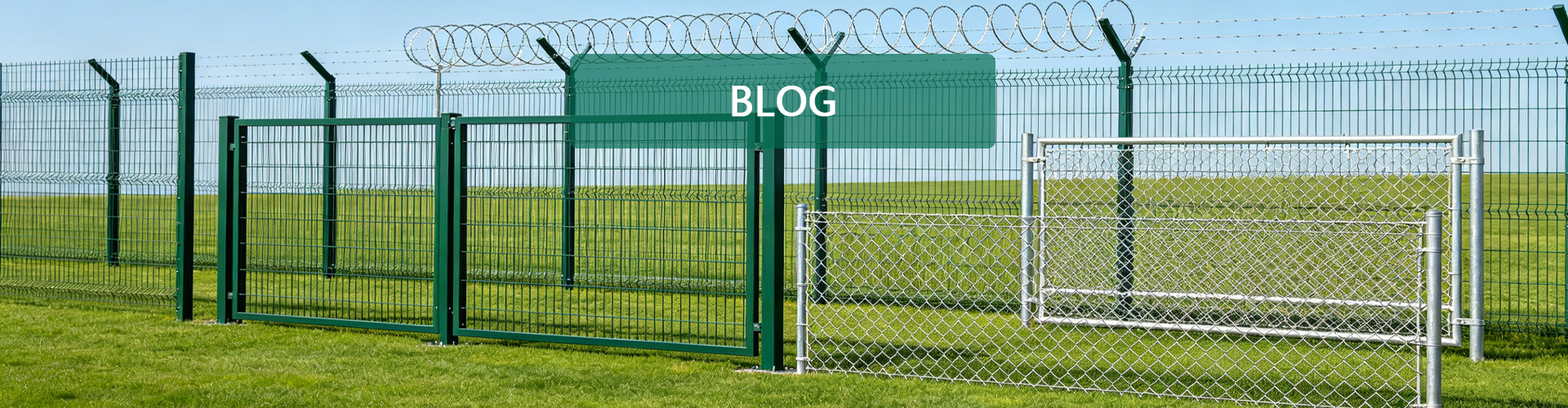
Anti-Climb Spikes: Materials, Specifications and Fence Applications
Anti-climb spikes are physical security accessories designed to discourage unauthorized climbing over suitable walls, fences and perimeter barriers. They can be considered for selected industrial compounds, commercial properties, utility facilities and restricted-access sites where additional perimeter protection is required.
Unlike a complete security fence, anti-climb spikes are supplementary components. Their effectiveness depends on the supporting structure, mounting method, site conditions and the suitability of the installation for its intended use.
Bendin (Hebei Bendin Industrial Technology Co., Ltd.) supplies perimeter fencing products and related accessories for international projects. Anti-climb spike configurations can be discussed according to the supporting wall or fence, material requirements, surface treatment and project specifications.
This guide explains the main product types, materials, typical specifications, installation considerations and selection factors for anti-climb spikes.
1. What Are Anti-Climb Spikes?
Anti-climb spikes are projecting metal security components installed on suitable perimeter structures to discourage unauthorized climbing.
Depending on the product design, they may be manufactured from formed steel strips, steel sections or other specified metal materials.
Common installation locations include:
- Suitable boundary walls
- Selected perimeter fence sections
- Restricted industrial compounds
- Utility and equipment enclosures
- Commercial property boundaries
- Other locations where their use is lawful and appropriate
The supporting wall or fence must be capable of carrying the additional components. The installation must also account for public access, maintenance, emergency procedures and the risk of accidental injury.
Anti-climb spikes should not be treated as a substitute for a properly designed fence, secure gate or broader site-security system.
2. Main Types of Anti-Climb Spikes
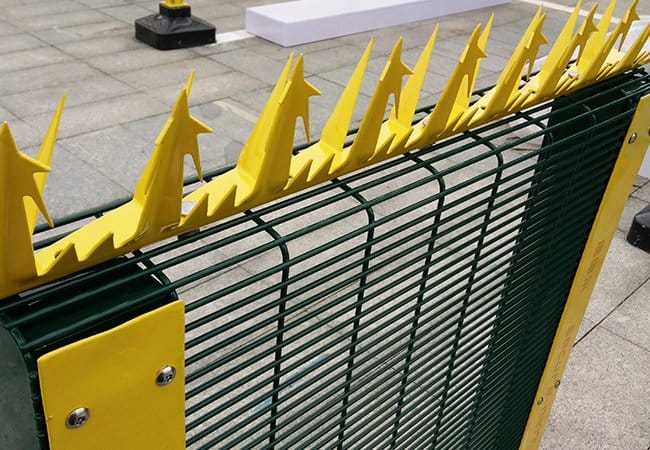
Metal Wall Spikes
Wall spikes are designed for compatible wall tops and selected boundary structures.
The correct product depends on the wall’s width, material, shape and available fixing points.
Before ordering, confirm the mounting surface and whether the product is compatible with the wall construction.
Fence-Mounted Spikes
Fence-mounted spikes are intended for use with compatible fence structures.
The supporting fence, posts and connections must be assessed before adding extra components, as the additional loading may affect the existing installation.
Multi-Directional Spike Profiles
Some products use projecting elements arranged in more than one direction.
The exact geometry and intended application should be confirmed using the manufacturer’s technical drawing and product specification.
Different profiles are not automatically interchangeable, even when their overall dimensions appear similar.
3. Typical Anti-Climb Spike Specifications
Bendin can discuss product configurations according to available manufacturing options and project requirements.
| Parameter | Specification Considerations |
|---|---|
| Product Type | Anti-Climb Spikes / Wall Spikes |
| Material | Carbon Steel / Specified Alloy Steel |
| Material Grade | Project-specific |
| Spike Projection | Confirmed product dimension |
| Base or Mounting Width | According to supporting structure |
| Component Length | Standard or customized |
| Surface Treatment | Galvanized / Powder Coated / Other specified finish |
| Color | Metallic Finish / RAL Color where applicable |
| Mounting | Compatible Bolted or Other Approved Fixing |
| Substrate | Suitable Wall or Fence Structure |
| Packaging | Bundled / Project-specific |
| Customization | Dimensions / Finish / Mounting Compatibility |
The final specification should be confirmed using an actual product drawing. A single dimension, such as spike length, does not by itself establish the overall security performance of the product.
4. Material Selection
Material selection affects the component’s strength, manufacturing characteristics and suitability for outdoor use.
Carbon Steel
Carbon steel can be used for formed security accessories where the required mechanical properties and manufacturing processes are appropriate.
The selected grade should match the product design and applicable requirements.
Spring Steel
Certain spring steel grades may be used for products requiring specific mechanical properties.
However, the material grade, heat treatment and final hardness must be verified against the manufacturer’s specification. Spring steel should not automatically be described as superior for every anti-climb application.
Material Verification
For project procurement, buyers should confirm:
- Material grade
- Required mechanical properties
- Applicable test documentation
- Dimensional tolerances
- Surface treatment compatibility
Where a specific grade such as 65Mn is requested, it should be stated in the purchase specification and confirmed before production.
5. Surface Treatment and Corrosion Protection
Outdoor security accessories may be exposed to rain, humidity, sunlight and, in coastal locations, salt-laden air.
The surface treatment should be selected according to the actual environment and expected maintenance requirements.
Hot-Dip Galvanizing
Hot-dip galvanizing provides a zinc coating that helps protect steel components from corrosion.
The required coating specification should be agreed upon before production.
Powder Coating
Powder coating provides a decorative finish and an additional protective layer when applied over an appropriately prepared surface.
Color options can help coordinate the accessory with the surrounding fence or building.
Galvanizing Plus Powder Coating
A duplex coating system may be considered when both corrosion protection and a specified appearance are required.
The appropriate system depends on environmental exposure, component design, maintenance requirements and project specifications.
Claims about coating thickness or guaranteed service life should be supported by relevant product documentation and test results.
6. Compatibility with Existing Fence Systems
Anti-climb spikes should be selected according to the supporting structure rather than purchased as a standalone item without checking compatibility.
Welded Mesh Fence
For welded mesh fencing, the post structure, upper frame and available mounting points should be reviewed before adding supplementary components.
358 Anti-Climb Fence
A 358 security fence is already designed with narrow mesh openings that reduce climbing opportunities.
Additional components should only be considered when required by the site’s security assessment and permitted by applicable regulations.
Chain Link Fence
Chain link fencing has a flexible woven structure. The suitability of additional accessories depends on the post arrangement, top rail, support system and existing installation.
Boundary Walls
Wall-mounted products require confirmation of the wall material, dimensions, condition and fixing method.
A mounting method suitable for concrete may not be appropriate for masonry, sheet materials or lightweight structures.
7. How to Select Anti-Climb Spikes
Before selecting a product, buyers should consider the following factors.
Supporting Structure
Identify whether the accessory will be mounted on a wall, welded mesh fence or another structure.
Environmental Exposure
Confirm whether the site is inland, coastal, humid or exposed to industrial contaminants.
Material and Finish
Specify the required material grade and surface treatment rather than relying on a general product description.
Mounting Compatibility
Confirm the available fixing points, mounting width and substrate condition.
Safety and Legal Requirements
Check applicable local restrictions, occupational safety requirements and the potential risk to members of the public, maintenance personnel and emergency responders.
Maintenance Access
The design should allow the supporting structure and surrounding area to be inspected safely.
8. Illustrative Project Example: Industrial Boundary Upgrade
An industrial facility is reviewing the security of an existing perimeter wall and adjacent fence sections.
Before selecting supplementary anti-climb accessories, the project team inspects the existing structure and identifies the required protection level.
A preliminary project checklist may include:
| Item | Requirement |
|---|---|
| Application | Industrial Boundary |
| Supporting Structure | Existing Wall or Fence |
| Access | Restricted Perimeter |
| Material | Project-Specified Steel |
| Surface Treatment | Selected for Local Exposure |
| Mounting | Compatible with the Existing Structure |
| Structural Review | Required |
| Safety Review | Required |
| Inspection | According to Project Requirements |
The final selection should be based on the wall or fence condition, the applicable safety requirements and the site’s security assessment.
This is an illustrative project scenario, not a completed Bendin customer installation.
9. Installation and Inspection Considerations
Anti-climb spikes contain projecting components that may cause serious injury if handled or installed incorrectly.
Installation should be carried out by qualified personnel following the manufacturer’s instructions and the applicable site-safety procedures.
Before installation, confirm:
- The supporting structure is suitable
- The mounting method is approved for the substrate
- Components are securely fixed
- The installation does not obstruct required access
- Public exposure and accidental-contact risks have been assessed
- Warning measures and restricted work areas are provided where required
- Maintenance and inspection can be carried out safely
After installation, the responsible personnel should inspect the fixings, supporting structure, coating condition and any signs of loosening or damage.
10. Quality Control
Quality checks should reflect the product specification and intended application.
Potential inspection items include:
- Material verification
- Component dimensions
- Forming consistency
- Surface finish
- Coating condition
- Mounting compatibility
- Fastener quality
- Packaging and labeling
For projects requiring particular mechanical properties or third-party inspection, the test method and acceptance criteria should be agreed upon before production.
11. Bendin Security Accessory Customization
Bendin supplies fencing products and related perimeter accessories for international customers.
Depending on product availability and manufacturing capabilities, customization discussions may cover:
- Component dimensions
- Material requirements
- Surface treatment
- Color
- Mounting compatibility
- Packaging
- OEM requirements
Customers can provide product drawings, photographs of the existing fence or wall, dimensions and project specifications for review.
For safety-related applications, the proposed configuration should be checked against the applicable requirements before installation.
12. Frequently Asked Questions
What are anti-climb spikes used for?
They are supplementary physical security components used on suitable walls and fences to discourage unauthorized climbing, subject to local regulations and site-safety requirements.
Can anti-climb spikes be installed on an existing fence?
Potentially, provided the existing fence and its supports are suitable for the additional components and the installation is permitted.
What materials are available?
Material options depend on the product design and manufacturing capabilities. Buyers should confirm the actual grade and mechanical requirements before ordering.
Are galvanized anti-climb spikes suitable for outdoor use?
Galvanized steel is commonly used outdoors, but corrosion performance depends on coating specifications, environmental exposure and maintenance.
Can Bendin customize dimensions?
Customization can be discussed according to the product design, available manufacturing capabilities and project requirements.
Do anti-climb spikes guarantee perimeter security?
No single accessory guarantees perimeter security. The complete system, including the fence, gates, supporting structure, access control and site procedures, must be assessed as a whole.
13. Request an Anti-Climb Spikes Quotation
Selecting anti-climb spikes requires more than choosing a component based on appearance or projection length. Material, coating, mounting compatibility, supporting structure and site-safety requirements all need to be considered.
Bendin supplies perimeter fencing products and related accessories for international projects.
For a quotation, provide:
- Intended application
- Supporting wall or fence type
- Required dimensions
- Material grade, if specified
- Surface treatment
- Quantity
- Project location
- Applicable requirements
Bendin can review the information and discuss a suitable product configuration for your project.