



Welded Wire Mesh: Materials, Specifications and Applications
Welded wire mesh is a versatile steel mesh product manufactured by joining intersecting wires through resistance welding. Its regular grid pattern, consistent openings and adaptable dimensions make it suitable for construction, agricultural fencing, industrial partitions, equipment protection and a wide range of fabrication projects.
The right welded wire mesh depends on more than wire diameter. Mesh opening, steel grade, weld quality, surface treatment, panel dimensions and installation conditions all influence the product’s suitability for a particular application.
Bendin (Hebei Bendin Industrial Technology Co., Ltd.) supplies customizable welded wire mesh products for international distributors, contractors and industrial customers. Depending on the product design, options may include galvanized steel wire, uncoated wire, PVC-coated mesh, flat panels, selected roll formats and project-specific dimensions.
This guide explains welded wire mesh manufacturing, technical specifications, surface treatments, application options and purchasing considerations.
1. What Is Welded Wire Mesh?
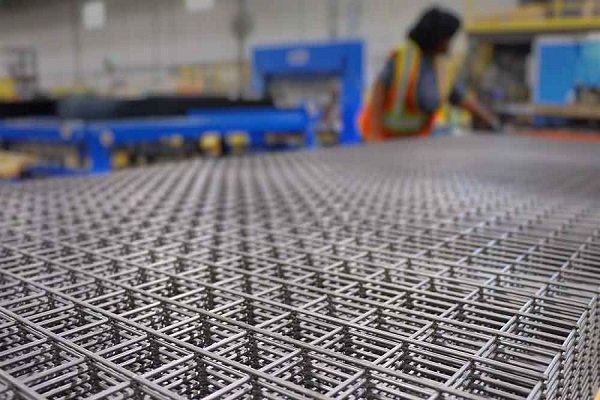
Welded wire mesh is a grid of longitudinal and transverse steel wires joined at their intersections by resistance welding.
The resulting structure provides consistent mesh openings and a relatively rigid grid, with performance depending on the wire specification, weld quality and panel dimensions.
A typical product may include:
- Longitudinal steel wires
- Transverse steel wires
- Resistance-welded intersections
- Square or rectangular mesh openings
- Flat panels or suitable roll formats
- Galvanized or other specified surface treatments
- Cut-to-size or fabricated components
Welded wire mesh is used in many industries, but products designed for different purposes are not automatically interchangeable. General-purpose mesh, concrete reinforcement mesh, industrial guarding panels and gabion mesh may have different material, manufacturing and testing requirements.
2. How Resistance Welding Works
Resistance welding joins intersecting wires through electrical current and applied pressure.
Automated production can help maintain consistent wire positioning and repeatable welding conditions.
Wire Positioning
Longitudinal and transverse wires are arranged according to the specified mesh pattern.
Resistance Welding
The welding equipment joins the intersecting wires to form a regular grid.
Panel Production
The mesh is produced to the required width, length and opening dimensions.
Surface Treatment
Depending on the selected product, the wire may be galvanized before welding, or the fabricated mesh may receive a compatible finishing process afterward.
The manufacturing sequence matters because welding, cutting and forming can affect the protective coating. The appropriate process should be confirmed for the actual product.
3. Typical Welded Wire Mesh Specifications
Bendin can discuss customized configurations according to product drawings and manufacturing capabilities.
| Parameter | Typical Options |
|---|---|
| Product Type | Welded Wire Mesh |
| Material | Low-Carbon Steel Wire / Other Specified Steel |
| Mesh Pattern | Square / Rectangular |
| Mesh Opening | Common options include 12.5 × 12.5 mm, 25 × 25 mm, 50 × 50 mm and 50 × 100 mm, subject to design |
| Wire Diameter | Approximately 1.0–6.0 mm for selected products |
| Panel Width | Customized |
| Panel Length | Customized |
| Supply Format | Flat Panels / Rolls where suitable |
| Surface Treatment | Uncoated / Electro-Galvanized / Hot-Dip Galvanized / PVC-Coated, subject to product |
| Edge Configuration | Standard / Cut-to-Size / Project-Specific |
| Customization | Mesh / Wire / Dimensions / Finish / Packaging |
These are indicative options rather than a fixed specification for every product. Actual mesh openings, wire diameters, panel dimensions, coating requirements and tolerances should be confirmed before ordering.
For structural applications, the product must meet the applicable engineering specification rather than relying on a general-purpose mesh description.
4. Main Advantages of Welded Wire Mesh
Uniform Mesh Openings
Automated wire positioning and welding can produce consistent grid dimensions.
Uniform openings help simplify fabrication, installation and quality inspection.
Consistent Panel Geometry
Flat welded panels can be convenient for cutting, framing and installation when produced to the required dimensions.
Actual flatness depends on wire size, panel dimensions and the manufacturing process.
Adaptable Specifications
Mesh opening, wire diameter and panel dimensions can be selected according to the intended application.
The correct configuration depends on the loads, installation method and performance requirements.
Multiple Surface Treatments
Different finishes may be available to address corrosion protection, appearance and maintenance requirements.
The appropriate treatment depends on the product design and environmental exposure.
Practical Fabrication
Suitable welded mesh can be cut, framed or incorporated into fabricated products.
Additional processing should follow the product specification to avoid compromising welds or protective coatings.
5. Material and Surface Treatment Options
Welded wire mesh may be used indoors or outdoors, depending on its material and coating.
Uncoated Steel Wire
Uncoated steel mesh may be suitable for selected indoor fabrication or applications where a separate finishing process is specified.
Its suitability depends on the environment and any subsequent coating or installation requirements.
Galvanized Steel Wire
Galvanized wire uses a zinc coating to help protect the steel substrate against corrosion.
It is commonly considered for agricultural fencing, industrial mesh and other outdoor applications.
Electro-Galvanized Mesh
Electro-galvanizing deposits a zinc coating using an electrochemical process.
The resulting coating specification should be confirmed for the intended use and exposure conditions.
Hot-Dip Galvanized Mesh
Hot-dip galvanizing provides a zinc coating that helps protect steel against corrosion.
The coating thickness or mass depends on the manufacturing process and applicable product specification.
PVC-Coated Mesh
PVC coating adds a polymer layer over the underlying wire or metallic coating.
It may be suitable for selected applications requiring a colored finish and additional surface protection.
The coating type and manufacturing sequence should be confirmed before ordering.
6. Welded Wire Mesh for Construction
Welded wire mesh can be used for selected construction and fabrication applications.
Potential uses include:
- General construction mesh
- Selected concrete reinforcement applications
- Precast components
- Partition panels
- Fabricated metal assemblies
The required material, wire dimensions and welding performance depend on the intended function.
Concrete Reinforcement
Where welded mesh is used as reinforcement in concrete, it must comply with the applicable reinforcement specification and structural design.
General-purpose welded mesh should not automatically be treated as certified reinforcement mesh.
The steel grade, wire dimensions, spacing, weld requirements and material documentation should be confirmed with the responsible engineer.
7. Welded Wire Mesh for Agriculture
Agricultural applications often require mesh that can withstand outdoor exposure and suit the animals or materials being contained.
Potential uses include:
- Garden fencing
- Crop protection
- Selected animal enclosures
- Equipment protection
- Agricultural storage partitions
Mesh opening and wire diameter should be selected according to the intended function.
For livestock or wildlife applications, the opening size and edge treatment should be reviewed for the species involved. Some applications may require specialized woven field fencing rather than rigid welded panels.
8. Welded Wire Mesh for Industrial Protection
Industrial facilities may use welded wire mesh for equipment enclosures, storage partitions and selected guarding applications.
Potential uses include:
- Warehouse partitions
- Equipment cages
- Storage racks and enclosures
- Machine-guard panels
- Maintenance-area separation
- Fabricated industrial components
The mesh opening, wire diameter, frame construction and fixing method should be selected according to the application and its risk assessment.
For machine guarding, the complete enclosure must meet the applicable safety requirements. A mesh panel alone does not establish compliance with machinery safety standards.
9. Welded Wire Mesh vs. Woven Wire Mesh
Welded and woven wire mesh have different manufacturing processes and structural characteristics.
| Feature | Welded Wire Mesh | Woven Wire Mesh |
|---|---|---|
| Manufacturing | Resistance-welded intersections | Interlaced wires |
| Mesh Pattern | Usually square or rectangular | Depends on the weaving design |
| Structural Behavior | Relatively rigid grid | Often more flexible |
| Supply Format | Commonly panels; selected roll formats | Rolls or other woven formats |
| Customization | Wire, opening and panel dimensions | Wire, opening and weaving pattern |
| Typical Applications | Panels, partitions, guards and selected reinforcement products | Agricultural fencing, screening and selected protective applications |
| Main Selection Factor | Weld quality and panel geometry | Weaving structure and flexibility |
Neither product is automatically better for every application. Selection should reflect the intended use, installation method, environmental exposure and required performance.
10. Choosing Mesh Opening and Wire Diameter
Mesh opening and wire diameter should be specified together.
Mesh Opening
The opening determines the size of the gaps between the wires.
Smaller openings may be suitable for closer separation or finer screening, while larger openings may be appropriate for applications requiring greater visibility or material passage.
Wire Diameter
Wire diameter influences the stiffness and strength of the grid, but it does not independently determine the performance of the complete product.
Weld quality, steel properties, panel dimensions and connection design also matter.
Panel Dimensions
Panel width and length affect transportation, handling, framing and installation.
For large projects, standardizing panel dimensions can simplify procurement and reduce unnecessary cutting on site.
11. Quality Control for Welded Wire Mesh
Quality inspection should cover the raw material, mesh dimensions, welded intersections and surface treatment.
Material Inspection
Confirm the steel specification and wire diameter against the approved product requirements.
Mesh Dimension Inspection
Measure mesh openings, wire spacing, panel width and panel length.
Weld Inspection
Inspect welded intersections using the method and acceptance criteria appropriate to the product.
Steel-wire tensile strength and welded-joint strength are different properties and should not be reported as interchangeable measurements.
Surface Inspection
Check coating condition, visible defects, deformation and exposed areas where applicable.
Documentation
For projects requiring specific standards or third-party testing, the required material documentation, inspection records and acceptance criteria should be agreed before production.
12. Illustrative Project Example: Industrial Equipment Enclosure
A manufacturing facility requires welded wire mesh panels for a storage and equipment enclosure.
The project team specifies regular mesh openings, compatible steel framing and a corrosion-protection system suitable for the facility.
Preliminary Configuration
| Item | Example Requirement |
|---|---|
| Application | Industrial Equipment Enclosure |
| Product Type | Welded Wire Mesh Panel |
| Mesh Opening | 50 × 50 mm, subject to design |
| Wire Diameter | Selected according to the enclosure requirements |
| Panel Dimensions | Customized to the frame |
| Surface Treatment | Galvanized or Other Specified Finish |
| Frame | Compatible Steel Frame |
| Connections | Project-Specified Fixings |
| Inspection | Mesh Dimensions, Weld Quality and Coating Checks |
The final mesh opening, wire diameter, frame design and fixing method should be confirmed against the intended use and any applicable safety requirements.
This is an illustrative project scenario, not a completed Bendin customer installation.
13. Welded Wire Mesh for International Procurement
International buyers may have specific requirements for material grades, dimensional tolerances, coating specifications, packaging and documentation.
Before placing an order, confirm:
- Intended application
- Mesh opening and wire diameter
- Material specification
- Panel or roll dimensions
- Surface treatment
- Applicable product standard
- Inspection requirements
- Packaging and labeling
- Destination and shipping requirements
A standard should only be claimed where it applies to the actual product and the required compliance has been established.
This is particularly important when distinguishing general-purpose welded mesh from reinforcement mesh, machine guarding panels and gabion products.
14. Bendin Custom Welded Wire Mesh Solutions
Bendin supplies customizable welded wire mesh products for construction, agriculture, industrial fabrication and selected fencing applications.
Customization may include:
- Wire diameter
- Mesh opening
- Panel width and length
- Roll dimensions where available
- Surface treatment
- Edge configuration
- Cut-to-size processing
- Packaging and OEM requirements
Customers can provide drawings, material requirements, intended application and the relevant product specification for review before ordering.
For large projects, a detailed mesh schedule can help coordinate panel dimensions, quantities, coatings and packaging.
15. Frequently Asked Questions
What is welded wire mesh used for?
Welded wire mesh is used for construction, agricultural fencing, industrial partitions, equipment enclosures and other fabricated applications.
Can welded wire mesh be galvanized?
Yes. Galvanized options may be available depending on the product design and manufacturing process.
Can mesh opening and wire diameter be customized?
Customization can be discussed according to product design and manufacturing capabilities. The exact specification should be confirmed before ordering.
Is welded wire mesh the same as reinforcement mesh?
Not necessarily. Reinforcement mesh must meet the applicable structural and material requirements. General-purpose welded mesh should not automatically be treated as reinforcement mesh.
Can welded wire mesh be supplied in rolls?
Some products are available in roll format, depending on wire diameter, mesh dimensions, welding process and manufacturing capability. Many heavier or more rigid configurations are supplied as panels.
Does ISO 9001 mean every mesh product is independently certified?
No. ISO 9001 is a quality management system standard. Product-specific certification or compliance must be confirmed separately.
16. Request a Welded Wire Mesh Quotation
Welded wire mesh provides a regular steel grid that can be configured for construction, agricultural, industrial and selected fencing applications.
The most suitable product depends on the wire specification, mesh opening, weld quality, surface treatment, dimensions and intended use.
Bendin supplies customizable welded wire mesh products for international distributors, contractors and industrial customers.
For a quotation, provide:
- Intended application
- Mesh opening
- Wire diameter
- Material specification
- Panel or roll dimensions
- Surface treatment
- Applicable product standard
- Quantity
- Project location and destination
Bendin can review your requirements and discuss a suitable welded wire mesh configuration for your project.