


Aluminum Fence: Lightweight, Corrosion-Resistant Solutions for Coastal and Residential Projects
Aluminum fencing is widely used in residential communities, coastal properties, commercial developments and landscape projects where durability, appearance and ease of installation are important.
Compared with conventional steel fencing, aluminum offers a lower material weight and does not develop iron rust. However, the long-term performance of an aluminum fence still depends on the alloy, profile design, surface treatment, fasteners and installation environment.
Bendin (Hebei Bendin Industrial Technology Co., Ltd.) provides customizable aluminum fence solutions for residential, commercial, landscape and selected industrial applications. The product range can be configured with different aluminum profiles, panel dimensions, powder-coated finishes, colors and matching gates.
This guide explains aluminum fence materials, surface treatments, typical specifications, coastal applications and the main factors buyers should consider before ordering.
1. What Is an Aluminum Fence?
An aluminum fence is a perimeter fencing system manufactured from aluminum profiles or extruded aluminum components.
A typical system may include:
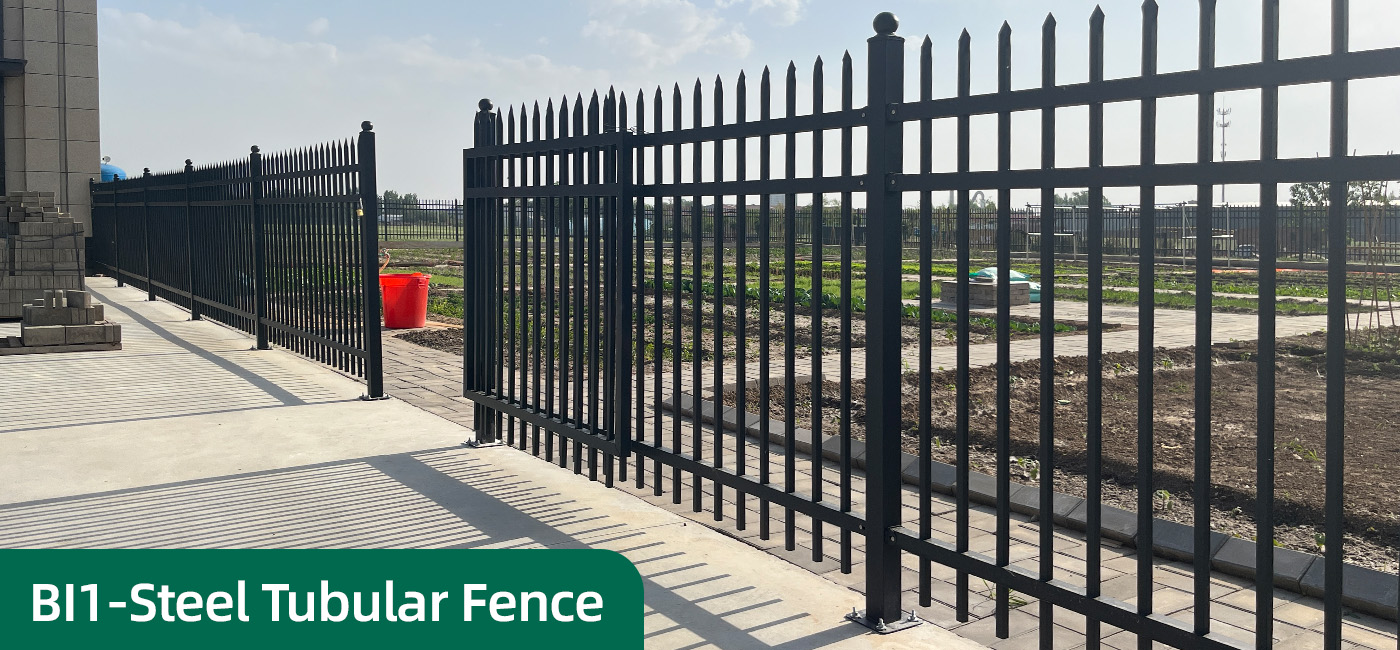
- Vertical aluminum pickets
- Horizontal rails
- Aluminum posts
- Connection brackets
- Stainless steel or other compatible fasteners
- Pedestrian gates
- Vehicle gates
- Decorative components
The design can range from simple vertical-picket fencing to contemporary horizontal-rail systems and customized architectural styles.
Aluminum fences are commonly selected where a balance of appearance, low maintenance, manageable weight and outdoor durability is required.

2. Why Choose Aluminum Fence?
Lightweight Construction
Aluminum generally has a lower density than steel, which can make fence components easier to handle and transport.
Depending on the design, lower component weight may also simplify installation.
However, the complete fence must still be designed to resist wind loads and other forces. Lightweight construction does not automatically mean that every aluminum fence is suitable for every location.
Corrosion Resistance
Unlike carbon steel, aluminum does not develop iron rust. It naturally forms a thin oxide layer that helps protect the underlying metal.
Appropriate surface treatments can further improve appearance and environmental durability.
For coastal projects, the alloy, coating, fasteners and installation details should be selected together because salt exposure can affect the performance of the complete system.
Architectural Appearance
Aluminum profiles can be manufactured in different shapes and finishes.
Common styles include:
- Vertical-picket fence
- Horizontal-rail fence
- Flat-top fence
- Decorative-top fence
- Minimalist architectural fence
- Customized privacy fence
These options make aluminum fencing suitable for villas, resorts, residential communities, gardens and commercial landscapes.
Low Routine Maintenance
Compared with conventional painted carbon steel fencing, aluminum systems may require less frequent rust-related maintenance.
Routine inspection is still important, particularly for coastal properties where salt deposits can accumulate on the surface and around connections.
3. Aluminum Fence Specifications
Bendin can discuss customized aluminum fence configurations according to project drawings and technical requirements.
| Parameter | Typical / Custom Options |
|---|---|
| Material | Aluminum Alloy |
| Alloy Grade | 6063 / Other specified grades, subject to availability |
| Temper | T5 / Other specified temper, subject to product design |
| Fence Style | Vertical Picket / Horizontal Rail / Decorative |
| Fence Height | Approximately 0.9–2.4 m, customizable |
| Panel Width | Approximately 1.8–2.5 m, customizable |
| Profile Shape | Square / Rectangular / Customized |
| Surface Treatment | Powder Coating / Anodizing / Other suitable finishes |
| Colors | Black / White / Gray / Green / Custom RAL |
| Post Type | Aluminum Post / Project-Specific |
| Gate Options | Single Swing / Double Swing / Sliding |
| Installation | Embedded Post / Base Plate, subject to design |
| Customization | Dimensions / Profiles / Colors / Gates / Accessories |
These figures are indicative options rather than a universal specification. Final profile dimensions, wall thickness, alloy, temper, coating and installation details should be confirmed before production.
4. Aluminum Alloy and Material Selection
Aluminum alloy selection affects the mechanical properties, extrusion characteristics and suitability of the finished fence components.
6063 Aluminum Alloy
6063 aluminum is commonly used for architectural extrusions because it offers useful extrusion characteristics and a suitable surface finish for many architectural applications.
Depending on the required properties, 6063-T5 may be considered for fence profiles.
The final mechanical properties should be verified against the applicable material specification and temper.
Profile Design
The profile shape and wall thickness influence:
- Bending stiffness
- Connection strength
- Wind-load performance
- Gate weight
- Overall structural behavior
For this reason, the fence should not be specified by alloy grade alone.
The profile dimensions, post spacing, connection details and foundation should be evaluated as a complete system.
5. Aluminum Fence Surface Treatment
Surface treatment can improve the appearance and environmental performance of aluminum fencing.
Powder Coating
Powder coating is commonly used for architectural aluminum fencing.
Advantages include:
- A wide range of colors
- Consistent appearance
- Additional surface protection
- Compatibility with modern architectural designs
The coating specification should identify the required finish, color, pretreatment and relevant performance criteria.
Anodizing
Anodizing creates a controlled oxide layer on the aluminum surface.
It can be considered where the project requires a metallic appearance or a particular surface finish.
The suitable anodizing specification depends on the intended environment and appearance requirements.
Coastal Environment Considerations
For coastal projects, the complete fence system should consider:
- Salt exposure
- Coating performance
- Fastener compatibility
- Drainage
- Water-trapping areas
- Maintenance access
- Dissimilar-metal contact
Stainless steel or other compatible fasteners may be considered where appropriate, but material compatibility should be evaluated to reduce the risk of galvanic corrosion.
No single coating automatically guarantees a particular service life in every coastal environment.
6. Aluminum Fence for Coastal Areas
Coastal properties often require fencing that maintains its appearance despite exposure to humid air, salt deposits and changing weather.
Aluminum is a useful option because it does not develop iron rust like unprotected carbon steel.
However, coastal suitability depends on the complete specification rather than the material name alone.
Important Design Considerations
Surface preparation: Appropriate cleaning and pretreatment help support coating adhesion.
Coating specification: The selected finish should be suitable for the expected salt exposure and maintenance conditions.
Fasteners: Compatible fasteners and connection components help reduce corrosion risks.
Drainage: Profiles should avoid unnecessary water traps where practical.
Inspection: Periodic cleaning and inspection help identify coating damage and deposits before they cause more significant problems.
For resorts, seaside villas, coastal residential developments and waterfront commercial properties, these factors should be considered before finalizing the aluminum fence design.
7. Aluminum Fence Applications
Residential Communities and Villas
Aluminum fences are commonly used around residential boundaries, gardens, entrances and shared community spaces.
They offer a combination of architectural appearance, manageable weight and flexible color options.
Coastal Resorts
Resorts and waterfront properties often require fencing that complements the surrounding landscape.
Powder-coated aluminum profiles can be coordinated with building facades, balconies, landscape features and matching gates.
Commercial Developments
Aluminum fencing can be used around:
- Office buildings
- Shopping areas
- Business parks
- Hotels
- Parking facilities
Customized profiles and colors can help maintain a consistent architectural style.
Parks and Landscape Projects
Aluminum fencing is suitable for selected landscape boundaries where an open appearance and coordinated finish are required.
Selected Industrial Applications
Aluminum fences may also be used for general boundary separation around selected commercial or industrial sites.
For high-security or high-impact applications, the fence design must be evaluated against the actual structural and security requirements. Aluminum should not automatically be substituted for a heavier steel security system.
8. Aluminum Fence vs. Steel Fence
| Feature | Aluminum Fence | Steel Fence |
|---|---|---|
| Material Weight | Generally Lower | Generally Higher |
| Iron Rust | Does Not Develop Iron Rust | Carbon Steel Can Rust if Protection Fails |
| Surface Options | Powder Coating / Anodizing | Galvanizing / Powder Coating |
| Architectural Design | Highly Adaptable | Highly Adaptable |
| Structural Performance | Depends on Alloy and Profile | Depends on Steel Grade and Section |
| Coastal Suitability | Depends on Alloy, Finish and Connections | Depends on Coating and Maintenance |
| Typical Applications | Residential / Commercial / Landscape | Residential / Commercial / Industrial / Security |
| Maintenance | Usually Low with Suitable Finish | Depends on Coating System |
Neither material is universally better.
Aluminum is often attractive when lower weight, corrosion behavior and architectural appearance are priorities. Steel may be more appropriate when the project requires specific heavy-duty structural performance or security configurations.
9. Aluminum Fence Gates and Access Solutions
A complete perimeter system often needs matching gates.
Bendin can discuss aluminum gate configurations according to the fence design and project requirements.
Single Swing Gate
Suitable for pedestrian entrances, garden access and smaller openings.
Double Swing Gate
Suitable for wider openings where sufficient swing clearance is available.
Sliding Gate
Can be considered where a wide opening is required and the site has suitable space along the fence line.
Gate design should consider:
- Clear opening width
- Gate height
- Frame profile
- Infill design
- Hinge or roller capacity
- Locking hardware
- Wind exposure
- Foundation and post requirements
For automated gates, the selected operator and safety equipment should be coordinated with the gate manufacturer or automation-system supplier.
10. Illustrative Project Example: Coastal Residential Development
A coastal residential development requires approximately 600 meters of perimeter fencing.
The project team wants a modern appearance, low routine maintenance and matching pedestrian and vehicle gates.
Preliminary Configuration
| Item | Example Requirement |
|---|---|
| Application | Coastal Residential Community |
| Approximate Fence Length | 600 m |
| Fence Height | 1.5–1.8 m |
| Panel Style | Vertical Picket |
| Material | Aluminum Alloy |
| Finish | Exterior-Suitable Powder Coating |
| Color | RAL 7016 Gray |
| Posts | Matching Aluminum Posts |
| Gates | Pedestrian and Vehicle Gates |
| Fasteners | Compatible Corrosion-Resistant Components |
Project Considerations
The design team should confirm the required profile dimensions, wall thickness, post spacing, gate loads and foundation arrangement.
Because the site is coastal, the coating system and fastener compatibility should be reviewed for the actual salt exposure.
This approach helps align the fence’s appearance, structural design and maintenance requirements with the needs of the property.
This is an illustrative project scenario, not a completed Bendin customer installation.
11. Aluminum Fence Installation
A typical installation process includes:
Step 1: Site Measurement
Confirm the fence line, ground levels, gate openings and obstacles.
Step 2: Post Layout
Determine post spacing according to the selected panel design and structural requirements.
Step 3: Foundation Preparation
Prepare embedded-post foundations or suitable base-plate connections according to the project design.
Step 4: Panel Installation
Install the fence panels using the specified brackets and fasteners.
Step 5: Gate Installation
Fit matching gates and confirm alignment, clear opening and hardware operation.
Step 6: Final Inspection
Check panel alignment, post stability, fastener security, coating condition and gate movement.
The actual installation method depends on the selected fence system, site conditions and engineering requirements.
12. Custom Aluminum Fence Manufacturing by Bendin
Bendin supports customized aluminum fence production according to customer drawings and project requirements.
Customization may include:
Dimensions
- Fence height
- Panel width
- Profile dimensions
- Post spacing
Design
- Vertical-picket styles
- Horizontal-rail styles
- Flat-top and decorative-top designs
- Customized architectural profiles
Surface Treatment
- Powder coating
- Anodizing
- Other suitable finishes
Complete System
- Fence panels
- Posts
- Pedestrian gates
- Vehicle gates
- Connection accessories
For international projects, buyers can provide drawings, sample photographs, dimensions, finish requirements and estimated quantities for technical review.
13. Quality Control and Material Documentation
For aluminum fence procurement, quality control should address both material properties and the finished assembly.
Inspection may include:
- Alloy and temper verification
- Profile dimensions
- Wall thickness
- Connection quality
- Coating appearance
- Coating thickness where specified
- Color consistency
- Gate alignment
- Packaging inspection
Where specific mechanical properties or corrosion-test results are required, the corresponding test methods and acceptance criteria should be agreed upon before production.
14. Frequently Asked Questions
Is aluminum fence suitable for coastal properties?
Aluminum can be a suitable option for coastal properties because it does not develop iron rust. The alloy, coating, fasteners and maintenance plan should still be selected for the actual salt exposure.
What aluminum alloy is commonly used for fence profiles?
6063 aluminum alloy is commonly used for architectural extrusions. The appropriate temper and profile design should be selected according to the structural requirements.
Can aluminum fences be powder coated?
Yes. Powder coating is widely used for aluminum fencing and provides a choice of colors and surface finishes.
Can Bendin supply matching aluminum gates?
Gate configurations can be discussed according to the selected fence system, available manufacturing options and project requirements.
Is aluminum fence stronger than steel fence?
Not in every situation. Structural performance depends on alloy, profile dimensions, wall thickness, connections and loading conditions. The appropriate material should be selected according to the project design.
Does aluminum fence require maintenance?
Yes. Although aluminum does not develop iron rust, periodic cleaning and inspection are recommended, particularly for coastal installations and areas with coating damage.
15. Request an Aluminum Fence Quotation
Aluminum fencing offers a practical combination of lightweight construction, architectural flexibility and corrosion-resistant material characteristics.
For residential, coastal, commercial and landscape projects, the most suitable solution depends on the profile design, alloy, surface treatment, post configuration, gate requirements and installation conditions.
Bendin supplies customizable aluminum fence systems for international customers, with options for different designs, dimensions, colors and matching gates.
To request a quotation, provide:
- Project application
- Fence length and height
- Preferred style
- Aluminum alloy and profile requirements
- Surface treatment
- Color
- Gate requirements
- Installation location
- Delivery destination
Bendin can review your requirements and discuss a suitable aluminum fencing configuration for your project.