




3D Fence Materials, V-Bend Structure & Corrosion Protection
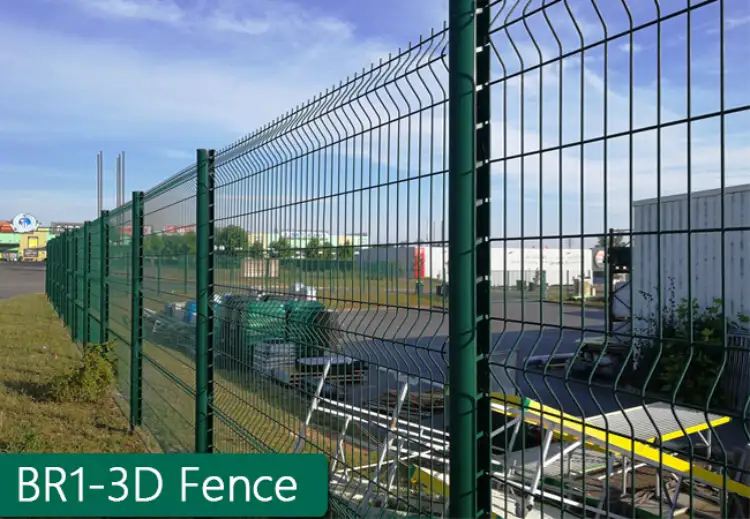
The performance of a 3D fence depends heavily on its materials, wire specifications, V-bend structure and surface treatment.
For commercial, industrial and perimeter protection projects, buyers should consider not only fence dimensions and price but also steel quality, wire diameter, corrosion protection and environmental conditions.
Bendin manufactures customizable 3D welded wire fencing using galvanized steel wire, steel posts and protective surface treatments for long-term outdoor applications.
What Materials Are Used for 3D Fence?
A typical 3D fence system consists of welded wire mesh panels, posts, connecting components and surface protection.
The main materials can include:
- Galvanized steel wire
- Q235 steel for structural components
- Steel fence posts
- High-strength carbon steel connectors
- Zinc coating
- Polyester powder coating
Material specifications can be adjusted according to fence height, security requirements and project environment.
High-Tensile Galvanized Steel Wire
The welded mesh panel is the main component of a 3D fence.
Bendin can manufacture 3D fence panels using galvanized steel wire in different diameters according to project requirements.
Typical wire diameter options can include 2.0–3.5 mm, while other specifications can be discussed for customized projects.
The welded wire structure provides:
- Stable panel construction
- Good impact resistance
- Consistent mesh openings
- Long-term dimensional stability
- Reliable perimeter separation
Wire diameter should be selected according to the required fence height, application and security level.
Why Does 3D Fence Use V-Bends?
The distinctive feature of a 3D V-bend fence is the reinforced bending section formed across the welded mesh panel.
Compared with a completely flat mesh panel, V-bends increase panel rigidity and help reduce flexing.
This makes 3D fencing suitable for applications where buyers want a balance between structural strength, visibility and cost.
Typical applications include:
- Factories
- Warehouses
- Logistics centers
- Residential communities
- Commercial properties
- Schools
- Parks
- Public facilities
- Industrial sites
The number and position of V-bends can vary according to panel height and design.
Galvanized 3D Fence for Corrosion Protection
Corrosion protection is particularly important for outdoor fencing.
Galvanizing provides a zinc protective layer that helps reduce direct exposure of the steel to moisture and air.
Depending on project requirements, Bendin can provide galvanized configurations suitable for different outdoor environments.
When selecting a galvanized 3D fence, buyers should consider:
- Installation environment
- Humidity
- Rainfall
- Coastal exposure
- Industrial pollution
- Expected service conditions
For projects with specific zinc coating requirements, the required specification should be confirmed before production.
Galvanized + Powder-Coated 3D Fence
For projects requiring additional surface protection and color customization, galvanized steel can be combined with polyester powder coating.
This dual surface-treatment configuration provides an additional protective layer while improving the appearance of the fencing system.
Powder coating also allows buyers to select different RAL colors according to architectural or project requirements.
Common colors can include:
- Green
- Black
- Grey
- White
- Custom RAL colors
The final coating specification should be selected according to the installation environment and project requirements.
3D Fence Posts & Connecting Components
A complete 3D fence system includes more than welded mesh panels.
Posts, clamps, bolts and other connecting components also affect the stability of the complete perimeter system.
Bendin can provide matching:
- Steel posts
- Post caps
- Clamps
- Bolts
- Connection accessories
- Base plates
- Gates
Connecting components can be selected according to the fence structure and installation method.
Smooth Surface & Precision Processing
Fence panels and accessories should be processed carefully to reduce sharp edges and irregular surfaces.
Bendin uses controlled cutting, welding and surface-finishing processes to maintain consistent panel dimensions and smooth finished surfaces.
This can help simplify handling and installation while improving the overall appearance of the finished fencing system.
How Material Affects 3D Fence Performance
Different material specifications can significantly affect fence performance.
Wire Diameter
Thicker wire generally provides greater panel rigidity but also increases material usage and weight.
Mesh Size
Mesh opening influences visibility, panel structure and overall material consumption.
V-Bend Structure
V-shaped reinforcement helps improve the rigidity of welded mesh panels.
Steel Posts
Post dimensions should be selected according to fence height, panel dimensions and installation conditions.
Surface Treatment
Galvanizing and powder coating provide different levels of surface protection depending on the selected specification and environment.
These factors should be considered together rather than selecting a 3D fence based only on one specification.
Custom 3D Fence Specifications
Bendin supports customized 3D fencing for distributors, contractors and project buyers.
| Item | Custom Options |
|---|---|
| Fence Height | Project-specific |
| Panel Width | Standard or customized |
| Wire Diameter | Multiple specifications |
| Mesh Size | Customizable |
| V-Bend Quantity | According to panel height |
| Post Size | Multiple options |
| Surface Treatment | Galvanized / powder coated |
| Color | Custom RAL colors |
| Gates | Available |
| Accessories | Matching system available |
Customers can provide drawings, BOQs or required specifications for technical review before production.
How to Choose 3D Fence Materials
Before purchasing a 3D fence, buyers should consider several factors.
Application: Determine whether the fence is for residential, commercial, industrial or public use.
Security Level: Select appropriate wire diameter, fence height and mesh configuration.
Environment: Consider rainfall, humidity, coastal exposure and industrial conditions.
Corrosion Protection: Select galvanizing, powder coating or a combined surface-treatment system according to the project environment.
Appearance: Choose suitable colors and panel designs according to the surrounding architecture.
Installation: Confirm posts, foundations, accessories and gate requirements before ordering.
Why Choose Bendin 3D Fence?
Bendin provides customizable 3D welded wire fencing for international distributors, contractors and engineering project buyers.
Available services include:
- OEM and ODM production
- Customized wire diameter
- Customized mesh size
- Multiple fence heights
- Galvanized finishes
- Powder-coated finishes
- Custom RAL colors
- Matching posts and accessories
- Gates
- Export packaging
Project drawings and technical specifications can be reviewed before production to determine the appropriate fencing configuration.
FAQ About 3D Fence Materials
What material is used for 3D fence panels?
3D fence panels are commonly manufactured from welded steel wire with protective surface treatments such as galvanizing and powder coating.
Why does a 3D fence have V-bends?
V-bends reinforce the welded mesh panel and improve structural rigidity without completely blocking visibility.
Is galvanized 3D fence suitable for outdoor use?
Yes. Galvanizing provides corrosion protection for outdoor applications. The required coating specification should be selected according to the actual environment.
Can 3D fence be galvanized and powder coated?
Yes. Galvanizing can be combined with powder coating where additional surface protection and color customization are required.
Can Bendin customize 3D fence specifications?
Yes. Bendin can customize fence height, wire diameter, mesh size, V-bend configuration, posts, surface treatment and colors according to project requirements.
Choose the Right 3D Fence for Your Project
A durable 3D fence depends on the correct combination of steel wire, mesh dimensions, V-bend reinforcement, posts and corrosion protection.
For residential, commercial and industrial perimeter projects, Bendin provides customized 3D welded wire fencing according to drawings, environmental conditions and technical requirements.
Send Bendin your required fence height, wire diameter, mesh size, quantity and surface-treatment requirements to discuss a suitable 3D fence solution.