


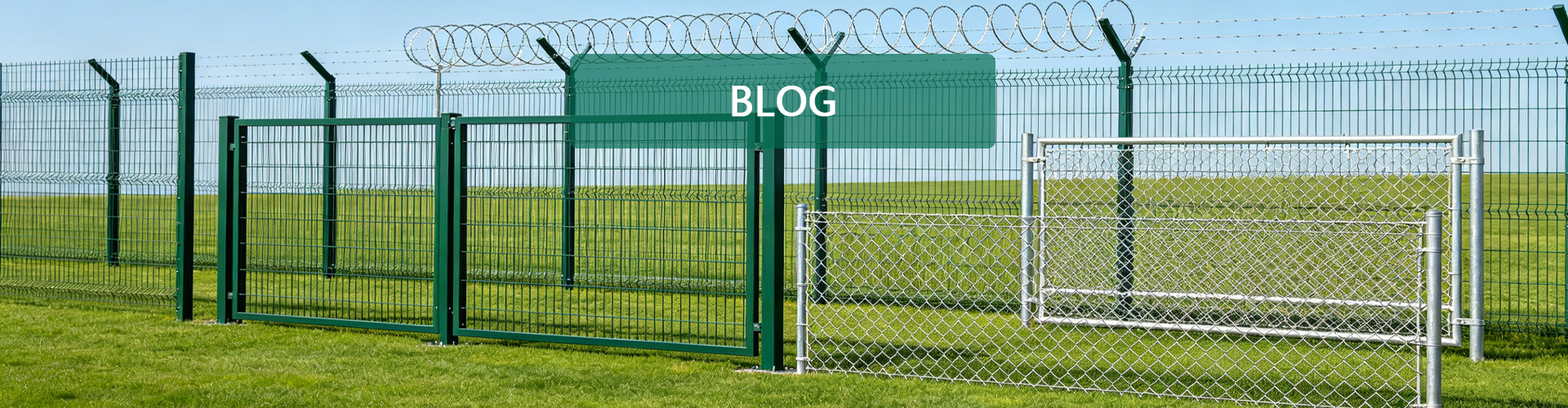
3D curved fence, also known as 3D welded mesh fence, is one of the most popular decorative and protective fencing solutions for residential yards, villa boundaries, community enclosures, highway greenbelts, parks and industrial zones. Different from flat mesh fences, its unique three-dimensional bending structure greatly enhances panel rigidity, impact resistance and overall stereoscopic appearance.
High-quality 3D fence relies entirely on standardized manufacturing procedures. Many low-grade products suffer from uneven bending radian, weak welding, easy coating peeling and poor flatness due to simplified production steps. This complete 3D fence manufacturing process explains every production link from raw material selection to finished packaging, helping buyers distinguish premium products and verify factory quality control standards.
1. Raw Material Selection & Incoming Quality Inspection
Standard 3D fence adopts high-quality Q195 low-carbon steel wire with uniform wire diameter, good ductility and strong tensile strength. Stable raw material performance ensures smooth bending, no cracking and firm welding during mass production.
Before entering the production line, all steel wires undergo strict inspection:
- Check wire diameter tolerance to avoid uneven tension after welding
- Inspect surface for no rust, cracks or scratches
- Test tensile strength and ductility to prevent bending fracture
- Batch sampling to ensure consistent material performance
Unqualified raw materials are rejected directly to guarantee stable quality of the whole production batch.
2. Automatic Straightening & Precision Cutting
Coiled steel wires are sent to automatic straightening machines to eliminate bending and deformation caused by winding and transportation. Straight wires ensure neat mesh structure and uniform grid spacing.
After straightening, precision cutting is performed according to customized panel width and height requirements. Standard cutting ensures consistent wire length, orderly mesh arrangement and zero assembly errors in subsequent processes.
3. Full-Automatic Mesh Welding (Core Process)
Welding is the most critical step affecting 3D fence firmness and durability. Formal factories use full-automatic row welding equipment for integrated molding.
Horizontal and vertical steel wires intersect at fixed spacing and are welded at every joint. The machine intelligently controls welding current, pressure and time to ensure each welding point is full, solid and non-loosening.
Standard welding features:
- No missing welding or virtual welding
- No wire falling off under external force
- Uniform welding spot size for neat mesh surface
4. 3D Stereo Bending Forming (Characteristic Process)
Different from ordinary flat mesh fence, 3D fence completes three-dimensional arc bending after mesh welding. Professional hydraulic bending machines shape the mesh panel into continuous curved radian.
Standard bending standards:
- Fixed bending spacing and unified radian
- No steel wire cracking or deformation after bending
- Even panel stress to enhance overall impact resistance
This 3D bending structure improves the fence’s bearing capacity, effectively resists external impact, and creates a beautiful layered stereoscopic effect.
5. Edge Trimming, Deburring & Surface Cleaning
After bending and forming, the edges of the mesh panel are trimmed neatly. Workers remove welding slag, sharp burrs and uneven cutting residues to ensure the fence surface is smooth and safe, suitable for residential and public area use.
Then all panels go through professional surface cleaning, degreasing and dust removal. Thorough cleaning removes oil stains and oxide layers, laying a solid foundation for tight combination of subsequent anti-corrosion coatings.
6. Anti-Corrosion Treatment & Powder Coating
Surface treatment determines the outdoor service life of 3D fence. Formal production adopts two mature anti-rust processes for different scenarios:
6.1 Pre-galvanized + Powder Coating (Conventional Projects)
Pre-galvanized steel wire forms basic rust protection. After mesh forming, electrostatic polyester powder spraying is applied. Rich RAL color options provide beautiful appearance, UV resistance and daily anti-rust performance, ideal for communities, parks and municipal greening projects.
6.2 Hot-Dip Galvanized + Powder Coating (Harsh Environments)
For coastal, high-humidity and industrial corrosive areas, finished panels are hot-dip galvanized first to form a thick zinc protective layer, then coated with outdoor high-adhesion powder. Double anti-corrosion treatment ensures 15+ years of stable outdoor service life.
7. Finished Product Quality Inspection & Sampling Test
After coating curing, all 3D fence panels enter strict final quality inspection:
- Dimension inspection: unified height, width and mesh spacing
- Bending inspection: consistent radian, neat 3D lines
- Welding inspection: firm solder joints without loose wires
- Coating inspection: uniform color, no peeling, pinholes or exposed steel
- Sampling impact and tension test to verify structural stability
Defective products are reworked or scrapped to ensure 100% qualified delivery.
8. Labeling, Waterproof Packaging & Shipping
Qualified 3D fence panels are cleaned and dried. Each batch is labeled with specification, production date and batch number for traceability.
Panels are wrapped with waterproof plastic film, protected by corner guards and fixed on wooden pallets. Overall stretch film packaging prevents friction scratches, moisture invasion and deformation during long-distance sea and land transportation.
Why Standard 3D Fence Manufacturing Matters
The core advantages of 3D fence lie in its stable three-dimensional structure, neat appearance and long anti-rust life. Irregular production such as random bending, sparse welding and thin coating will cause panel deformation, wire falling off, color fading and rusting in a short time. Standard full-process manufacturing ensures stable structural performance, beautiful stereoscopic effect and low maintenance cost for long-term outdoor use.
FAQ About 3D Fence Manufacturing Process
Q1: What makes 3D fence different from ordinary flat mesh fence?
3D fence adds professional arc bending technology on the basis of flat mesh. The three-dimensional structure greatly improves rigidity and impact resistance, while presenting a more layered and beautiful appearance.
Q2: What is the best surface treatment for outdoor 3D fence?
Hot-dip galvanized plus polyester powder coating is the optimal solution. It provides double anti-corrosion protection, resists UV fading and rain erosion, and extends outdoor service life significantly.
Q3: Can 3D fence customize sizes and colors?
Yes. Factories can customize panel height, mesh spacing, bending radian and all RAL colors to meet municipal, residential and industrial project design requirements.
Q4: Why do some 3D fences deform easily?
Easy deformation is caused by unqualified raw materials, insufficient welding points and non-standard bending process. Standard automatic welding and hydraulic bending ensure stable structural tension.
Q5: How long does a standard 3D fence last outdoors?
With complete galvanized and powder coating process, the service life reaches 10–15 years in normal environments and over 8 years in coastal and humid areas.
Conclusion
The complete 3D fence manufacturing process covers raw material inspection, straightening cutting, automatic welding, 3D bending forming, edge trimming, anti-corrosion coating, quality testing and standardized packaging. Every standardized procedure guarantees the fence’s structural stability, beautiful stereoscopic appearance and long-term durability. For project procurement, choosing manufacturers with full-process quality control is the key to obtaining high-quality and cost-effective 3D fencing solutions.