



358 Anti-Climb Fence: Square, Rectangular and I-Post Compatibility
A 358 anti-climb fence system consists of more than a security mesh panel. The post profile, fixing method, foundation and panel dimensions all influence the stability, installation requirements and long-term performance of the completed perimeter.
For high-security projects, different post configurations may be selected according to fence height, site conditions, structural requirements and installation preferences.
Bendin (Hebei Bendin Industrial Technology Co., Ltd.) supplies customizable 358 anti-climb fencing systems with square posts, rectangular posts and I-post configurations. The system can be adapted with different panel dimensions, connection accessories, surface treatments and matching gates according to project requirements.
This guide compares the three post options, explains their connection methods and outlines the specifications buyers should confirm before ordering.
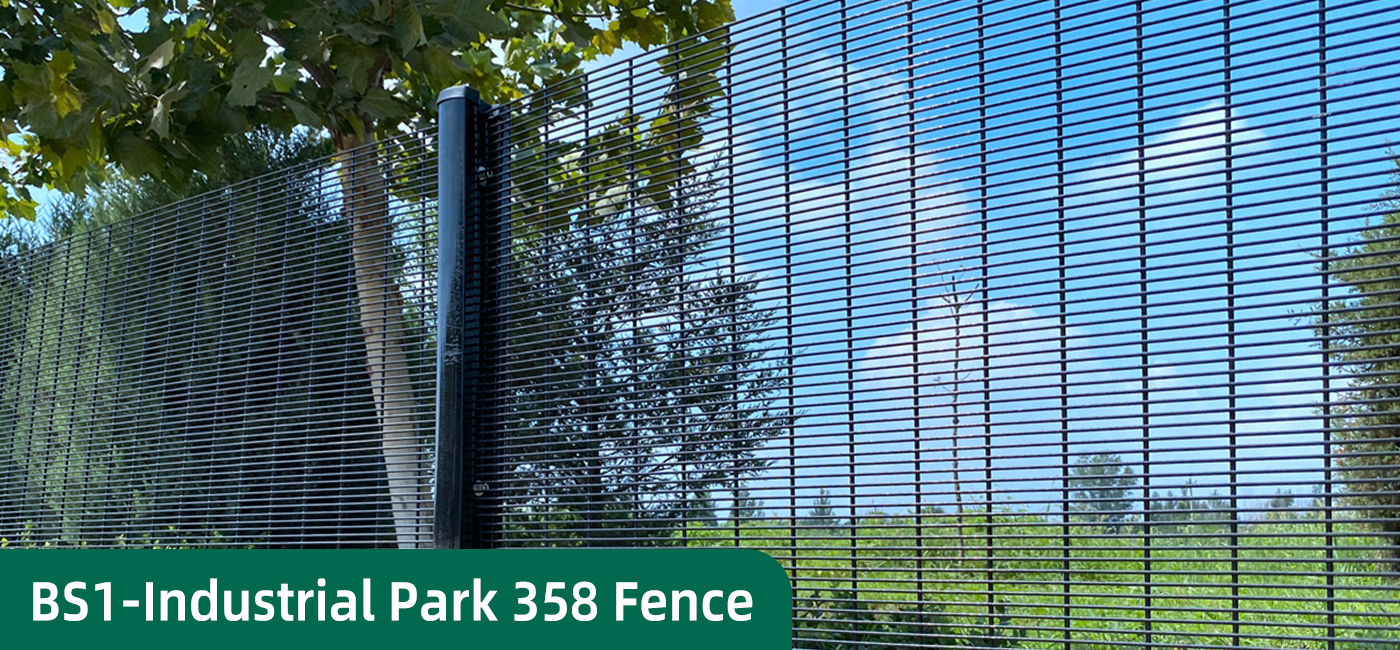
1. What Is a 358 Anti-Climb Fence?
A 358 fence is a welded steel mesh fencing system designed for high-security perimeter applications.
The name traditionally refers to a nominal mesh opening of 3 inches by 0.5 inch, with 8-gauge wire commonly specified. The corresponding metric mesh opening is approximately 76.2 × 12.7 mm.
Its narrow mesh openings make it difficult to obtain a secure handhold or foothold. The closely spaced wires can also make cutting an opening with conventional hand tools more difficult than with many larger-mesh fencing systems.
Typical applications include:
- Correctional and restricted-access facilities
- Airports
- Power stations and utility compounds
- Military facilities
- Data centers
- Industrial infrastructure
- Logistics and storage compounds
The actual security performance depends on the complete system, including the mesh, posts, connections, foundations, gates and other security measures.
2. Why Post Selection Matters
The posts support the mesh panels and transfer loads into the foundations or supporting structure.
Choosing a suitable post profile involves more than comparing its appearance. The design should consider:
- Fence height
- Post spacing
- Steel grade and section dimensions
- Wind exposure
- Ground and foundation conditions
- Panel connection method
- Gate positions
- Installation and maintenance requirements
A heavier-looking post does not automatically provide better performance. The complete post section, connection details and foundation must be suitable for the project’s loading conditions.
Bendin offers different post configurations so that project designers can select a system appropriate to their requirements.
3. Square Post for 358 Fence
Square posts have a symmetrical cross-section and are widely used in modular welded mesh fencing.
Main Characteristics
- Clean, regular appearance
- Straightforward panel alignment
- Compatibility with suitable clip or bolted fixing systems
- Flexible dimensions and wall-thickness options
- Convenient integration with matching fence sections
Square posts can be considered for industrial compounds, commercial properties, infrastructure boundaries and other projects requiring a conventional steel post configuration.
Typical Configuration
A square-post 358 fence system may include:
- 358 welded mesh panels
- Square steel posts
- Panel connection clips
- Security fasteners
- Base plates or embedded posts
- Matching access gates
The post dimensions and spacing should be determined according to the fence height, site loads and engineering requirements.
4. Rectangular Post for 358 Fence
Rectangular posts allow the width and depth of the steel section to be specified independently.
This can be useful when a project requires a particular structural profile or connection arrangement.
Main Characteristics
- Flexible width-to-depth configuration
- Compatibility with customized brackets
- Suitable for different panel layouts
- Available in project-specific dimensions
- Can be coordinated with matching gates and accessories
Rectangular posts may be considered for industrial facilities, infrastructure projects, warehouses and restricted-access compounds.
Whether a rectangular post provides greater load capacity than a square post depends on the actual section dimensions, wall thickness, steel grade, load direction and support conditions.
5. I-Post for 358 Fence
I-posts use an I-shaped cross-section and may be considered where a particular structural profile is required.
Their performance depends on the section geometry and the direction of the applied load. An I-post should not automatically be assumed to provide better wind resistance or lower weight than other post types without a specific design comparison.
Potential Applications
- Long perimeter fence runs
- Industrial and infrastructure sites
- Projects requiring a customized support arrangement
- Installations where the post profile must meet a defined engineering specification
For exposed outdoor locations, the post, foundation and panel connections should be evaluated together under the relevant wind and structural design conditions.
6. Square vs. Rectangular vs. I-Post
| Feature | Square Post | Rectangular Post | I-Post |
|---|---|---|---|
| Cross-Section | Square | Rectangular | I-shaped |
| Design Flexibility | High | High | Depends on section specification |
| Appearance | Symmetrical | Directional profile | Structural profile |
| Panel Connection | Clips or specified fixings | Clips or customized brackets | Project-specific brackets |
| Structural Performance | Depends on dimensions and design | Depends on dimensions and design | Depends on section geometry and load direction |
| Common Applications | Industrial and commercial perimeters | Customized industrial and infrastructure projects | Projects requiring an I-section support |
| Customization | Available | Available | Available, subject to production capability |
This is a general comparison rather than a ranking of structural strength. Final post selection should be based on the engineering specification and installation conditions.
7. Typical 358 Fence Specifications
Bendin can discuss customized fence dimensions and post configurations according to project drawings.
| Parameter | Typical Options |
|---|---|
| Product | 358 Anti-Climb Fence |
| Mesh Opening | Approximately 76.2 × 12.7 mm |
| Wire Diameter | Commonly around 4.0 mm, subject to specification |
| Panel Height | 1.8 / 2.0 / 2.2 / 2.4 / 2.8 / 3.0 m, subject to availability |
| Panel Width | 2.0 / 2.2 / 2.4 / 3.0 m, subject to availability |
| Post Types | Square / Rectangular / I-Post |
| Post Dimensions | Project-specific |
| Connection | Security Clips / Bolted Fixings / Customized Brackets |
| Surface Treatment | Galvanized / Powder Coated / Duplex Coating |
| Common Colors | RAL 6005 / RAL 7016 / RAL 9005 |
| Gate Options | Single Swing / Double Swing / Sliding |
| Accessories | Security Fixings / Gate Hardware / Project-Specific Components |
These are indicative options, not a universal specification. The actual wire diameter, panel dimensions, post profile, wall thickness and coating requirements should be confirmed before production.
8. Fixing Methods for Different Post Profiles
The connection between the mesh panel and post is an important part of the system.
Bendin can discuss different fixing arrangements according to the post profile and project requirements.
Bolt Clamps
Bolt clamps can secure the panel to compatible posts and allow controlled assembly and maintenance.
For high-security applications, suitable anti-tamper fasteners may be specified.
U-Clips
U-clips can be used for compatible post and panel configurations. Their suitability depends on the panel dimensions, post profile and required connection performance.
Flat-Bar Fixings
Flat-bar systems can provide a continuous fixing arrangement along a panel edge, depending on the design.
The flat bar, bolts and post section should be selected together to provide suitable support.
Customized Brackets
For non-standard post profiles, customized brackets may be required to achieve correct alignment and load transfer.
The fixing system should be confirmed using technical drawings before manufacturing.
9. Corrosion Protection for 358 Fence Posts and Panels
Outdoor security fencing may be exposed to rain, humidity, sunlight, industrial pollutants and coastal salt.
Bendin can discuss different surface-treatment options according to the project environment.
Galvanized Finish
A zinc coating helps protect steel components against atmospheric corrosion.
Powder Coating
Powder coating provides a decorative finish and additional surface protection when applied over an appropriately prepared substrate.
Duplex Coating
Galvanizing combined with powder coating can be considered when a project requires both corrosion protection and a specified color.
The required coating system depends on environmental exposure, maintenance requirements and project specifications. A particular service life or corrosivity classification should only be claimed when supported by the relevant technical evidence.
10. Installation Considerations
A typical 358 fence installation includes the following stages.
Step 1: Site Survey
Confirm the fence line, ground levels, corners, gate openings and any underground utilities.
Step 2: Post and Foundation Design
Determine post spacing, foundation dimensions and fixing methods according to the approved engineering design.
Step 3: Post Installation
Install the selected square, rectangular or I-post sections according to the specified layout.
Step 4: Panel Fixing
Attach the 358 mesh panels using the specified clips, bolts or brackets.
Step 5: Gate Installation
Install matching gates and check the required clear opening and hardware operation.
Step 6: Final Inspection
Inspect panel alignment, post verticality, connection security, coating condition, gate operation and ground clearance.
The actual installation method must follow the project drawings and applicable requirements.
11. Illustrative Project Example: Industrial Perimeter
An industrial facility requires a 358 mesh perimeter fence around a restricted equipment compound.
The project team wants to maintain surveillance visibility while selecting a post configuration suitable for the site conditions.
Preliminary Configuration
| Item | Example Requirement |
|---|---|
| Application | Restricted Industrial Compound |
| Fence Type | 358 Anti-Climb Mesh |
| Mesh Opening | 76.2 × 12.7 mm |
| Panel Height | 2.4 m |
| Panel Width | 2.4 m |
| Post Type | Rectangular Steel Post |
| Connection | Specified Security Fixings |
| Surface Treatment | Galvanized + Powder Coated |
| Gate | Controlled-Access Gate |
| Monitoring | CCTV-Compatible Layout |
Before production, the project engineer would confirm the post dimensions, wall thickness, spacing, foundation design, fixing arrangement and applicable wind requirements.
The same panel specification could be reviewed with square or I-post alternatives if the structural design or installation requirements justified a different configuration.
This is an illustrative project scenario, not a completed Bendin customer installation.
12. How to Choose the Right Post
Before selecting a post profile, buyers should confirm:
Fence height: Taller fences may require different post dimensions and foundation arrangements.
Site exposure: Wind conditions and surrounding structures can affect the design loads.
Ground conditions: Soil properties and foundation type influence post support.
Panel dimensions: Panel width and connection positions must match the post layout.
Connection method: The bracket or fixing system must be compatible with the selected post.
Gate positions: Gate posts may need a different structural specification from intermediate posts.
Corrosion protection: Post and panel coatings should be coordinated.
For projects with significant wind, impact or security requirements, the complete fence system should be checked against the applicable engineering criteria.
13. Bendin Custom 358 Fence Systems
Bendin supplies customizable 358 security fencing systems for distributors, contractors and infrastructure project owners.
Customization can include:
- Mesh opening
- Wire diameter
- Panel height and width
- Square, rectangular or I-post configurations
- Post dimensions and wall thickness
- Connection clips and brackets
- Surface treatment
- Powder-coating color
- Matching gates
- Security accessories
- Packaging and OEM requirements
Customers can provide drawings, technical specifications, quantities and installation details for review before production.
For large projects, coordinating panels, posts, gates and fixings under one specification can simplify procurement and installation planning.
14. Frequently Asked Questions
What post types can be used with 358 fence?
Square posts, rectangular posts and I-posts can be considered, depending on the fence design and available connection system.
Is a rectangular post stronger than a square post?
Not necessarily. Structural performance depends on the section dimensions, wall thickness, steel grade, load direction, post spacing and foundation design.
Is an I-post better for windy locations?
Not automatically. Wind resistance depends on the entire system, including post geometry, panel dimensions, spacing, foundations and connections. The design should be evaluated for the site’s wind conditions.
Can the same 358 panel work with different post types?
It may be possible when the post and fixing system are designed for the panel dimensions and connection positions. Compatibility should be confirmed before ordering.
Can Bendin customize post dimensions and fixings?
Yes. Post profiles, dimensions, connection methods and accessories can be discussed according to manufacturing capabilities and project requirements.
What surface treatment is available?
Galvanized, powder-coated and duplex coating options can be discussed according to the project environment.
15. Request a 358 Fence Post Configuration
The performance of a 358 security fence depends on the mesh panel, post profile, connections, foundations, gates and installation conditions working together.
Bendin provides customizable 358 fence systems with square, rectangular and I-post configurations for project-specific applications.
For a quotation, provide:
- Required fence height
- Panel width
- Mesh opening and wire diameter
- Preferred post profile
- Post dimensions or drawings
- Connection method
- Surface treatment
- Gate requirements
- Total perimeter length
- Project location
Bendin can review your requirements and discuss a suitable 358 fence configuration for your project.