



358 Anti-Climb Mesh: Specifications, Post Options and Applications
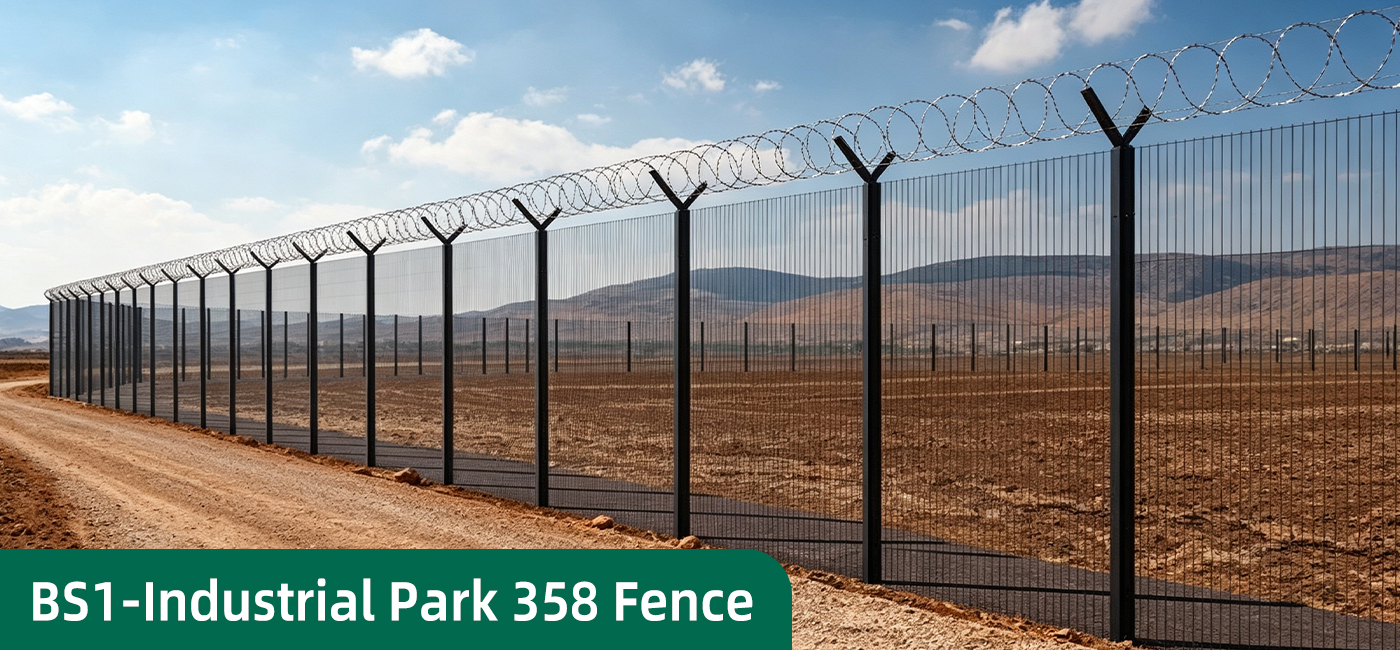
358 anti-climb mesh is a high-security welded wire mesh designed to make unauthorized climbing and cutting more difficult while maintaining visibility through the fence. Its dense rectangular openings, welded intersections and compatible steel post systems make it suitable for selected infrastructure, industrial and restricted-access perimeter projects.
Unlike conventional open-mesh fencing, 358 security mesh uses narrow openings that limit the available space for gripping and footholds. The complete fence system can be configured with different panel heights, supporting posts, fixing accessories and corrosion-protection finishes according to project requirements.
Bendin (Hebei Bendin Industrial Technology Co., Ltd.) supplies customizable 358 security mesh and compatible fencing components for international distributors, contractors and infrastructure projects.
This guide explains 358 mesh dimensions, material options, post compatibility, surface treatments, installation considerations and applications for high-security fencing projects.
1. What Is 358 Anti-Climb Mesh?
358 anti-climb mesh is a welded steel mesh commonly identified by its traditional imperial dimensions:
- 3 inches horizontal wire spacing
- 0.5 inches vertical wire spacing
- 8-gauge wire, commonly specified at approximately 4.0 mm
These dimensions correspond to approximately 76.2 × 12.7 mm mesh openings, with the exact wire diameter and tolerances confirmed by the product specification.
The narrow rectangular openings make it difficult to gain useful handholds or footholds through the mesh. The welded construction also limits access for many conventional cutting tools.
The term 358 fence generally refers to a complete security fencing system incorporating 358 mesh panels, posts, connections and installation components.
Main Characteristics
- Dense rectangular mesh openings
- Welded steel wire construction
- Limited opportunities for gripping or footholds
- Visibility through the mesh for perimeter observation
- Compatible with selected steel post systems
- Galvanized and other specified coating options
Actual security performance depends on the complete fence design, wire specification, connections, posts, foundations and installation quality. No mesh pattern should automatically be described as completely climb-proof or cut-proof.
2. Typical 358 Mesh Specifications
Bendin can discuss customized configurations according to product design, manufacturing capabilities and project requirements.
| Parameter | Typical Specification |
|---|---|
| Product Type | 358 Anti-Climb Welded Mesh |
| Horizontal Wire Spacing | Approximately 76.2 mm |
| Vertical Wire Spacing | Approximately 12.7 mm |
| Common Wire Diameter | Approximately 4.0 mm |
| Mesh Pattern | Rectangular, high-density welded mesh |
| Panel Height | Customized according to the project |
| Panel Width | Customized |
| Post Options | Square / Rectangular / I-Post / Other Compatible Profiles |
| Surface Treatment | Galvanized / Powder Coated / Other Specified Finish |
| Fixing System | Compatible Clips / Brackets / Specified Security Fasteners |
| Gate Options | Compatible Pedestrian and Vehicle Gates |
| Customization | Panel Dimensions / Wire Diameter / Post / Finish / Accessories |
These are indicative specifications rather than a fixed configuration for every product. Confirm the actual wire diameter, mesh dimensions, tolerances, panel size and coating requirements before ordering.
If a project requires a specific security rating or test result, the relevant performance criteria should be stated in the technical specification.
3. Why Choose 358 Security Mesh?
Narrow Mesh Openings
The small rectangular openings reduce the space available for gaining handholds or footholds, making climbing more difficult than with many conventional open-mesh fences.
Resistance to Cutting Attempts
The dense wire arrangement restricts access for many conventional cutting tools. Actual cutting resistance depends on wire diameter, steel properties, weld quality, tools and the overall fence construction.
Perimeter Visibility
The open mesh allows security personnel to observe areas beyond the fence.
Visibility depends on viewing angle, lighting, surrounding structures and camera placement. The mesh does not automatically provide privacy screening.
Modular Panel Construction
Standardized panel designs can simplify installation and replacement when compatible posts and fixing accessories are used.
Adaptable Project Configuration
Panel dimensions, post profiles, gate positions and finishes can be selected according to the site layout and project requirements.
4. Choosing the Right Post System
The supporting post system is an important part of a 358 fence installation. Post dimensions, mounting arrangements and fixing details influence the stability and compatibility of the complete assembly.
Square Posts
Square posts provide regular mounting faces and may be suitable for compatible panel systems using specified brackets or clips.
They are commonly considered for industrial and commercial security boundaries.
Rectangular Posts
Rectangular posts may be selected where the post dimensions and orientation need to be coordinated with the panel arrangement and project requirements.
Their performance depends on the section dimensions, wall thickness, loading direction, connections and foundations.
I-Posts
I-posts use an I-shaped cross-section and may be suitable for selected engineered fence systems.
Compatibility depends on the actual profile, fixing method and panel design.
Other Compatible Posts
Additional post profiles may be available for specific product systems.
Before ordering, confirm the post section, panel fixing method, fastener type and any required installation accessories using the supplier’s technical drawings.
A post should not be considered interchangeable with another profile simply because both are marketed for 358 fencing.
5. Fixing Systems and Connection Details
Panel-to-post connections affect installation accuracy, maintenance and resistance to tampering.
Depending on the design, a 358 fence system may use:
- Dedicated panel clips
- Bolted brackets
- Specified security fasteners
- Compatible post caps
- Matching gate and terminal-post components
The fixing system should be compatible with the selected post profile and panel dimensions.
For restricted-access sites, the connection arrangement should be specified according to the project’s security requirements. The presence of security fasteners alone does not establish a particular security rating.
6. Surface Treatment and Corrosion Protection
358 mesh fencing is commonly installed outdoors and may be exposed to rain, humidity, airborne salt and industrial pollutants.
The appropriate surface treatment depends on the base material, manufacturing process and environmental exposure.
Galvanized Steel
Galvanized steel uses a zinc coating to help protect the steel substrate against corrosion.
The required coating specification should be confirmed for the actual product.
Powder-Coated Finish
Powder coating provides a decorative finish and an additional protective layer when applied over an appropriately prepared substrate.
It also allows the fence to be coordinated with surrounding buildings and security infrastructure.
Galvanizing Plus Powder Coating
A compatible galvanized substrate combined with powder coating may be suitable where both corrosion protection and appearance are important.
The manufacturing sequence should be confirmed because welding, cutting and other processing steps can affect the protective coating.
PE or PVC Coating
Polymer coatings may be available for selected mesh products, depending on the product design and manufacturing process.
Confirm the coating type, underlying steel protection and applicable technical specifications before ordering.
A specific outdoor service-life claim should only be made when supported by product data and clearly defined environmental conditions.
7. 358 Mesh for Different Security Applications
Data Centers
358 mesh may be considered for data center perimeters where controlled access and visibility through the fence are important.
The layout should coordinate the fence, gates, access-control equipment, surveillance and maintenance routes.
Power Substations and Utility Facilities
Selected utility facilities may use dense welded mesh fencing to define restricted-access boundaries.
The fence design should be coordinated with site-specific engineering requirements, electrical clearances and operating procedures.
Industrial and Logistics Compounds
358 mesh may be used around selected industrial compounds, storage areas and logistics facilities where enhanced resistance to climbing is required.
The required height, post configuration and gate arrangement depend on the site’s security assessment.
Airports and Transport Facilities
Some airport and transport projects require high-security perimeter fencing.
The final specification must be determined according to the relevant facility requirements and applicable regulations. A generic 358 mesh product should not automatically be described as compliant with every airport or transport security standard.
Correctional and Other Restricted-Access Facilities
358 mesh may be considered for selected restricted-access environments. The complete system must be designed to meet the project’s actual security specification, including panels, posts, connections, gates and installation details.
8. Selecting Panel Height and Dimensions
Panel dimensions should be coordinated with the perimeter layout, post spacing, ground conditions and gate positions.
Panel Height
The required height depends on the site’s security assessment, applicable requirements and overall fence design.
There is no single panel height suitable for every high-security project.
Panel Width
Panel width affects post spacing, transportation, handling and installation planning.
The layout should account for corners, changes in direction, gate openings and ground-level variations.
Ground-Level Details
Gaps beneath the fence can affect the effectiveness of the perimeter.
The lower edge, ground clearance, foundations and any required ground-level protection should be specified according to the project design.
Gate Integration
Pedestrian and vehicle gates should be included in the layout before panel quantities are finalized.
Gate posts and frames may require different dimensions and foundations from intermediate fence posts.
9. Installation Considerations
A typical 358 fence installation involves the following stages.
Step 1: Review the Perimeter Layout
Identify boundary dimensions, corners, gate openings, changes in direction and ground-level variations.
Step 2: Confirm Product Specifications
Verify the mesh opening, wire diameter, panel dimensions, post profiles and fixing arrangements.
Step 3: Prepare the Foundations
Determine the post installation method and foundation requirements according to the approved design and site conditions.
Step 4: Install the Posts
Position the posts according to the layout and confirm alignment.
Step 5: Attach the Panels
Secure the panels using the specified brackets, clips or fasteners.
Step 6: Install Gates and Accessories
Fit the designated gates, locks, brackets and other specified components.
Step 7: Inspect the Completed Fence
Check panel alignment, fixing security, post stability, ground-level gaps, coating condition and gate operation.
Installation should follow the manufacturer’s instructions and the applicable project requirements.
10. Quality Control for 358 Security Mesh
Quality inspection should cover the mesh, supporting components and surface treatment.
Mesh Dimensions
Check horizontal and vertical wire spacing, wire diameter, panel dimensions and relevant tolerances.
Weld Quality
Inspect welded intersections using the method and acceptance criteria specified for the product.
Wire tensile strength and welded-joint strength are different properties and should not be reported as interchangeable measurements.
Post and Fixing Compatibility
Confirm that the supplied posts, clips, brackets and fasteners match the approved technical drawings.
Surface Treatment
Check coating condition and visible defects according to the agreed inspection requirements.
Documentation
Depending on the project, buyers may request:
- Product drawings
- Material specifications
- Coating details
- Inspection records
- Relevant test reports
- Installation instructions
- Applicable certificates
Any claimed security rating or certification should be supported by documentation that iden